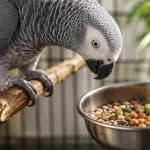
If you’ve ever watched your African Grey parrot carefully inspect a piece of fruit before deciding whether to eat it — turning it over with one foot, eyeing it from multiple angles, giving it a cautious sniff — you’ve witnessed something genuinely fascinating. These birds don’t just eat whatever lands in front of them. African Greys are deliberate, intelligent foragers, and the way they identify food is a perfect reflection of how sophisticated their senses and cognition really are.
Understanding how your African Grey recognizes food isn’t just intellectually interesting — it has real practical value. It explains picky eating behavior, helps you introduce new foods successfully, and gives you insight into why your bird trusts some items immediately while rejecting others outright.
Table of Contents
Vision: The Primary Tool for Food Recognition
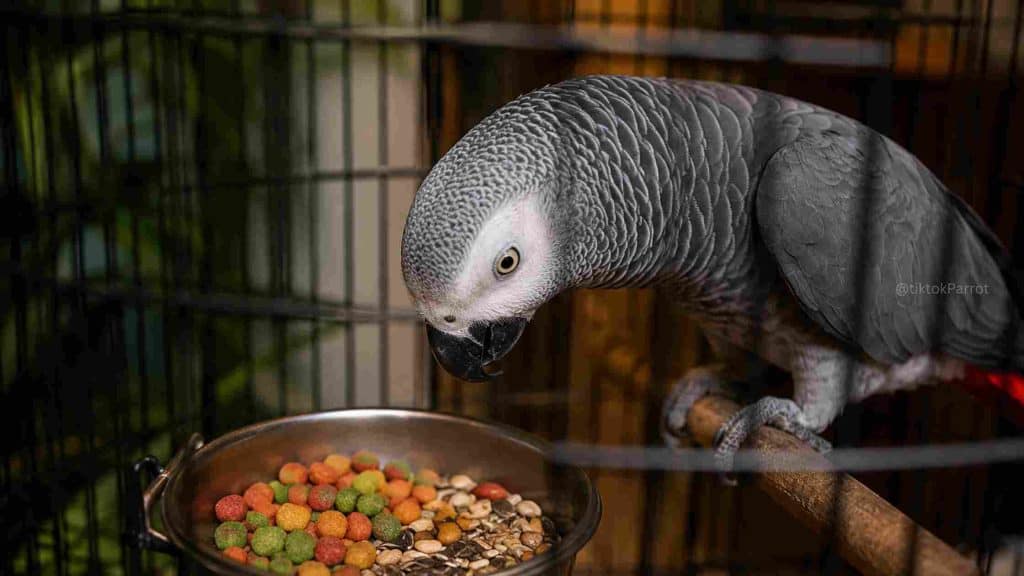
The single most important sense an African Grey uses to identify food is sight. Parrots have highly developed visual systems that far surpass human capability in several key ways.
African Greys can see into the ultraviolet spectrum, which means they perceive colors and patterns on food that are completely invisible to us. In the wild, this adaptation helps them assess the ripeness of fruit, distinguish between similar-looking seeds, and spot food sources hidden among dense foliage. A banana that looks uniformly yellow to you may show distinct UV patterns to your parrot — patterns that signal whether it’s ripe, overripe, or not yet worth eating.
Color as a Ripeness Signal
Color plays a central role in how African Greys evaluate food. Bright reds, oranges, and deep purples tend to signal ripe, nutrient-rich fruit — exactly the type of food wild Grey parrots seek out in the rainforests of Central and West Africa. This is one reason many African Greys show an immediate preference for colorful foods like bell peppers, papaya, and mango, while showing more hesitation toward pale or unfamiliar items.
Shape and texture are also processed visually. African Greys seem to form mental templates for familiar foods. Once your bird has learned that a particular shape — say, a grape or a slice of apple — is safe and edible, it will recognize that food reliably in the future, even when presented differently.
The Role of Smell in Food Recognition
Compared to mammals, birds were long thought to have a poor sense of smell. Recent research has revised that view considerably. While smell is not the primary sense African Greys use to identify food, it does play a supporting role — particularly when evaluating unfamiliar items or foods with strong aromatic profiles.
African Greys are often observed holding food up close to their nares (nostrils) before consuming it. This may seem like a quirky habit, but it likely serves a real evaluative function. Strong-smelling foods like garlic, citrus, or certain herbs may be rejected partly on olfactory grounds, even if they’re visually familiar.
This also helps explain why some African Greys are more receptive to warm or freshly prepared foods — heat releases volatile aromatic compounds that can make a dish smell more appealing and recognizable.
Tactile Assessment: Using the Beak and Tongue
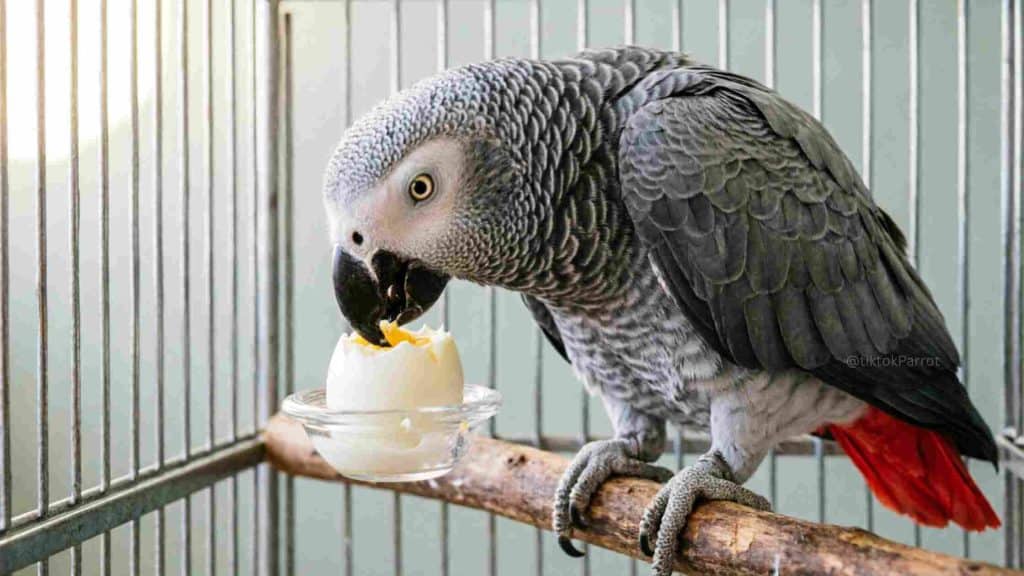
Once an African Grey has visually approved a piece of food, the next stage of evaluation happens through touch. The parrot’s beak and tongue are extraordinarily sensitive tactile organs.
Before eating, many Grey parrots will:
- Tap or probe the food with the tip of the beak to assess firmness and texture
- Roll the food around inside the bill to gauge size, weight, and consistency
- Use the tongue to test the surface for moisture, temperature, and texture
This tactile phase is especially important with new foods. An African Grey encountering a piece of cooked sweet potato for the first time may handle it extensively before eating — or reject it entirely because the mushy texture feels unfamiliar. Texture preferences are highly individual among African Greys and often develop from early exposure.
Taste: More Sophisticated Than You Might Think
African Grey parrots have far fewer taste buds than humans — roughly 300 to 400 compared to our 10,000. Yet despite this, they display clear and consistent taste preferences, which suggests their taste system is more efficient than its size implies.
African Greys can detect:
- Sweetness — ripe fruits and natural sugars are generally preferred
- Bitterness — a useful evolutionary warning signal against toxic plant matter
- Saltiness — in moderate amounts, though excess salt is harmful and should be avoided
- Sourness — responses vary; some birds tolerate citrus while others reject it
Taste reinforces what vision and touch have already flagged. If a food passes the visual and tactile tests but tastes wrong, an African Grey will drop it quickly — often flicking it to the bottom of the cage with visible disdain.
Memory and Learned Food Recognition
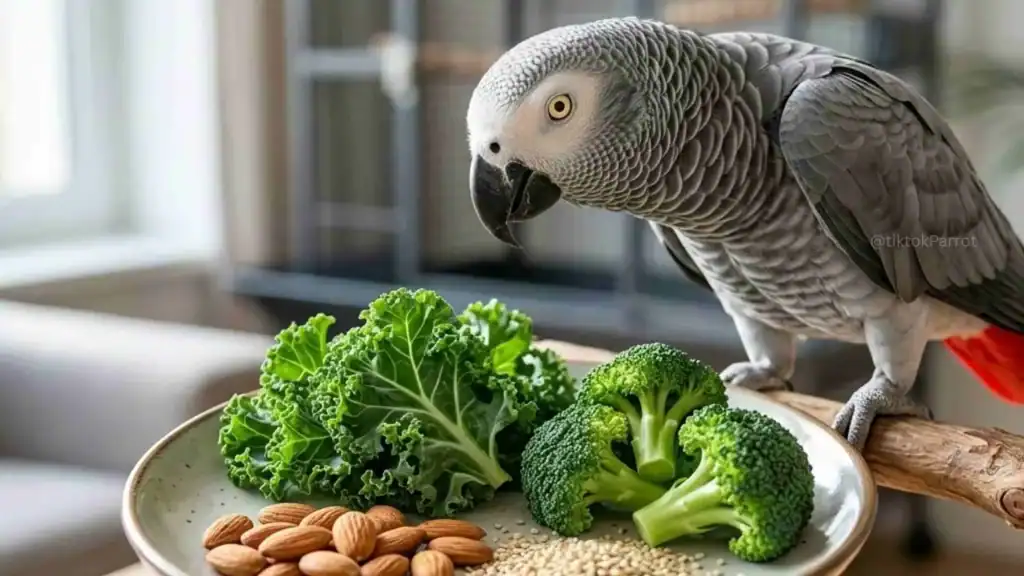
One of the most underappreciated aspects of how African Greys recognize food is the role of memory and learned association. These are among the most cognitively advanced parrots in the world, and their food recognition system is not purely instinct-driven. It is heavily shaped by experience.
Research into African Grey cognition — most famously Dr. Irene Pepperberg’s decades of work with a Grey named Alex — has shown that these birds can categorize objects by color, shape, and material. This capacity extends to food. A Grey that has learned the word “grape” or “nut” doesn’t just associate the sound with a reward — it forms a conceptual category for that food type.
In practical terms, this means:
- Early food exposure matters enormously. African Greys introduced to a wide variety of foods as young birds are far more likely to accept those foods throughout their lives.
- Negative experiences create lasting aversions. A bird that once choked on or became ill after eating a certain food may refuse similar-looking items for years.
- Social learning plays a role. Wild African Greys observe what flock members eat and use that information to assess safety. In captivity, eating in front of your bird or letting it watch you enjoy a food can reduce suspicion toward new items.
Why African Greys Are Such Picky Eaters
Food neophobia — fear of new foods — is common in African Greys and is directly connected to their recognition system. Because these birds rely so heavily on learned templates and past experience, anything that doesn’t match a known pattern gets flagged as potentially dangerous.
This is not stubbornness. It’s a survival strategy. In the wild, eating an unfamiliar plant or fruit could be fatal. Caution is adaptive.
To successfully introduce new foods to a picky Grey, use what you know about their recognition system:
- Serve new foods alongside familiar favorites — the familiar item lowers the bird’s guard.
- Present the food multiple times — research suggests birds may need 10 or more exposures before accepting a new food.
- Eat it yourself in front of your parrot — social mimicry is a powerful motivator.
- Vary the preparation — sometimes a food rejected raw will be accepted cooked, or vice versa.
- Use color strategically — mix new foods with brightly colored familiar ones to draw the bird’s attention.
Frequently Asked Questions
How do African Grey parrots identify if food is safe to eat?
African Greys use a combination of vision, smell, touch, and taste to assess food. They rely heavily on visual cues like color and shape, then confirm safety through tactile and taste evaluation. Learned memory from past food experiences also plays a major role.
Why does my African Grey examine food before eating it?
This is a natural foraging behavior. Your parrot is using its beak and tongue to assess the food’s texture, firmness, and taste before committing to eating it. It’s a sign of healthy, instinct-driven caution — not fussiness.
Can African Grey parrots see colors better than humans?
Yes. African Greys can see into the ultraviolet spectrum, giving them a far richer perception of color than humans. This helps them evaluate the ripeness and quality of food with precision that we simply can’t replicate.
Why won’t my African Grey try new foods?
Food neophobia is common in African Greys. Their food recognition system is heavily based on learned templates, so anything unfamiliar triggers caution. Patience, repeated exposure, and eating the food yourself in front of your bird are the most effective strategies.
Do African Grey parrots have a good sense of taste?
Despite having fewer taste buds than humans, African Greys display clear and consistent taste preferences. They can detect sweetness, bitterness, sourness, and saltiness, and will reject food that doesn’t meet their standards even after passing visual and tactile checks.
Conclusion
African Grey parrots recognize food through a remarkably layered process — one that combines ultraviolet-enhanced vision, tactile beak assessment, limited but effective taste detection, and a powerful memory system built from experience.
Understanding this process explains so much about their picky eating habits, their initial suspicion of new foods, and why early dietary variety matters so much.
The next time your Grey scrutinizes a piece of mango like it’s evidence in a trial, you’ll know exactly what’s happening: a highly intelligent bird running its multi-sense food verification system. Work with that system — offer variety early, be patient with new introductions, and eat alongside your bird — and you’ll unlock a far more adventurous eater than you might have thought possible.
If this blog post has helped you, please share it with your family and friends who might also find it helpful. If you love African Greys, join our community of Grey owners! You can meet other owners, share tips and learn from each other.
Stay safe and much love!


Hey there! 🐾 Looking for top-notch pet supplies or anything on Amazon?
Support our site by shopping on Amazon through our this referral link, it will not cost you extra!
Your purchases on Amazon can help us continue providing valuable content.
Thank you for your support! 🛍️