Why Your African Grey Parrot Needs Many Types of Perches: The Guide to Healthy Bird Feet!
So, you’ve finally brought home your African gey parrot, and you’re ready to treat them like royalty. You’ve got the giant cage, the organic pellets, and a toy chest that would make a toddler jealous. But have you looked at where they actually spend 24 hours a day?
I’m talking about their feet. Imagine if you had to spend your entire life standing on a single, perfectly smooth broom handle. No shoes, no carpet, just one round stick. Your feet would be screaming for mercy within an hour, right? For a parrot, the right perches aren’t just “furniture”—they are the difference between a happy camper and a bird with serious health problems.
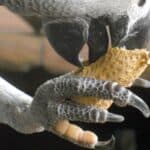
When it comes to an African Grey, their feet are their most important tools. They use them to eat, to climb, to play, and to sleep. Unlike us, they don’t have the luxury of sitting on a fluffy sofa at the end of the day. They are always on their toes. If you give them a variety of textures, diameters, and materials, you’re essentially giving them a high-end orthotic gym. If you stick to those basic dowel rods that come with the cage? Well, you’re asking for trouble.
Table of Contents
The “Dowel Rod” Trap: Why One Size Doesn’t Fit All
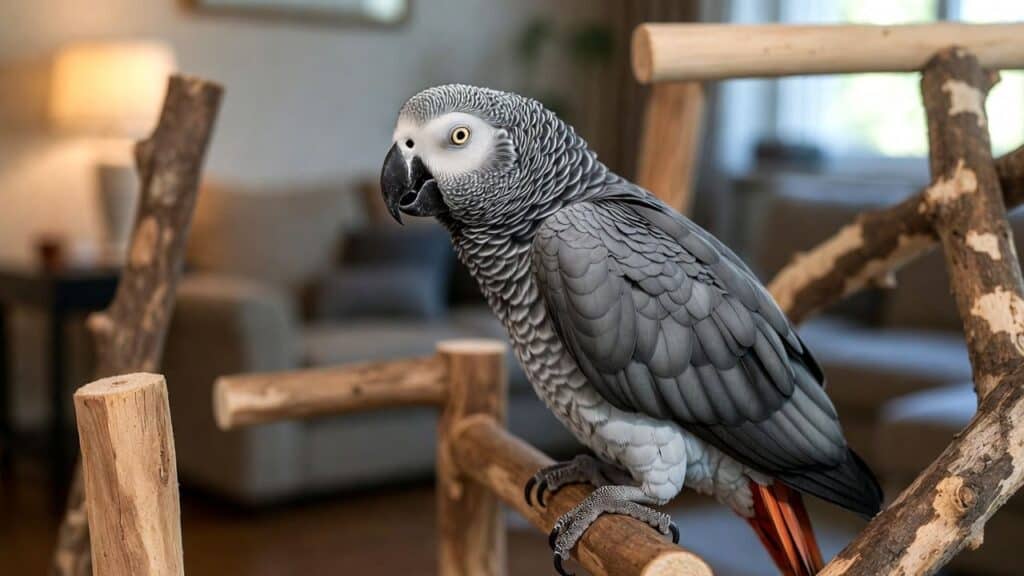
Most cages come with those perfectly round, smooth wooden dowels. They look neat and tidy, but for an African grey parrot, they are a nightmare. Because the diameter is the same all the way across, your bird’s foot is locked into the exact same position every single second they stand on it.
This leads to a nasty condition called Bumblefoot (pododermatitis). Think of it like a pressure sore. When the weight is always hitting the same spots on the bottom of the foot, the skin starts to thin, get red, and eventually becomes infected. It’s incredibly painful and a total pain to treat. By varying the perches, you ensure that the pressure is constantly shifting to different parts of the foot. It’s like the difference between standing on a flat concrete floor and walking on a lush, uneven forest path.
1. Natural Wood Perches: The Gold Standard
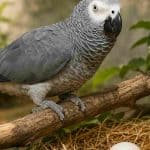
If you want to make your Grey parrot feel at home, you need branches. Not just any sticks, but natural, pesticide-free wood branches with the bark still on. Why? Because nature doesn’t do “perfectly round.” Natural branches have knots, bumps, and varying thicknesses.
When your bird walks across a natural branch, their toes have to stretch and contract in different ways. This is basically “yoga for bird feet.” It keeps the joints supple and the muscles strong. Plus, Greys love to chew. A natural branch doubles as a giant toothpick. They can strip the bark, whittle the wood, and satisfy that innate urge to destroy things without ruining your doorframe.
Pro Tip: Manzanita, Dragonwood, and Java wood are fan favorites. They are tough enough to survive the “beak of doom” and look great in the cage.
2. Pedicure Perches: Goodbye, Sharp Talons!
Have you ever been “stepped up” by an African grey and felt like you were being attacked by ten tiny needles? Their nails grow fast, and if they aren’t worn down, they get sharp enough to perform surgery. This is where “concrete” or “sand” perches come in.
These are designed to act like a giant nail file. Every time your bird moves, their nails rub against the rough surface, naturally blunting the tips. However, a word of caution: never make this the main perch where they sleep! Standing on a rough, sandy surface all night is like you sleeping on a bed made of sandpaper. It will shred their delicate foot pads. Place these near the food bowl or the door—somewhere they spend time but don’t live permanently.
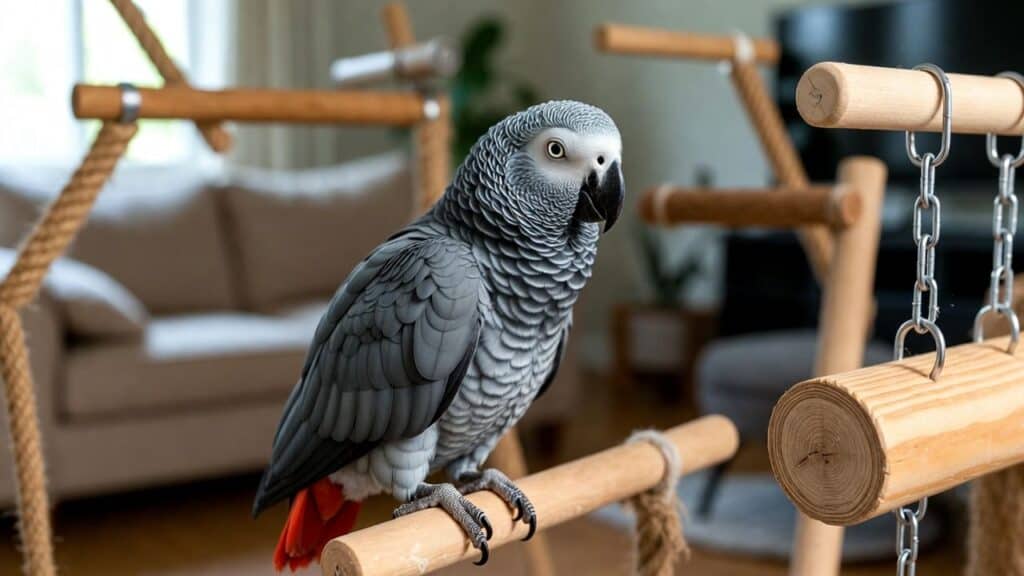
3. Rope Perches: The Comfy Couch
Rope perches (usually made of soft cotton) are the “lazy boy” recliners of the bird world. They are soft, they have a bit of “give,” and they are incredibly easy on the joints. This is especially important for older parrots or birds with arthritis.
My grey parrot loves his rope perch for his afternoon naps. It cushions the feet and provides a stable, non-slip surface. Just one major warning here: keep an eye on the threads. If your bird is a “shredder,” they might pull the cotton apart. Loose threads can snag a toe or, worse, get swallowed and cause a crop impaction. If it starts looking frayed, toss it and get a new one!
4. Platform Perches: Taking a Load Off
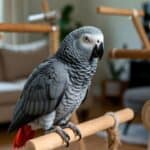
Believe it or not, sometimes a bird just wants to stand flat. A platform perch is exactly what it sounds like—a flat wooden or metal shelf. It allows the foot to fully extend and rest in a natural, flat position.
It’s also a great place to put foot toys. Watching an African grey parrot sit on a platform while holding a wooden block in one foot is like watching a tiny person at a workbench. It encourages different types of play and gives those “grasping” muscles a much-needed break.
5. The “Swing” Factor: Balance and Core Strength
Parrots in the wild don’t sit on stationary objects all day. Branches move in the wind! Adding a swing or a hanging boing (a bouncy rope coil) to your grey parrot‘s environment is fantastic for their balance.
When the perch moves, the bird has to use its core muscles and grip strength to stay steady. It’s great exercise and keeps them mentally sharp. Plus, there is nothing funnier than a Grey trying to look dignified while swinging wildly back and forth.
The Layout: How to Arrange the “Furniture”
It’s not just about what perches you have, but where you put them.
- The High Perch: This should be the most comfortable one (usually a natural wood or soft rope). This is where they sleep.
- The “Pathway”: Arrange perches so your bird has to hop or climb to get from the food to the water. Don’t make it too easy!
- The “Poop Zone”: Avoid placing perches directly over each other. Unless you enjoy cleaning bird droppings off your expensive Java wood every twenty minutes, staggering them is the way to go.
Conclusion
Your Grey Parrot is a complex, intelligent creature from the ground up—literally. By providing a “buffet” of perches, you aren’t just decorating a cage; you’re protecting them from pain and keeping their mind engaged. A mix of hard, soft, rough, and smooth surfaces will keep those clever feet healthy for decades to come.
Remember, if you’re bored looking at the inside of the cage, they are definitely bored living in it. Switch things up, try new textures, and keep those toes moving!
What’s your bird’s favorite spot to hang out? Do they have a “security perch” they refuse to leave, or are they a fan of the bouncy swings? Drop a comment below and let’s talk bird feet—I’d love to hear about your cage setups!
If you liked this blog, please share it with your family and friends who might also find it helpful. If you love African Greys, join our community of Grey owners! You can meet other owners, share tips and learn from each other.
Stay safe and much love!


Hey there! 🐾 Looking for top-notch pet supplies or anything on Amazon?
Support our site by shopping on Amazon through our this referral link, it will not cost you extra!
Your purchases on Amazon can help us continue providing valuable content.
Thank you for your support! 🛍️