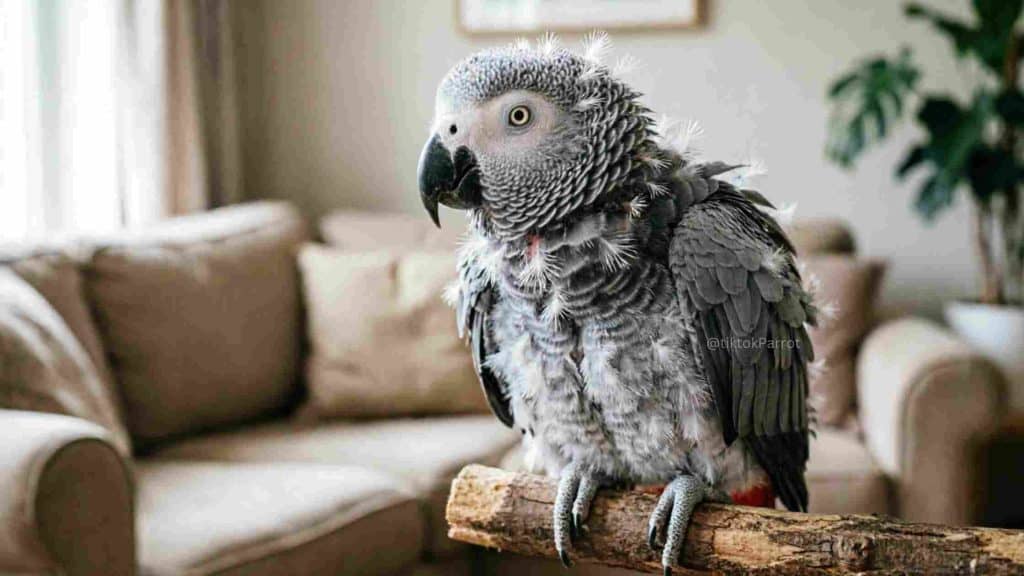
The first time an African Grey parrot goes through a molt, it can be an unsettling experience — for both the bird and the owner. Feathers everywhere, a bird that seems grumpy and out of sorts, and the occasional bald patch that sends new owners rushing to the internet in a panic.
If your African Grey is going through its first molt, take a deep breath. This is a completely natural, healthy process, and understanding what’s happening will help you support your bird through it with confidence.
Table of Contents
What Is a Molt?
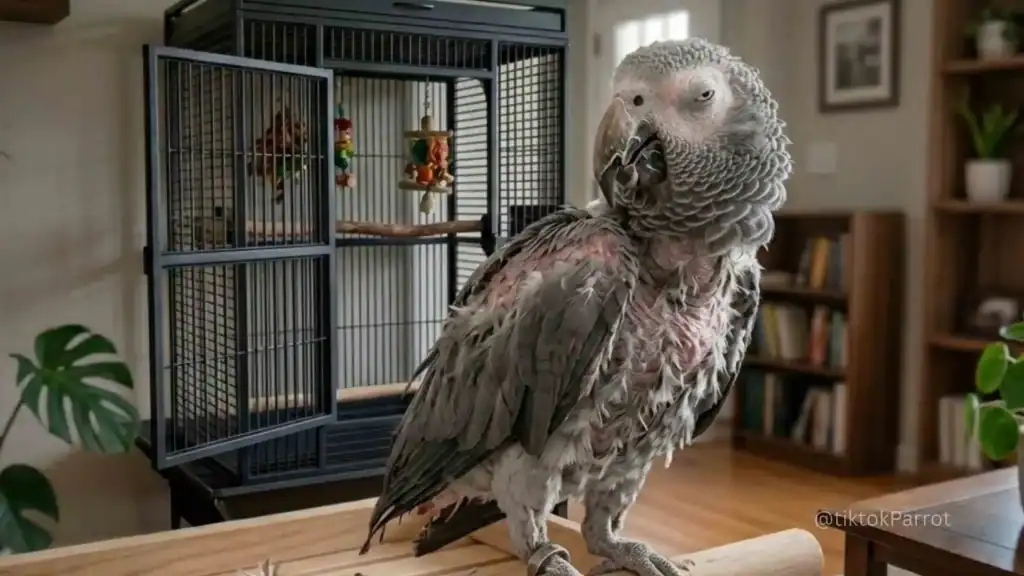
A molt is the process by which a bird sheds old, worn feathers and replaces them with new ones. For African Grey parrots, molting is an essential part of maintaining a healthy, functional plumage. Feathers don’t last forever — they fray, lose their insulating properties, and become less effective for flight and temperature regulation over time. Molting allows your bird to essentially reset its feather coat.
Unlike some bird species that shed all their feathers at once (which would leave them unable to fly and dangerously exposed), African Greys molt gradually. Old feathers are replaced in a staggered sequence, so the bird always retains enough coverage to fly and regulate its body temperature.
When Does the First Molt Happen?
African Grey parrots typically experience their first molt between 6 months and 12 months of age, though some birds begin slightly earlier or later depending on individual development and environmental conditions. Chicks hatch with down, which is gradually replaced by juvenile plumage. The first true molt marks the transition from juvenile feathers to a more mature coat.
One of the most notable changes during this first molt in Congo African Greys is the eye color shift — from dark grey or black in juveniles to a pale yellow iris in adults. This change happens gradually over the first couple of years and is a reliable aging indicator for birders and breeders alike.
Timneh African Greys, the smaller subspecies, go through a similar process but tend to develop their adult coloration slightly sooner than Congos.
What Does a Molting African Grey Look Like?
During the first molt, you’ll notice several visible changes:
- Pin feathers (blood feathers): These are new feathers still growing inside a protective keratin sheath. They look like small spikes or quills emerging from the skin, often visible on the head and neck. They contain a blood supply while developing and can be sensitive — even painful — if touched or damaged.
- Increased feather debris: Expect to find more feathers and feather dust (a fine white powder) around the cage and perches than usual.
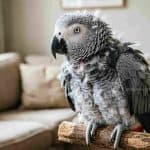
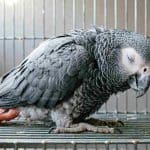
- Slight bald patches: It’s normal to see small, temporary thinning areas, particularly on the head and neck where the bird cannot preen itself. These should fill back in as new feathers emerge.
- Dull or uneven coloration: Juvenile grey feathers have a faint red or brownish tinge on the tail feathers before the true bright red of the adult tail emerges fully.
How Does a First Molt Affect Behavior?
This is where many owners get caught off guard. A bird that was previously sweet, playful, and affectionate can seem to transform overnight during a molt. Common behavioral changes include:
- Increased irritability: Pin feathers on the head and neck are sensitive, and your bird may not want to be touched or scratched in areas it previously enjoyed.
- Clinginess or withdrawal: Some African Greys become more needy and vocal, while others become quieter and more withdrawn. Both are normal responses to the physical discomfort of molting.
- Reduced appetite: Feather production is nutritionally demanding. Some birds eat less during a molt, though a dramatic drop in appetite warrants a vet check.
- More time preening: Your bird will spend significantly more time grooming itself, working to remove keratin sheaths from new feathers.
- Increased fatigue: Growing new feathers takes energy. Don’t be alarmed if your African Grey seems to sleep more than usual.
Understanding that these behavioral shifts are temporary and linked to physical discomfort will help you respond with patience rather than worry.
How to Help Your African Grey Through the First Molt
Your job during the first molt is to make the process as comfortable and nutritionally supported as possible.
1. Upgrade the Diet
Feather production is protein-intensive and requires a wide range of nutrients, including amino acids, B vitamins, zinc, and biotin. During a molt, focus on:
- High-quality pellets as a dietary base (they’re nutritionally more complete than seeds).
- Protein-rich foods such as cooked egg, cooked chicken, or legumes.
- Fresh vegetables including leafy greens, sweet potato, and carrots.
- Fresh fruits in moderation for vitamins and variety.
Avoid a seed-only diet during molting — seeds are nutritionally poor and do not support healthy feather regeneration.
2. Offer Regular Bathing Opportunities
Bathing helps soften the keratin sheaths around pin feathers, making it easier for your bird to crack them open and complete the preening process. Offer a shallow bath dish, a gentle misting from a spray bottle, or a lukewarm shower a few times per week. Many African Greys will actively seek bathing during a molt.
3. Help With Head Preening — Carefully
Your African Grey cannot preen its own head and neck feathers. If your bird is comfortable with you, you can gently help by softly rolling a pin feather between your fingertips once it appears mature (no longer dark and blood-filled at the base). Never force this — a bird in discomfort will let you know by pulling away. If in doubt, let the bird manage at its own pace.
4. Respect the Bird’s Personal Space
If your African Grey is less tolerant of handling during a molt, respect that boundary. Forcing interaction with a physically uncomfortable bird damages trust. Offer calm presence and verbal reassurance instead of hands-on contact if your bird signals it doesn’t want to be touched.
5. Maintain Stable Temperature and Lighting
Avoid placing a molting bird near cold drafts or air conditioning vents. New feathers provide less insulation while they’re still developing. Natural or full-spectrum lighting supports healthy feather development and helps regulate the bird’s internal clock.
When to See a Vet
Most first molts are uncomplicated, but there are warning signs that warrant a professional evaluation:
- Widespread bald patches that don’t fill in after several weeks
- Blood feathers that are damaged and actively bleeding
- Your bird feather-plucking or chewing at its own feathers
- Lethargy, labored breathing, or a dramatic change in droppings
- A molt that seems to go on for many months without resolution
Feather destructive behavior (plucking) can sometimes begin around the first molt and has both physical and psychological causes. Early intervention gives the best outcome, so don’t wait to seek help if you’re seeing it.
Frequently Asked Questions
How long does an African Grey’s first molt last?
The first molt typically lasts several weeks to a few months. Because molting in African Greys is gradual rather than all at once, you may notice it happening in waves — different areas of the body molting at different times.
Is it normal for an African Grey to lose a lot of feathers during the first molt?
Yes. Some feather loss is completely normal during a molt. Temporary thin patches — especially on the head and neck — are expected. What’s not normal is large, persistent bald areas or your bird actively pulling its own feathers out.
Why is my African Grey so grumpy during its molt?
Pin feathers are sensitive and can be mildly painful. Your bird is also spending extra energy growing new feathers, which can make it tired and irritable. This behavioral shift is temporary and should resolve once the molt is complete.
Should I change my African Grey’s diet during a molt?
Yes. Feather production demands extra protein and key nutrients. Increase protein-rich foods like cooked egg and legumes, and ensure your bird is on a balanced pellet-based diet rather than relying heavily on seeds.
Can I bathe my African Grey during a molt?
Absolutely — and it’s encouraged. Bathing helps soften the keratin sheaths on pin feathers and makes preening easier. Offer baths several times per week using lukewarm water.
Conclusion
Your African Grey’s first molt is a milestone, not a crisis. It signals that your young bird is maturing and transitioning into its adult plumage. Yes, it can be messy, and yes, your bird might become temporarily less fun to be around — but understanding why all of this is happening makes it manageable.
Support your bird with good nutrition, regular bathing, a little patience, and a willingness to give it space when it needs it. Before long, the new feathers will be in, the pin feathers will be gone, and you’ll have an African Grey with a beautiful, healthy adult coat — and an even stronger bond built on the trust you showed during a challenging time.
If this blog post has helped you, please share it with your family and friends who might also find it helpful. If you love African Greys, join our community of Grey owners! You can meet other owners, share tips and learn from each other.
Stay safe and much love!


Hey there! 🐾 Looking for top-notch pet supplies or anything on Amazon?
Support our site by shopping on Amazon through our this referral link, it will not cost you extra!
Your purchases on Amazon can help us continue providing valuable content.
Thank you for your support! 🛍️