You’ve brought home your African Grey parrot. The cage is set up, the food is fresh, and you’re ready to build a bond — but your new bird is pressed against the far side of the cage, eyeing you like you’re the problem. Sound familiar? If so, you’re not alone.
African Greys are widely regarded as one of the most emotionally complex parrots in the world, and trust with them is never instant. Understanding how long the process takes — and why — can save you from making mistakes that set you back weeks or even months.
Table of Contents
The Honest Answer: It Depends
There is no universal timeline for earning an African Grey’s trust. Some birds warm up within a few weeks; others take six months to a year before they’re comfortable stepping onto your hand. A rescued or previously neglected Grey may take even longer — sometimes two or more years before fully relaxing around a new person.
What determines the pace isn’t just your behavior. It’s a combination of your bird’s past experiences, its individual personality, your consistency, and how well you read its body language.
African Greys are acutely sensitive to human emotion and routine, which is both what makes them extraordinary companions and what makes trust-building such a nuanced process.
Why African Greys Are Slow to Trust
To understand the timeline, it helps to understand the bird.
African Greys are prey animals with a strong instinct for self-preservation. In the wild, they are cautious, observant, and slow to accept unfamiliar things into their environment. This isn’t stubbornness — it’s survival intelligence. A Grey that’s wary of a new person is doing exactly what its biology wired it to do.
On top of that, African Greys have long memories and deep emotional lives. Research, including work associated with Dr. Irene Pepperberg and her famous subject Alex, has shown these birds process information at a level comparable to a young child. That cognitive depth means past trauma, poor handling, or even a single frightening experience can leave a lasting impression. A Grey that was previously mishandled may carry that wariness into every new relationship.
The Role of Previous Ownership
A hand-raised African Grey purchased from a reputable breeder at a young age will generally trust faster than an older bird or one that was previously rehomed. Birds that have been passed between multiple owners often show what’s sometimes called “rehoming stress” — a period of withdrawal, feather-picking, or heightened anxiety as they try to make sense of yet another unfamiliar environment.
If your Grey came from a difficult background, adjust your expectations. Progress may be slow and non-linear. Some days will feel like breakthroughs; others may feel like you’ve gone backwards. Both are normal.
Realistic Trust-Building Timelines
While every bird is different, here’s a general framework to help set expectations:
Weeks 1–2: Settling In
Your Grey is observing everything. It’s learning the sounds of your home, the rhythm of your schedule, and what you look like when you’re not paying attention to it. Resist the urge to interact heavily during this period.
Spend time near the cage without making direct eye contact or sudden movements. Talk softly. Let it get used to your presence without pressure.
Weeks 3–6: First Signs of Curiosity
Many African Greys begin showing mild curiosity around week three — moving toward the front of the cage when you approach, watching you more intently, or responding to your voice. This is a green light to begin gentle, low-pressure interaction. Offer treats through the cage bars without pushing your hand in aggressively. Slow blinks, relaxed feathers, and leaning toward you are positive body language signals.
Months 2–4: Building Routine
Consistency becomes your most powerful tool here. African Greys thrive on predictable routines. Feeding, talking, and spending time near the cage at the same times each day helps your bird feel safe. By this stage, many Greys will step up for trusted people, vocalize more freely, and show less defensive body language like pinned eyes or raised neck feathers.
Months 4–12: Deepening the Bond
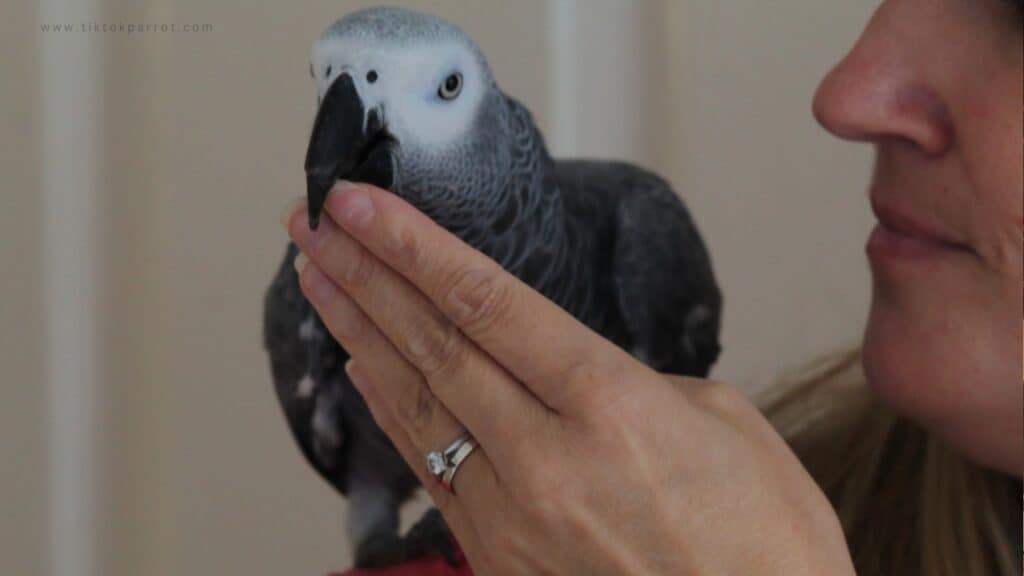
True trust — the kind where your Grey actively seeks your company, preens in front of you, or comes to you voluntarily — often solidifies somewhere between four months and a year. This phase is about depth rather than milestones. Your bird isn’t just tolerating you; it’s beginning to rely on you emotionally.
Proven Strategies That Speed Up Trust (Without Forcing It)
There are no shortcuts, but there are approaches that consistently work.
Let the bird set the pace. Forcing interaction — reaching into the cage uninvited, picking up a reluctant bird, or insisting on contact — backfires badly with African Greys. These birds have a strong sense of agency. Respecting that builds trust faster than any amount of coaxing.
Use food strategically. High-value treats like walnuts, pine nuts, or a favorite fruit can transform your hand from a threat into something worth approaching. Offer treats consistently and without strings attached early on.
Talk to your Grey constantly. African Greys are auditory learners. Reading aloud, narrating your day, or simply talking near the cage builds familiarity with your voice. Many Greys begin mimicking sounds long before they’re comfortable with physical contact — a sign that the bond is forming even if it’s not yet visible.
Read body language accurately. A Grey with slicked-down feathers, pinned pupils, and a rigid posture is telling you to back off. A relaxed bird with puffed feathers, half-closed eyes, or a slowly wagging tail is comfortable. Acting on these signals — retreating when asked, approaching when welcomed — teaches your bird that you can be trusted to listen.
Avoid punishment entirely. African Greys do not respond well to being scolded or punished. Negative reactions can create fear associations that take months to undo. If your bird bites or lunges, calmly withdraw and give it space.
Common Mistakes That Slow Down Trust
- Moving too fast: Trying to handle a Grey before it’s ready is the single most common trust-setback owners experience.
- Inconsistent routines: Unpredictable schedules make Greys anxious. Anxiety and trust don’t coexist well.
- Too many people at once: African Greys often bond deeply with one or two people. Overwhelming a new bird with a crowd of curious family members during the settling period can delay trust significantly.
- Staring directly: In bird body language, prolonged direct eye contact can read as a threat. Use soft, indirect gazes initially.
- Giving up during setbacks: Progress with a Grey is rarely a straight line. A bird that stepped up yesterday may refuse today. Persistence and patience — without pressure — is what gets you through.
Frequently Asked Questions
How long does it take for an African Grey to bond with a new owner?
It varies widely. A young, well-socialized bird may begin bonding within weeks, while a rehomed or older Grey may take six months to a year or more. The key is consistency and patience rather than rushing the process.
How do you know when an African Grey trusts you?
Signs of trust include voluntarily stepping onto your hand, preening in your presence, vocalizing freely, making eye contact without tension, and seeking your company rather than retreating from it.
Can an African Grey bond with more than one person?
Yes, though they often have a primary bonded person. With proper socialization from an early age, African Greys can be comfortable and affectionate with multiple family members.
What should I do if my African Grey bites me?
Do not react with anger or punishment. Calmly withdraw your hand, give the bird space, and evaluate what triggered the bite. Biting is communication — your Grey was telling you something. Understanding the cause is more useful than any correction.
Is it harder to gain the trust of a rescued African Grey?
Often, yes. Rescued birds may have experienced trauma, neglect, or multiple rehomings, all of which affect their ability to trust. With extra patience and a calm, consistent environment, most rescued Greys do eventually bond — it simply takes longer.
Conclusion
If you’re asking how long it takes for an African Grey to trust you, the most truthful answer is: as long as it takes. For some birds that’s a few weeks; for others it’s over a year. What matters more than the timeline is your approach.
Consistency, patience, respect for your bird’s boundaries, and a willingness to follow its lead will get you there — and the bond you build with an African Grey parrot is unlike anything else in the world of companion birds. These are animals that will remember your kindness for decades. Every week of patience you invest now pays off for a lifetime.
If this blog post has helped you, please share it with your family and friends who might also find it helpful. If you love African Greys, join our community of Grey owners! You can meet other owners, share tips and learn from each other.
Stay safe and much love!


Hey there! 🐾 Looking for top-notch pet supplies or anything on Amazon?
Support our site by shopping on Amazon through our this referral link, it will not cost you extra!
Your purchases on Amazon can help us continue providing valuable content.
Thank you for your support! 🛍️