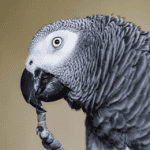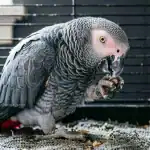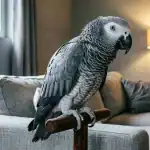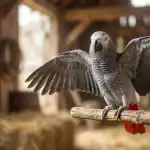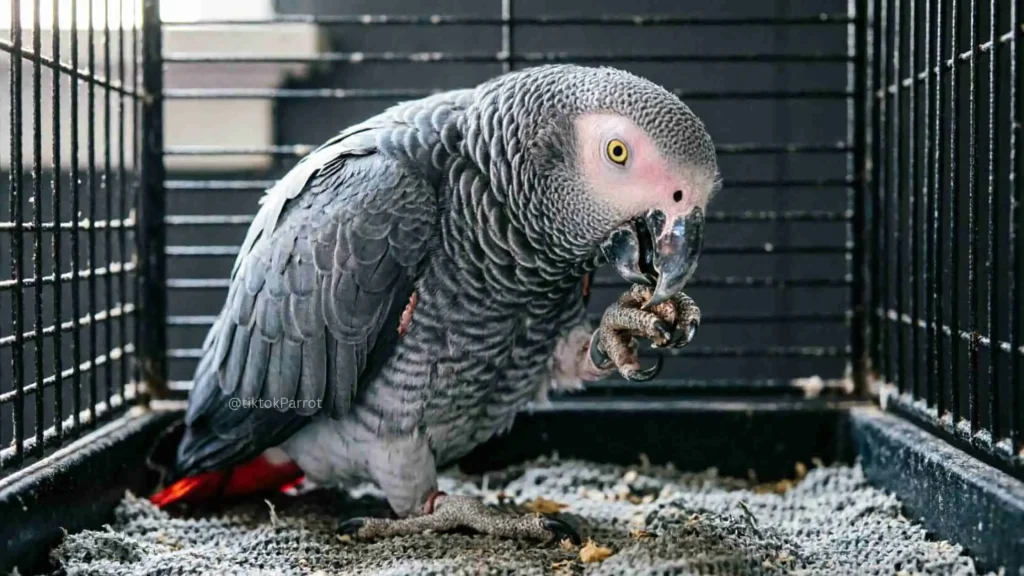
If you’ve ever caught your African Grey sitting quietly, methodically gnawing away at its own toenails, you’ve probably wondered whether this is normal behavior or something to worry about. It’s a surprisingly common question among Grey owners, and the honest answer is: it depends. Nail chewing can be completely harmless grooming, or it can be a sign of nervousness, overgrown nails, or an underlying issue worth addressing.
This guide walks through the most common reasons African Greys chew their nails, how to tell the difference between normal and concerning behavior, and what you can actually do to help.
Table of Contents
Is Nail Chewing Normal for African Greys?
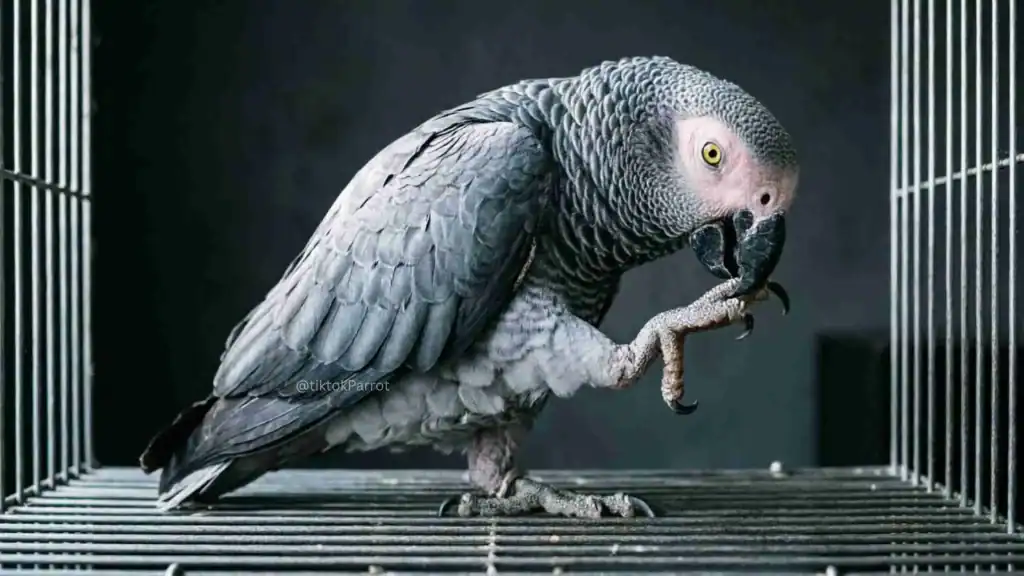
Yes, to a point. Nail chewing and foot grooming are part of a parrot’s natural preening routine, and many African Greys chew at their nails occasionally without it indicating any problem at all. Greys, along with Amazon parrots, are among the species most commonly reported to chew their feet and nails compared to other parrot types, and interestingly, the exact reason African Greys seem particularly prone to this behavior isn’t fully understood.
Some behaviorists suspect it may relate to natural socialization patterns from the wild that aren’t fully replicated in a home environment, though this remains more theory than confirmed science.
The key distinction owners should focus on isn’t whether the behavior happens at all, but how often it happens and whether it’s causing any physical problems.
Common Reasons African Greys Chew Their Nails
1. Overgrown Nails
This is one of the most frequently cited reasons for nail chewing. In the wild, a Grey’s nails naturally wear down through constant climbing, foraging, and gripping rough bark and branches.
In a home environment with smooth perches and less varied movement, nails can grow longer than they would naturally, and a bird may chew at them in an attempt to shorten them itself. Overgrown nails aren’t just uncomfortable; they can interfere with a bird’s ability to perch, walk, and grip food properly.
2. Nervousness or Stress
Many owners report their Grey chewing its nails specifically during moments of nervousness, frustration, or uncertainty, sometimes alongside other stress-related behaviors like wing flapping or vocalizing.
In these cases, nail chewing functions similarly to a self-soothing habit, something the bird does with its beak while working through an uncomfortable feeling, rather than a response to the physical state of the nail itself.
3. Boredom or Lack of Stimulation
Parrots are highly intelligent and need consistent mental engagement. When that’s lacking, some birds redirect that energy into repetitive self-directed behaviors, including nail or foot chewing, as a way of occupying themselves.
4. Normal Grooming and Sensation-Seeking
Sometimes it really is that simple: a nail feels slightly rough, too long, or oddly shaped, and the bird chews at it the same way a person might pick at a hangnail. This tends to be brief, occasional, and not accompanied by any signs of distress.
When Nail Chewing Becomes a Concern
Occasional, calm nail chewing generally isn’t something to worry about. However, owners should pay closer attention if they notice:
- Chewing that happens constantly or for extended periods
- Nails becoming razor-sharp or unusually rough from repeated chewing
- Swelling, redness, or soreness around the feet or nail beds
- Chewing that appears linked to visible signs of stress, like repeated flapping or agitation
- The behavior extending to feather chewing or picking as well
If foot or nail chewing becomes frequent enough to cause physical irritation, or if it’s paired with other repetitive, self-directed behaviors, it’s worth ruling out an underlying health or behavioral issue with an avian vet or a qualified parrot behaviorist rather than assuming it will resolve on its own.
What You Can Do About It
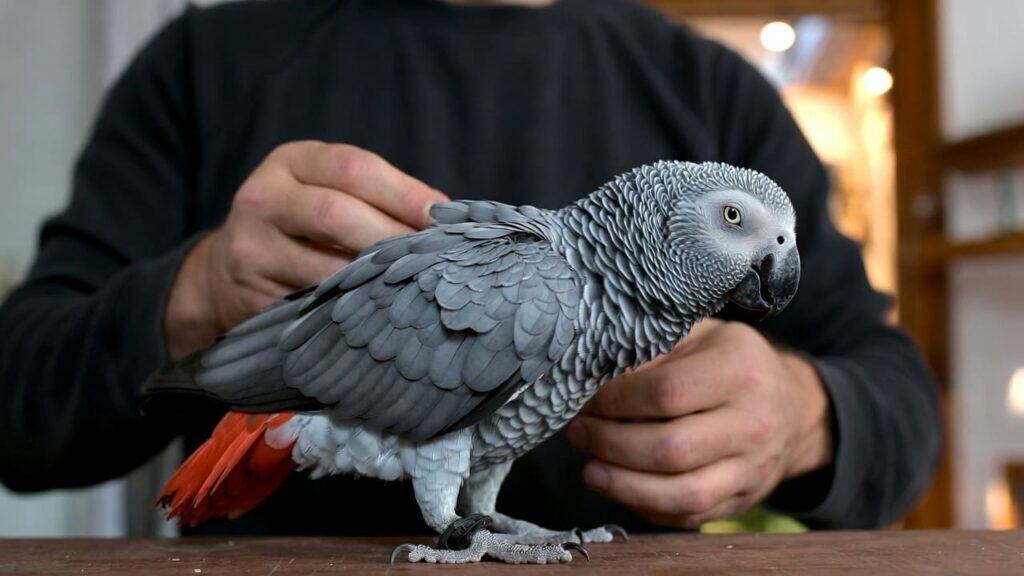
Check Nail Length First
Since overgrown nails are one of the most common and easily fixed causes, this is the logical first step. Look for signs your Grey’s nails may be too long, including:
- Changes in how confidently the bird perches
- Difficulty walking or climbing smoothly
- Nails curving noticeably or catching on fabric and surfaces
- Scratches on your hands or arms during normal handling
If nails appear overgrown, have them trimmed by a vet, experienced groomer, or someone comfortable doing it safely with proper bird-specific nail clippers. Trimming too much or too quickly can cause bleeding, so this isn’t a task to rush if you’re inexperienced.
Provide Varied, Textured Perches
Natural wood perches with varying diameters and rough textures help wear nails down gradually and naturally, much like branches would in the wild, reducing the need for the bird to manage nail length through chewing.
Address Potential Stress Triggers
If nail chewing seems linked to nervous moments, try to identify what’s happening right before and after the behavior. Common triggers include changes in routine, unfamiliar sounds, being denied something the bird wants, or feeling insecure in its environment. Once you spot a pattern, you can work on gradually reducing that specific stressor or building the bird’s confidence around it.
Increase Mental Enrichment
Foraging toys, puzzle feeders, and regular out-of-cage interaction help redirect a Grey’s considerable intelligence and energy toward engaging activities rather than repetitive self-directed habits.
Rule Out Underlying Issues
If chewing is frequent, intense, or causing physical damage, a vet visit helps rule out pain, skin irritation, or other medical contributors before assuming it’s purely behavioral.
Common Mistakes Owners Make
- Ignoring overgrown nails. This remains one of the simplest and most overlooked causes of chronic nail chewing.
- Assuming all nail chewing is a sign of stress. Sometimes it’s genuinely just routine grooming.
- Trimming nails too aggressively. This can cause pain or bleeding and may make the behavior worse rather than better.
- Overlooking the connection to boredom. Increasing enrichment often resolves mild cases without any other intervention needed.
- Waiting too long to consult a professional once chewing becomes frequent enough to cause visible irritation.
Frequently Asked Questions
Is it normal for African Grey parrots to chew their nails?
Yes, occasional nail chewing is considered normal grooming behavior, and African Greys are among the species most commonly reported to do this compared to other parrots.
Why do African Greys chew their nails when they’re long?
Overgrown nails can feel uncomfortable and interfere with perching and gripping, so some birds attempt to shorten them by chewing, similar to how they’d naturally wear nails down while climbing in the wild.
Can stress cause an African Grey to chew its nails?
Yes, some Greys chew their nails specifically during moments of nervousness or frustration, often alongside other stress-related behaviors like wing flapping.
When should I be concerned about my parrot chewing its nails?
If the behavior becomes constant, causes swelling or soreness, or is paired with other repetitive behaviors like feather picking, it’s worth consulting an avian vet or bird behaviorist.
How can I stop my African Grey from chewing its nails?
Start by checking nail length and trimming if needed, provide varied textured perches, increase enrichment, and try to identify and reduce any specific stress triggers.
Do all parrot species chew their nails equally?
No, African Greys and Amazon parrots are more commonly reported to chew their feet and nails compared to many other parrot species.
Can overgrown nails cause other problems besides chewing?
Yes, overgrown nails can interfere with normal perching, walking, climbing, and gripping food, making regular nail maintenance important regardless of chewing behavior.
Conclusion
Nail chewing in African Greys sits on a spectrum from completely normal grooming to a sign of nervousness, boredom, or overgrown nails needing attention. The best approach is simple observation: check nail length, watch for patterns tied to specific situations, and keep an eye out for any physical irritation.
Most cases resolve easily with a nail trim, better perches, or a bit more mental stimulation, but persistent or intense chewing is always worth a conversation with your avian vet.
If this blog post has helped you, please share it with your family and friends who might also find it helpful. If you love African Greys, join our community of Grey owners! You can meet other owners, share tips and learn from each other.
Stay safe and much love!

Hey there! 🐾 Looking for top-notch pet supplies or anything on Amazon?
Support our site by shopping on Amazon through our this referral link, it will not cost you extra!
Your purchases on Amazon can help us continue providing valuable content.
Thank you for your support! 🛍️