If you’ve recently noticed your African Grey parrot acting strangely — sitting low in the cage, becoming protective over a corner, or losing interest in food — there’s a good chance breeding season is on your radar.
Whether you’re a first-time African Grey owner or an experienced breeder, understanding your bird’s reproductive cycle is essential. One of the most common questions that comes up is: how many eggs does a grey parrot lay? The answer might surprise you, and there’s a lot more to the story than a simple number.
Table of Contents

The African Grey Parrot Breeding Cycle
African Grey parrots (Psittacus erithacus) are not spontaneous breeders. In the wild, they typically breed once a year, usually between October and March, though this can vary by region. In captivity, the timing can shift depending on light exposure, diet, temperature changes, and the presence of a bonded mate.
Before eggs ever appear, African Greys go through a courtship phase. You may notice your bird regurgitating food for you or its mate, becoming more vocal, or seeking out dark, enclosed spaces. These behavioral shifts are your first clues that your parrot may be preparing to lay.
How Many Eggs Does an African Grey Parrot Lay Per Clutch?
An African Grey parrot typically lays between 2 and 4 eggs per clutch, with 3 being the most common number. Some hens may lay as few as 1 egg or as many as 5, though this is less typical. Unlike chickens or other domesticated birds bred for egg production, African Greys lay a modest clutch — and this is perfectly normal for a long-lived, slow-reproducing species.
Each egg is laid approximately 2 to 3 days apart, so a full clutch of three eggs might take nearly a week to complete. This staggered laying is important to understand because incubation begins once the hen decides to sit, meaning the first egg may start developing before the last one is laid.
What Do African Grey Eggs Look Like?
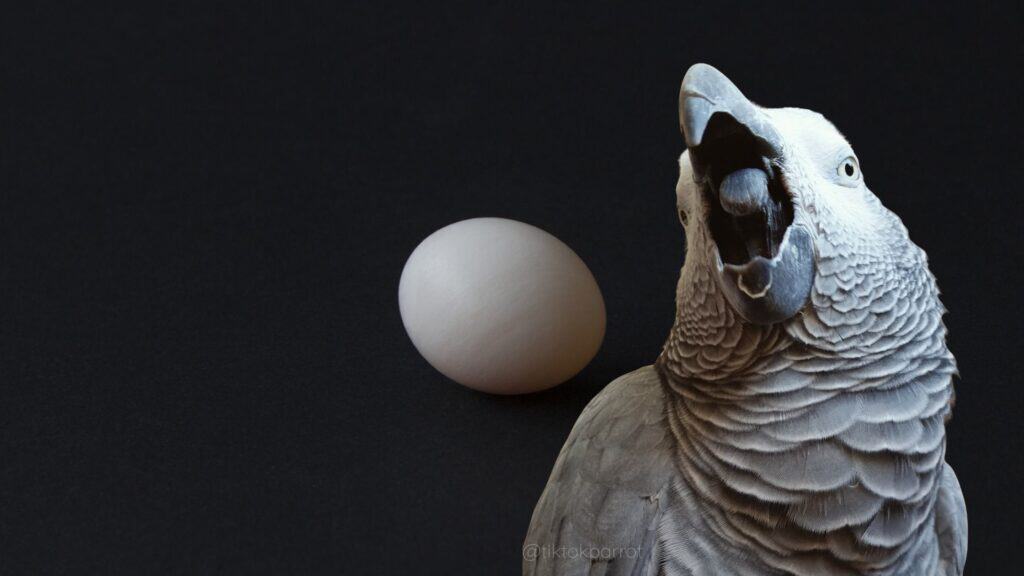
African Grey eggs are white, oval-shaped, and relatively small compared to what many people expect. They measure roughly 4 cm in length and have a smooth, matte shell. Fertile eggs will begin to show veining inside when candled (held up to a light source) after about 7 to 10 days of incubation.
The Incubation Period
Once a hen begins sitting, the incubation period for African Grey eggs is approximately 28 to 30 days. Both parents often share incubation duties in bonded pairs, with the male frequently feeding the female during this time.
In captivity, if eggs are removed and incubated artificially, maintaining a temperature of around 37.2°C (99°F) and humidity between 50–60% is critical. Turning the eggs several times daily mimics what the parents do naturally and prevents the embryo from sticking to the shell membrane.
Can African Greys Lay Infertile Eggs?
Yes — and this happens more often than many owners expect. A female African Grey can lay eggs even without a male present. These are called infertile or unfertilized eggs. While this is a natural biological process, chronic egg-laying in females without a mate can be a serious health concern, leading to calcium depletion and a condition called egg binding — where an egg becomes stuck and cannot be passed safely.
If your lone female is laying eggs repeatedly, consult an avian veterinarian. Adjusting light exposure, diet, and removing nesting materials can help discourage the behavior.
How Many Clutches Per Year Does an African Grey Lay?

In the wild, African Grey parrots typically produce one clutch per year. In captivity, with optimal conditions, some pairs may produce up to two clutches annually, particularly if the first clutch is removed early for hand-rearing. However, allowing more than two clutches per year puts significant strain on the female and is not recommended by most avian veterinarians and experienced breeders.
Responsible breeding means prioritizing your bird’s long-term health over maximizing output. African Greys are not production animals — they are highly intelligent, sensitive birds that live for 50 to 60 years in captivity, and their bodies need adequate recovery time between breeding cycles.
Common Mistakes African Grey Owners Make During Egg-Laying Season
Understanding what not to do is just as important as knowing what to expect.
- Removing eggs too quickly: Removing eggs immediately can encourage the female to keep laying to replace the lost clutch, increasing health risks. If you don’t want the eggs to hatch, replacing them with dummy eggs is a better strategy.
- Ignoring dietary changes: A laying hen needs significantly more calcium. Cuttlebone, calcium supplements, and leafy greens like kale should be added to her diet.
- Disturbing the nest box too frequently: African Greys are sensitive birds. Constantly checking on eggs or the nest box can cause stress, leading hens to abandon the clutch.
- Providing a nest box year-round: Leaving a nest box in the cage permanently encourages breeding behavior. Remove it outside of breeding season.
- Underestimating the risks of egg binding: Signs include straining, lethargy, fluffed feathers, and a swollen abdomen. This is a veterinary emergency — do not wait to seek help.
Tips for Supporting a Laying African Grey Hen
If your hen is laying or you’re planning to breed your African Greys, these practical steps will help:
- Boost calcium intake through cuttlebone, mineral blocks, or vet-recommended supplements.
- Provide a suitable nest box — a wooden box approximately 30 cm x 30 cm x 60 cm with a circular entrance works well.
- Maintain stable temperatures in the breeding area, ideally between 20–25°C (68–77°F).
- Ensure a nutritious diet rich in fresh vegetables, quality pellets, and protein sources such as cooked egg.
- Minimize disturbances during incubation and consult an avian vet before and during the breeding season.
Frequently Asked Questions
How many eggs does an African Grey parrot lay at a time?
An African Grey typically lays 2 to 4 eggs per clutch, with eggs laid every 2 to 3 days. Three eggs per clutch is the most common.
How long does it take for African Grey parrot eggs to hatch?
African Grey eggs take approximately 28 to 30 days to hatch after incubation begins. Chicks hatch blind and helpless, requiring full parental or hand-rearing care.
Can a female African Grey lay eggs without a male?
Yes. Female African Greys can lay unfertilized eggs without a mate. Chronic egg-laying without a male is a health concern and should be addressed with the help of an avian vet.
How often do African Grey parrots breed?
In the wild, African Greys breed once a year. In captivity, pairs may produce up to two clutches per year, though more than that is not recommended for the hen’s health.
What should I do if my African Grey’s egg doesn’t hatch?
Wait the full 28–30 days before concluding an egg is infertile. You can candle the egg to check for development. If the egg remains undeveloped and the hen has abandoned it, remove it carefully. An avian vet can advise if you’re unsure.
Conclusion
African Grey parrots typically lay 2 to 4 eggs per clutch, once or at most twice a year, with incubation lasting around 28 to 30 days. These numbers reflect the natural biology of a slow-breeding, long-lived species. Whether you’re a breeder or simply a curious owner trying to understand your hen’s behavior, knowing what to expect during egg-laying season helps you provide better care and respond appropriately when things don’t go as planned.
The most important takeaway: egg-laying is a physically demanding process for your African Grey. Proper nutrition, reduced stress, veterinary support, and a responsible breeding approach will protect her health — and give any chicks the best possible start.
If you liked this blog, please share it with your family and friends who might also find it helpful. If you love African Greys, join our community of Grey owners! You can meet other owners, share tips and learn from each other.
Stay safe and much love!


Hey there! 🐾 Looking for top-notch pet supplies or anything on Amazon?
Support our site by shopping on Amazon through our this referral link, it will not cost you extra!
Your purchases on Amazon can help us continue providing valuable content.
Thank you for your support! 🛍️