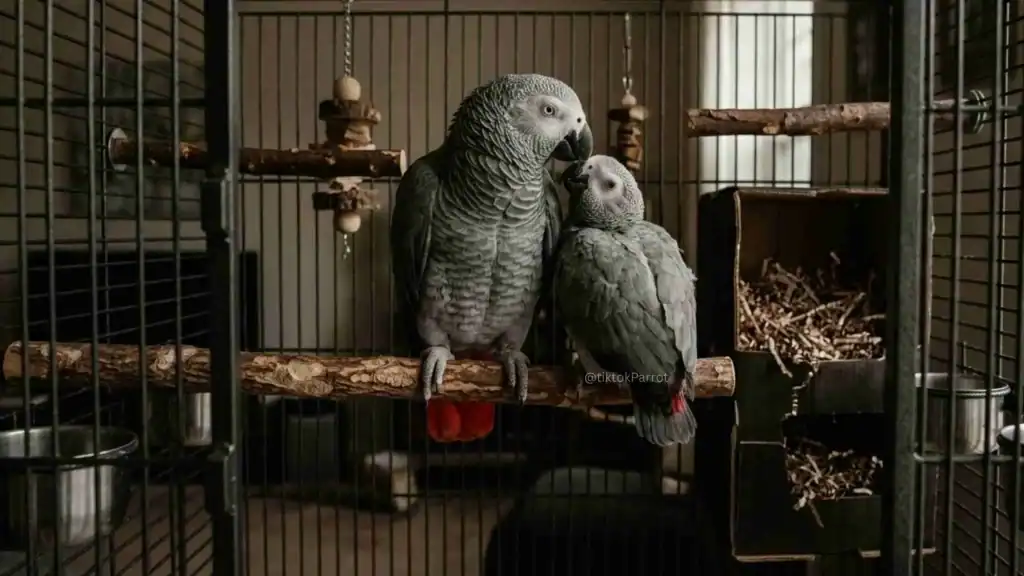
Whether you’re researching African Grey breeding for the first time, considering a baby bird, or simply curious about how these remarkably intelligent parrots grow up, understanding the parent-chick relationship offers real insight into why African Greys take so long to mature compared to many other pet bird species. The short answer is: much longer than most people expect, and that extended dependency actually shapes the personality and needs of the adult bird you eventually bring home.
This guide walks through each stage of an African Grey chick’s early life, how long it typically stays with its parents in the wild, and why this matters even for owners who acquire a bird well past infancy.
Table of Contents
Life in the Nest: The First Few Weeks
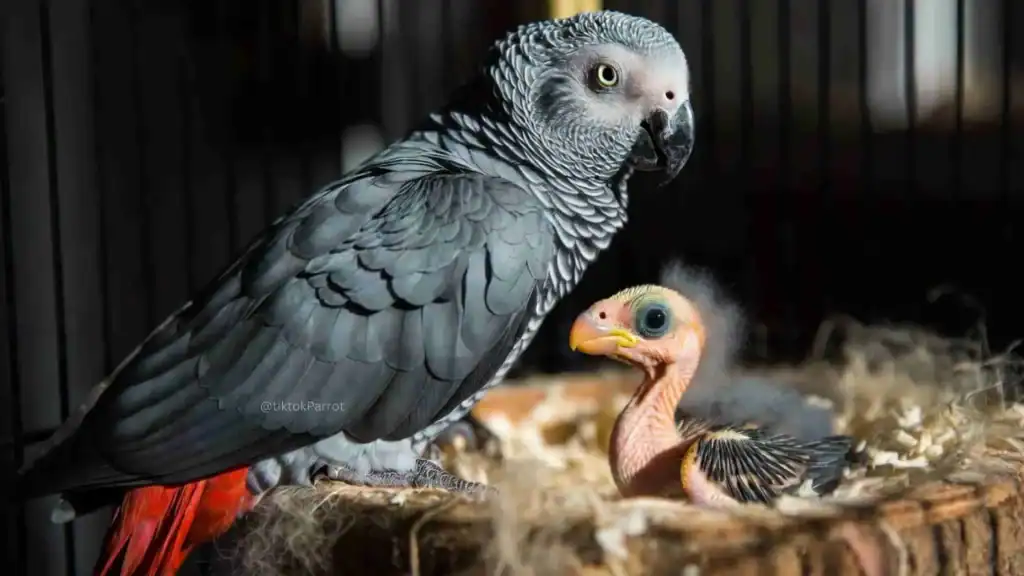
African Grey chicks hatch in tree cavities, high up in the forest canopy, completely helpless: blind, featherless, and entirely dependent on their parents for warmth, protection, and food. The female typically incubates a clutch of 2 to 4 eggs for about 28 to 30 days, while the male brings food to support her during this period.
Once hatched, chicks rely entirely on both parents for regurgitated food, with the female typically feeding the chicks directly during the earliest days while the male supplies the food. Both parents generally begin feeding the chicks once they reach about a week old.
Development during this stage is gradual: chicks continue growing feathers, opening their eyes, and strengthening their muscles over the following weeks, with most chicks fully feathered by around 8 to 10 weeks of age.
Fledging: Leaving the Nest, But Not the Family
This is where African Greys differ notably from many smaller parrot species. While some sources note chicks beginning to leave the nest around 10 to 12 weeks, others report that African Grey chicks develop unusually slowly compared to many parrots, with some documented cases taking as long as five months before actually leaving the nest.
Critically, fledging (leaving the nest) doesn’t mean independence. Newly fledged African Greys stay close to their parents for continued guidance, protection, and food, practicing flight and building coordination while still relying heavily on parental support. In fact, after fledging, parents have been observed continuing to feed their young for at least another month.
Weaning: A Slow, Individualized Process
Weaning, the transition from being fed by parents to eating independently, is another area where African Greys are known for taking their time. In the wild, chicks generally don’t begin learning to wean until after they’ve first learned to fly, around the 12-week mark, and the full process of learning to forage and eat a varied diet can continue for additional weeks or even months.
This slow, individualized weaning process is well documented even in captive breeding contexts. Aviculturists frequently note that baby African Greys can be notably reluctant to transition to self-feeding, sometimes preferring to continue being fed rather than eating independently, even when developmentally capable of doing so.
Because of this, reputable breeders generally favor what’s known as “abundance weaning,” allowing the chick to transition at its own pace rather than forcing early independence, since forced or rushed weaning can lead to long-term behavioral and emotional issues in the adult bird.
How Long Do Chicks Stay With Parents in the Wild?
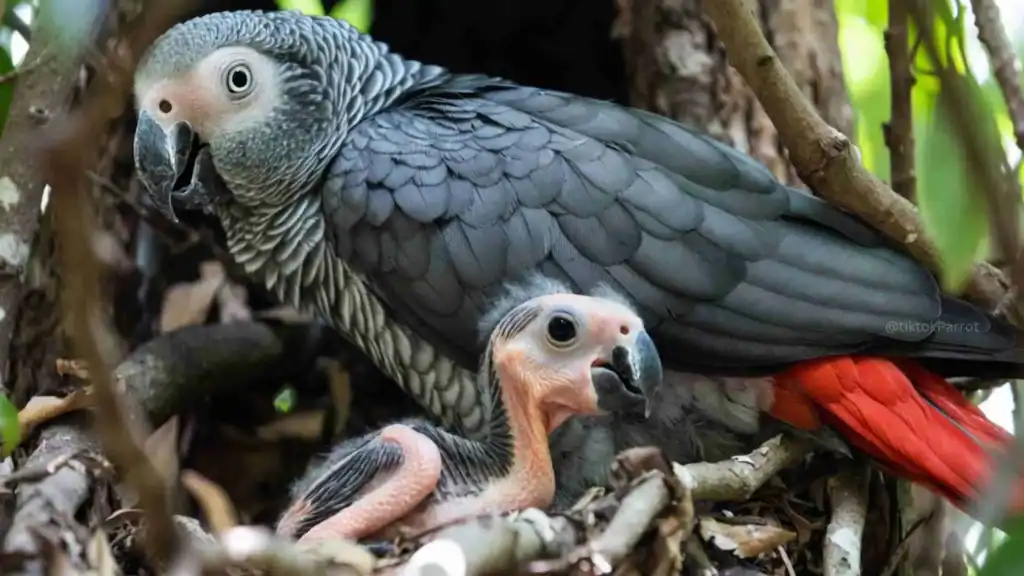
Taken together, the full picture in the wild looks something like this:
- 0–3 weeks: Nestling stage, complete dependence on parents in the nest
- 8–10 weeks: Fully feathered
- 10 weeks to 5 months: Fledging, with chicks leaving the nest but remaining closely tied to parents for guidance, protection, and continued feeding
- Several weeks to months post-fledging: Continued parental feeding and supervision while learning to forage independently
- Extended juvenile period: Even after becoming more independent, young African Greys often remain within the family or flock group, continuing to learn social behaviors and communication skills
Genetically speaking, this extended developmental timeline reflects just how much a Grey’s brain and behavioral repertoire needs to develop before true independence, considerably longer than many other parrot species, including some Amazon parrots, which mature roughly twice as fast.
Why This Matters for Pet Owners
Understanding a Young Bird’s Emotional Needs
Because African Greys are genetically wired for such an extended period of parental dependency, young birds separated from parents too early, or weaned too abruptly, can develop emotional and behavioral difficulties later in life, including issues like chronic begging, insecurity, or difficulty adjusting to new caregivers.
Why Some Baby Greys Bond Strongly With Other Birds
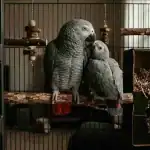
If a young Grey spends extended time with an older bird acting in a parental role, feeding or closely bonding with the chick, that older bird can genuinely become the chick’s primary attachment figure, similar to how it would view an actual parent.
This can make it considerably harder for the chick to bond with human caregivers, which is why breeders and experienced owners often recommend separating a young chick from an older, parent-acting bird if the goal is a strong human bond.
The Importance of Responsible Breeding Practices
Because African Grey chicks wean so slowly and individually, responsible breeders generally avoid rushing this process or selling birds as “fully weaned” before they’re truly ready. Chicks pushed into premature weaning can struggle to eat enough on their own, sometimes with serious health consequences, which is part of why buying from a reputable, transparent breeder matters so much when acquiring a young African Grey.
Common Mistakes People Make
- Assuming fledging means independence. Leaving the nest is just one step in a much longer process of continued parental support.
- Expecting weaning to happen on a fixed timeline. Individual chicks wean at their own pace, and forcing an early transition can cause lasting behavioral issues.
- Underestimating how long full independence takes. African Greys mature considerably slower than many other parrot species.
- Separating a chick from human caregivers by leaving it primarily with another bird. This can create a strong bond with that bird rather than with people, if human bonding is a priority.
- Buying a bird advertised as “weaned” without verifying with the breeder. Some birds are pushed into weaning prematurely, which can pose real health risks.
Frequently Asked Questions
How long do baby African Greys stay with their parents in the wild?
Chicks can remain in the nest for anywhere from about 10 weeks to as long as 5 months, and continue relying on parents for feeding and guidance for additional weeks after leaving the nest.
At what age do African Grey chicks start eating on their own?
Weaning typically begins around 12 weeks of age, after chicks have learned to fly, though the full process can continue for additional weeks or months depending on the individual bird.
Why do African Grey chicks take so long to become independent compared to other parrots?
African Greys have a naturally extended developmental timeline, believed to reflect the amount of time needed for their complex cognitive and behavioral development, considerably longer than faster-maturing species like many Amazon parrots.
Is it normal for a baby African Grey to resist weaning?
Yes, it’s commonly reported that African Grey chicks can be reluctant to transition to self-feeding, which is why gradual, unforced weaning is generally recommended.
Can a baby African Grey bond too strongly with another bird instead of a human?
Yes, if a chick spends significant time being fed and cared for by an older bird, it can form a strong attachment to that bird similar to a parental bond, potentially making human bonding more difficult.
Why is early or forced weaning risky for African Grey chicks?
Forcing weaning before a chick is ready can lead to insufficient food intake, health complications, and long-term behavioral or emotional issues in the adult bird.
How long should I wait before bringing home a baby African Grey?
Reputable breeders generally wait until a chick has been fully and gently weaned at its own pace, rather than selling birds prematurely, so timing varies by individual bird rather than a fixed age.
Conclusion
African Grey chicks remain dependent on their parents for a genuinely extended period, far longer than many people initially expect, spanning months of nest life, fledging, and a slow, individualized weaning process.
Understanding this timeline helps explain both the emotional needs of a young bird and why responsible, patient breeding practices matter so much. Whether you’re considering bringing home a young Grey or simply curious about their remarkable development, appreciating this extended parental bond offers real insight into the intelligent, socially complex birds African Greys grow up to become.
If this blog post has helped you, please share it with your family and friends who might also find it helpful. If you love African Greys, join our community of Grey owners! You can meet other owners, share tips and learn from each other.
Stay safe and much love!


Hey there! 🐾 Looking for top-notch pet supplies or anything on Amazon?
Support our site by shopping on Amazon through our this referral link, it will not cost you extra!
Your purchases on Amazon can help us continue providing valuable content.
Thank you for your support! 🛍️