If there’s one nutrient that African Grey parrot owners consistently underestimate, it’s calcium. These highly intelligent birds have a well-documented vulnerability to calcium deficiency — and the consequences can be serious, ranging from weak bones and seizures to life-threatening egg binding in females.
Getting calcium right isn’t just about sprinkling supplements on food and hoping for the best. It’s about building a diet that naturally delivers this essential mineral through foods your African Grey will actually eat and enjoy.
This guide covers the best calcium-rich foods for African Grey parrots, how to serve them effectively, and the common mistakes that prevent calcium from being properly absorbed.
Table of Contents
Why Calcium Is So Important for African Grey Parrots
African Greys are widely recognized in avian medicine as a species particularly prone to hypocalcemia — low blood calcium. This isn’t just a dietary quirk. Research and clinical observation have consistently shown that African Greys have a higher calcium requirement than many other parrot species, and they’re more susceptible to deficiency even when their diet appears adequate.
Calcium plays a critical role in:
- Bone strength and density — a deficiency leads to fragile bones that fracture easily.
- Muscle and nerve function — low calcium can trigger seizures, muscle tremors, and weakness.
- Feather health — chronic deficiency is linked to poor feather condition.
- Egg production — laying hens draw heavily on calcium reserves; without enough, egg binding can occur.
- Beak and nail development — calcium contributes to the integrity of keratin-rich structures.
Signs of calcium deficiency in African Greys include trembling, falling off perches, seizures, soft or deformed beaks, and lethargy. If you notice any of these symptoms, consult an avian veterinarian immediately — a blood panel can confirm calcium levels.
The Best Calcium-Rich Foods for African Grey Parrots
Leafy Green Vegetables
Dark leafy greens are among the most valuable calcium sources you can offer your African Grey. The key is choosing greens that are high in calcium but low in oxalic acid, a compound that binds to calcium and prevents absorption.
Best choices:
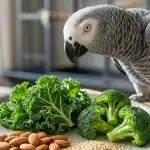
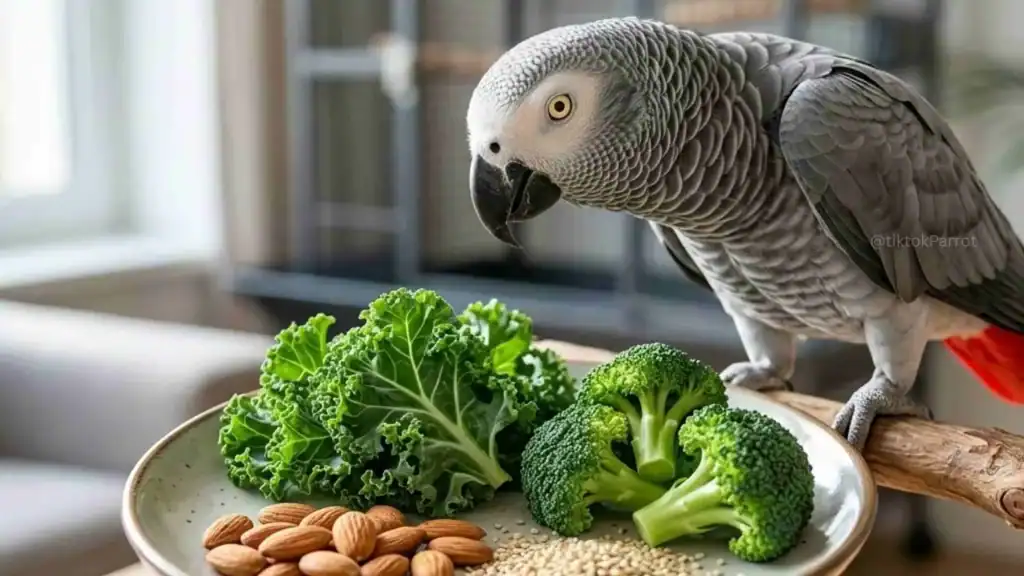
- Kale — one of the highest plant-based calcium sources available. Offer it raw or lightly steamed.
- Bok choy — mild flavor, high calcium, and low in oxalates. Many African Greys accept it readily.
- Collard greens — excellent calcium content with good bioavailability.
- Mustard greens — nutritious and often well-received by parrots who enjoy stronger flavors.
- Dandelion greens — often overlooked, but dandelion leaves are calcium-rich and make a great foraging addition.
Greens to limit: Spinach and beet greens are high in oxalic acid. While not harmful in small quantities, they should not form the bulk of your bird’s leafy green intake as they actively block calcium absorption.
Broccoli and Brassica Vegetables
Broccoli, cauliflower, and Brussels sprouts all provide useful calcium along with vitamins C and K. Broccoli in particular — including the florets and stems — is a favourite of many African Greys. Serve it raw or lightly steamed. The stems are especially good for beak exercise and enrichment.
Legumes and Cooked Beans
Cooked legumes such as chickpeas, lentils, black-eyed peas, and navy beans are surprisingly calcium-dense and offer an excellent protein boost alongside. Always cook legumes thoroughly — raw or soaked-only beans can contain harmful compounds. Cooked beans can be mashed, served whole, or mixed into a grain medley for variety.
Almonds and Sesame Seeds
Among nuts, almonds stand out for their calcium content. Offer them unsalted and unroasted, a few at a time. Sesame seeds are extraordinarily high in calcium — a small sprinkle over food goes a long way. Tahini (sesame paste, unsalted) can also be offered sparingly as a treat. These foods are calorie-dense, so moderation is important.
Fortified Pellets
High-quality formulated pellets are the dietary backbone recommended by most avian vets for African Greys, and reputable brands are specifically fortified with calcium and vitamin D3 — the vitamin essential for calcium absorption. If your African Grey is on a predominantly seed-based diet, transitioning to a pellet-inclusive diet is one of the single most impactful changes you can make for long-term calcium health.
Cuttlebone and Mineral Blocks
Cuttlebone is not a food in the traditional sense, but it is a time-tested and highly effective calcium supplement for parrots. Many African Greys will gnaw on cuttlebone at their own pace, self-regulating their intake. Mineral blocks serve a similar function and are especially valuable for breeding hens. Keep one available in the cage at all times.
Cooked Eggs (Including the Shell)
Cooked eggs — scrambled or hard-boiled without salt or butter — are a nutritious protein source that many African Greys love. The eggshell, baked at 180°C (350°F) for 10 minutes to sterilize it and then crumbled, is an excellent calcium supplement you can sprinkle over food. It’s a natural, bioavailable source your bird’s body recognizes easily.
Figs and Fortified Foods
Fresh or dried figs are among the most calcium-rich fruits available. Offer fresh figs when in season. Dried figs can also be given in small amounts, though they’re higher in sugar. A slice or two a few times a week is a tasty, calcium-boosting treat.
The Vitamin D3 Connection: Why Calcium Alone Isn’t Enough
Here’s where many well-intentioned African Grey owners go wrong: they load the diet with calcium-rich foods, but their bird still tests low. The reason is often vitamin D3 deficiency.
Vitamin D3 is essential for calcium absorption in the gut. Without it, calcium simply passes through the body unused. African Greys housed indoors with no access to natural, unfiltered sunlight are at particular risk of D3 deficiency.
Solutions:
- Provide access to natural sunlight through an open window or outdoor aviary time (glass filters UVB rays).
- Use a quality full-spectrum UVB bird lamp for 4–6 hours daily.
- Ensure pellets contain vitamin D3, or discuss supplementation with your avian vet.
Common Mistakes to Avoid
- Relying on seeds as the primary diet — seeds are low in calcium and high in fat. They are treats, not staples.
- Feeding spinach as the main green — its oxalate content blocks calcium absorption.
- Skipping D3 — calcium without D3 cannot be properly utilized.
- Over-supplementing without vet guidance — too much calcium, especially from supplements, can cause issues like kidney problems. Balance matters.
- Ignoring the laying hen — breeding females need significantly more calcium and should be monitored closely.
Frequently Asked Questions
What is the best calcium source for African Grey parrots?
Dark leafy greens like kale, bok choy, and collard greens are excellent natural sources. Cuttlebone and fortified pellets are also highly effective and should be part of every African Grey’s diet.
Can I give my African Grey dairy products for calcium?
Parrots are lactose intolerant and cannot digest dairy properly. Avoid milk, cheese, and yogurt. Plant-based and natural food sources are far safer and more appropriate.
How do I know if my African Grey is calcium deficient?
Common signs include trembling, muscle weakness, seizures, falling from perches, and soft beak or nails. An avian vet can confirm deficiency through a blood test.
Do African Grey parrots need calcium supplements?
Some do, particularly laying hens, birds recovering from illness, or those on poor diets. Always consult an avian vet before adding supplements — over-supplementation can also cause harm.
Does sunlight help African Greys absorb calcium?
Yes. Natural, unfiltered sunlight enables African Greys to synthesize vitamin D3, which is critical for calcium absorption. If outdoor access isn’t possible, a full-spectrum UVB bird lamp is a good alternative.
Conclusion
Calcium is not an optional extra in an African Grey’s diet — it is a foundational requirement for a healthy, long life. By regularly offering calcium-rich foods like kale, broccoli, cooked legumes, almonds, sesame seeds, and cuttlebone, and by ensuring adequate vitamin D3 through sunlight or full-spectrum lighting, you give your bird the building blocks it needs to thrive.
Small, consistent dietary choices made daily add up to a dramatic difference in your African Grey’s long-term health and vitality.
When in doubt, work with an avian veterinarian to assess your bird’s specific needs — especially if your hen is laying, your bird is older, or you’ve noticed any warning signs of deficiency.
If this blog post has helped you, please share it with your family and friends who might also find it helpful. If you love African Greys, join our community of Grey owners! You can meet other owners, share tips and learn from each other.
Stay safe and much love!


Hey there! 🐾 Looking for top-notch pet supplies or anything on Amazon?
Support our site by shopping on Amazon through our this referral link, it will not cost you extra!
Your purchases on Amazon can help us continue providing valuable content.
Thank you for your support! 🛍️