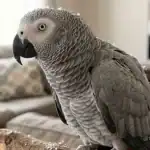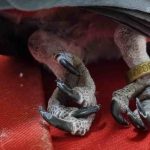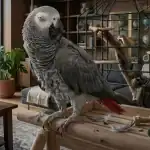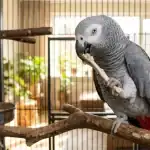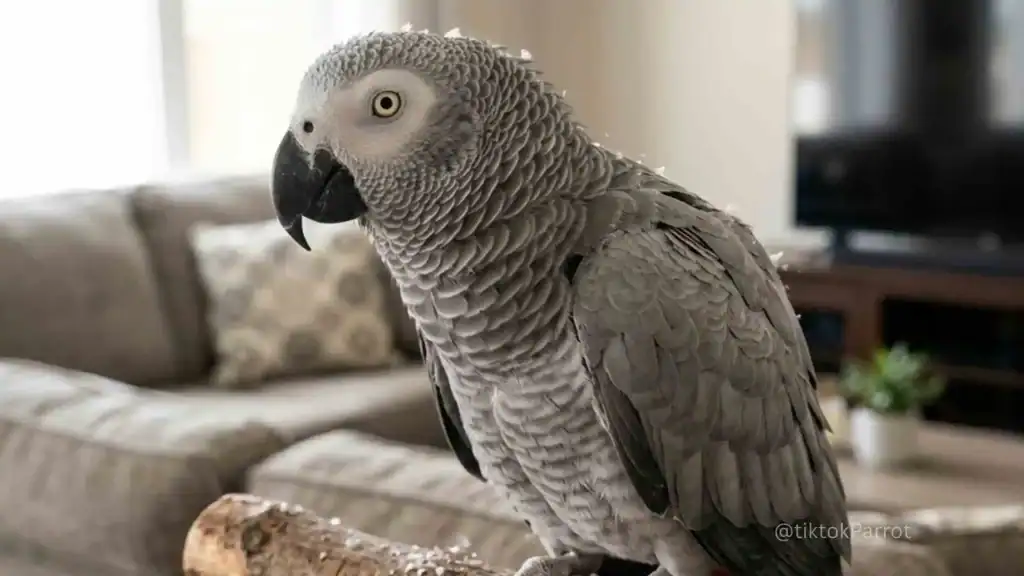
If you’ve noticed a fine white powder coating your furniture, settling on nearby surfaces, or visibly rising off your African Grey parrot when it flaps its wings or shakes its feathers, you’re not alone — and you’re not imagining things.
This white dust is one of the most distinctive features of owning an African Grey, and it often catches new owners completely off guard. The good news is that in most cases, this powder is entirely natural and actually a sign of a healthy bird. Here’s everything you need to know about it.
Table of Contents
What Is the White Dust on African Grey Parrots?
The white dust you see coming off your African Grey is called powder down. It is produced by specialized feathers located near the rump and lower body called powder down feathers. Unlike regular feathers, these unique feathers grow continuously and never fully develop — instead, they constantly disintegrate at the tips, releasing an ultra-fine keratin powder.
This powder is waxy in texture at a microscopic level but appears as a dry, chalky white dust to the naked eye. When your bird preens, shakes, or flaps, this powder disperses throughout the cage and surrounding area — coating perches, toys, cage bars, and every surface within reach.
African Greys are considered one of the heaviest powder-producing parrot species in the world. If you also own or have experience with cockatoos or cockatiels, you’ll recognize the phenomenon — these birds are also prolific powder producers. Eclectus parrots and most conures, by contrast, produce very little to none.
Is Powder Down Normal and Healthy?
Yes — absolutely. Powder down is a completely natural biological feature. In the wild, this powder serves several important purposes:
- Feather conditioning: The powder works its way through the plumage during preening, helping to keep feathers flexible, waterproof, and in good structural condition.
- Skin protection: The keratin particles help protect the skin beneath the feathers from moisture and minor abrasions.
- Plumage maintenance: It gives African Grey feathers that characteristic soft, slightly dusty sheen you often see in healthy birds.
A healthy African Grey will produce a consistent, moderate amount of powder down year-round. You may notice slightly more during molting season, when feather activity is at its highest.
When Does Powder Down Become a Concern?
While powder down is normal, a sudden increase or decrease in powder production can sometimes signal an underlying health issue worth investigating.
- Sudden dramatic increase: Could indicate a hormonal change, a nutritional issue, or in rare cases a feather disease. If it’s accompanied by feather abnormalities, it’s worth a vet visit.
- Absence of powder in a bird that previously produced it: This can sometimes be an early indicator of Psittacine Beak and Feather Disease (PBFD), a serious viral condition that affects feather development. Birds with PBFD often stop producing powder down before other symptoms become obvious.
- Excessively clumped or greasy-looking powder: Normal powder should be dry and fine. Greasy or clumped feathers alongside the dust may indicate a nutritional deficiency, particularly a lack of Vitamin A.
If you’re uncertain whether your bird’s powder production is within normal range, an avian vet can provide a straightforward assessment.
How Much White Dust Is Too Much?
This is highly subjective, but most African Grey owners learn to manage the dust as a routine part of ownership. Some birds naturally produce more than others. A bird in peak health during an active molt will produce noticeably more than one that is not molting.
What’s consistent across all healthy African Greys is that the powder will always be present. If you’re finding it on picture frames across the room or coating electronics several feet away, your Grey is likely just an enthusiastic shaker — this is personality-driven as much as anything else.
Living With Powder Down: Practical Tips for African Grey Owners
The white dust is harmless to your bird but can be a significant consideration for the humans (and other pets) in the home. Here’s how to manage it effectively:
1. Invest in a Good Air Purifier
A HEPA air purifier placed near your African Grey’s cage will dramatically reduce the amount of powder dust that circulates through your home. This is particularly important if anyone in the household has asthma, allergies, or respiratory sensitivities. Look for a purifier rated for pet dander and fine particles.
2. Wipe Down Surfaces Regularly
A damp microfiber cloth is the best tool for capturing powder dust from surfaces. Dry dusting tends to disperse it back into the air rather than removing it.
3. Mist Your Bird Regularly
Lightly misting your African Grey with clean, lukewarm water two to three times a week helps clump the loose powder on the feathers before it disperses into the air. Many Greys genuinely enjoy a light spray bath, and it encourages natural preening behavior.
4. Keep the Cage Area Well-Ventilated
Good airflow helps prevent powder from accumulating in dense concentrations. Avoid placing your bird in a poorly ventilated room or a closed space where the dust has nowhere to go.
5. Wash Your Hands After Handling
The powder is not harmful with brief skin contact, but people with sensitive skin or allergies may want to wash their hands after extended handling sessions.
6. Be Aware of Respiratory Sensitivities
African Greys are not an ideal companion bird for people with severe bird or dust allergies, asthma triggered by fine particles, or chronic respiratory conditions. If you have pre-existing respiratory concerns, discuss this with your doctor before bringing an African Grey into your home.
Can the White Dust Affect Other Pets?
In multi-pet households, the most relevant concern is other birds. The powder itself is not harmful, but the close proximity of different bird species always carries disease transmission risks that are unrelated to powder down. Keep different species appropriately separated and ensure all birds in the home are regularly health-checked.
For cats and dogs, powder down is generally a non-issue. It is not toxic and does not accumulate harmfully on fur. However, it can irritate sensitive dogs or cats who like to hang around the bird’s cage — watch for any sneezing or eye irritation and adjust accordingly.
Does Powder Down Mean My African Grey Is Unhealthy If It Smells?
Healthy powder down has a faint, chalky, earthy smell that most parrot owners find pleasant or neutral. If the powder or your bird’s feathers have a strong, unpleasant, or distinctly different odor, this is worth investigating. Yeast infections, bacterial skin conditions, or dietary issues can sometimes alter the natural scent of a bird’s feathers. An avian vet can rule out infections with a simple examination.
Frequently Asked Questions
Why does my African Grey parrot leave white powder everywhere?
African Greys are powder down birds — they naturally produce a fine keratin dust from specialized feathers that continuously break down. This powder conditions their plumage and is completely normal.
Is white dust from an African Grey dangerous to humans?
For most healthy adults, the dust poses no danger. However, people with respiratory conditions, bird allergies, or asthma may experience irritation. Using a HEPA air purifier and regular misting of your bird can help manage airborne dust levels.
Do all parrots produce white dust?
No. Only certain species produce significant powder down. African Greys, cockatoos, and cockatiels are the heaviest producers. Species like Eclectus parrots produce very little.
Should I bathe my African Grey to reduce the powder?
Regular misting two to three times a week is beneficial for both dust management and your bird’s feather health. Many African Greys enjoy a light spray bath. Avoid soaking the bird or using cold water.
Can no powder down on an African Grey be a warning sign?
Yes. A healthy African Grey always produces some powder. A sudden absence of powder down — especially alongside feather abnormalities — can be an early indicator of Psittacine Beak and Feather Disease (PBFD) and should be evaluated by an avian vet promptly.
Conclusion
The white dust coming off your African Grey parrot is powder down — a completely natural, healthy feature of this species. It conditions their feathers, protects their skin, and is one of the hallmarks of a thriving bird.
Managing it in your home is straightforward with a good air purifier, regular misting, and simple cleaning habits. The only time powder down warrants concern is when its production changes dramatically or stops entirely, which can be an early signal of a health issue worth investigating.
For everything in between, consider it part of the unique experience of sharing your life with one of the most intelligent birds on the planet.
If this blog post has helped you, please share it with your family and friends who might also find it helpful. If you love African Greys, join our community of Grey owners! You can meet other owners, share tips and learn from each other.
Stay safe and much love!


Hey there! 🐾 Looking for top-notch pet supplies or anything on Amazon?
Support our site by shopping on Amazon through our this referral link, it will not cost you extra!
Your purchases on Amazon can help us continue providing valuable content.
Thank you for your support! 🛍️