Whether you’re considering breeding a pair of African Greys or you’re simply noticing new, unfamiliar behaviors from your bird and wondering what’s going on, recognizing the signs of mating readiness is genuinely useful knowledge. African Greys communicate reproductive readiness through a fairly recognizable set of physical displays, vocalizations, and behavioral shifts, though context matters just as much as the signs themselves.
This guide covers the key indicators that an African Grey is ready to mate, what courtship and mating actually look like in this species, and important considerations before pursuing breeding.
Table of Contents
Sexual Maturity Comes First
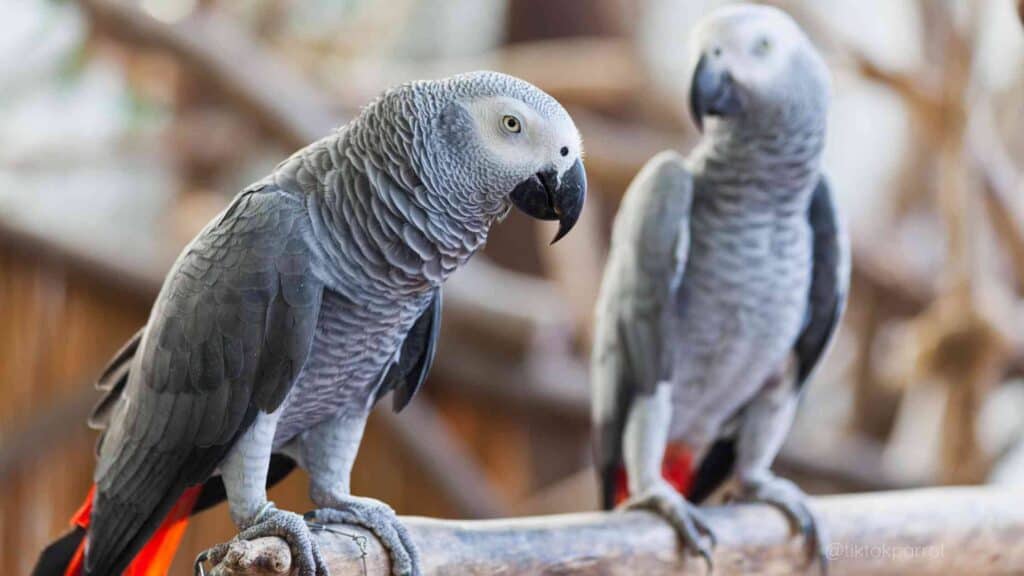
Before any of the behavioral signs below become relevant, it helps to know that African Greys generally don’t reach sexual maturity until somewhere between 3 and 5 years of age. Attempting to breed birds younger than this is generally discouraged, as younger birds tend to be less reliable breeders and parents.
If your bird is younger than this range, the behaviors described below are less likely to represent genuine breeding readiness and more likely reflect general hormonal fluctuations or exploratory behavior.
Physical and Postural Signs of Courtship
African Greys have a fairly distinctive breeding display that’s been documented by breeders and researchers alike. Signs to watch for include:
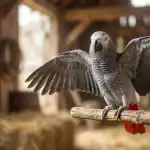
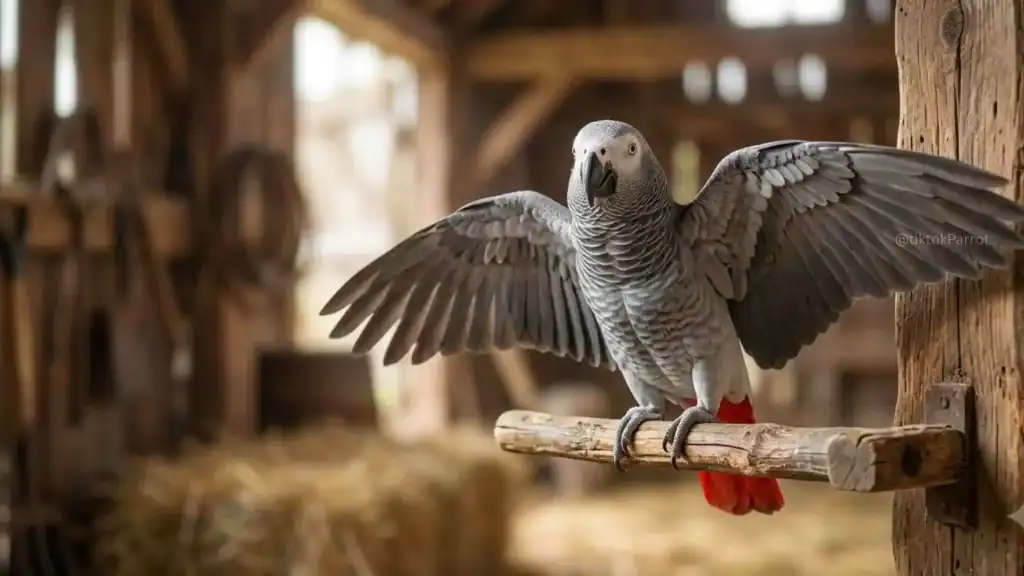
- Wing lowering and forward positioning. The male will lower his wings and bring them forward until the wing butts nearly touch, exposing the paler grey rump area.
- Wing pumping. A rhythmic wing motion that gives the impression of slow-motion flight.
- Flared body feathers. Feathers puffed outward as part of the overall display posture.
- Eye pinning. Rapid dilation and contraction of the pupils, often described as a clear sign of high arousal or emotional intensity, whether related to mating interest or excitement more generally.
Courtship Feeding: A Key Bonding Behavior
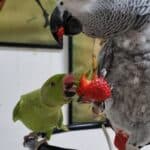
One of the most reliable signs of bonding and mating readiness in African Greys is courtship feeding, where one bird regurgitates food to offer to its partner. This behavior typically occurs before mating and reflects a strong pair bond. It’s worth noting that pet Greys sometimes direct this same regurgitation behavior toward their human owners as a sign of affection, which isn’t necessarily indicative of breeding readiness on its own, but does reflect the same underlying bonding instinct.
Vocal and Behavioral Changes
Hormonal shifts associated with breeding readiness often bring noticeable behavioral changes:
- Increased vocalization, including louder or more frequent calling, sometimes described as general screaming during peak hormonal periods
- Mutual preening, particularly around the head and neck, where reaching one’s own feathers isn’t possible
- Sitting closely together for extended periods, a sign of intensified pair bonding
- Increased territoriality, including protectiveness over a cage, favorite toys, or a particular person
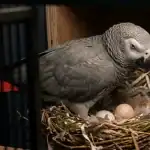
- Nesting behaviors, such as shredding paper, cardboard, or other materials to create a nest-like environment
- Seeking out dark, enclosed spaces, like tucking into a box, corner, or hidden area of the room
The Actual Mating Process
When a bonded pair is ready to mate, the process generally follows a fairly consistent pattern documented in African Greys:
- The hen crouches low on the perch, signaling readiness
- The male mounts either from the top, stepping onto the hen’s back, or from the side, keeping one foot on the perch
- Switching sides during mating isn’t uncommon, with the male stepping over the female partway through
- During copulation, the female often produces a series of grunting sounds not typically heard at other times
Some variation in positioning (top versus side mounting) has been observed depending on the specific bird’s background, so slight differences between individual pairs are considered normal.
Environmental Triggers That Encourage Mating Readiness
In the wild, breeding tends to align with seasonal cues, most notably increased daylight hours and the dry season. In a home environment, several factors can trigger similar hormonal responses, sometimes unintentionally:
- Extended artificial light exposure. Lights left on for many hours a day can mimic an eternal “breeding season” signal.
- Abundant food availability. A consistently full food dish can signal environmental abundance associated with ideal breeding conditions.
- Physical affection in certain areas. Petting along the back, under the wings, or near the tail can stimulate courtship-related hormones, sometimes unintentionally encouraging behaviors associated with mating readiness even without an actual mate present.
- Nesting-like hideaways. Dark, enclosed spaces like boxes or covered corners can encourage nesting behavior.
For owners not intending to breed, being aware of these triggers can help manage unwanted hormonal behavior, while for those pursuing breeding, replicating some of these conditions intentionally, alongside proper avian veterinary guidance, is part of typical breeding setup.
Important Considerations Before Breeding
- Health screening matters. Both birds should be examined by an avian vet and confirmed free of disease before breeding is attempted.
- A strong existing bond is essential. Courtship behaviors like mutual preening and courtship feeding are good indicators that a pair has developed the kind of bond conducive to successful breeding, rather than simply placing two birds together and expecting compatibility.
- Breeding isn’t guaranteed even with willing birds. Some pairs simply aren’t compatible, regardless of displaying individual mating-readiness behaviors.
- Not every hormonal display means true breeding readiness. Behaviors like increased vocalization, territoriality, or feather plucking can also occur during hormonal seasonal shifts without an actual mate present, and shouldn’t automatically be interpreted as breeding-specific signals in a solo pet bird.
When Hormonal Behavior Isn’t About an Actual Mate
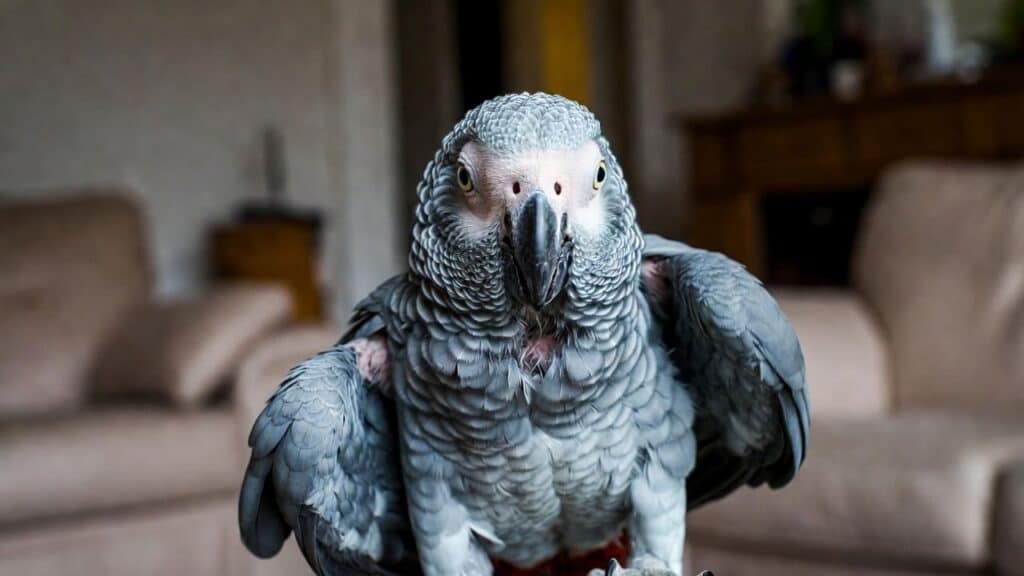
It’s worth understanding that a solo pet African Grey without a companion bird can still display many of these same hormonal behaviors, increased vocalization, nesting behavior, territoriality, or even courtship feeding directed at an owner, without this indicating genuine breeding readiness toward another bird.
In these cases, the behaviors reflect normal hormonal cycling rather than a specific readiness to mate, and management typically focuses on adjusting light exposure, diet, and physical affection patterns rather than pursuing breeding.
Common Mistakes Owners Make
- Assuming young birds displaying hormonal behavior are ready to breed. True breeding readiness generally requires reaching sexual maturity, around 3 to 5 years of age.
- Interpreting general hormonal behavior in a solo bird as mate-directed readiness. Many of these signs can occur without an actual breeding partner present.
- Placing two birds together without an established bond. Courtship behaviors like mutual preening and courtship feeding are better indicators of true compatibility than simple physical proximity.
- Overlooking environmental triggers. Artificial lighting and constant food abundance can create a near-permanent hormonal state that complicates reading genuine breeding readiness.
- Skipping veterinary health checks before breeding. Both birds should be confirmed healthy before any breeding attempt.
Frequently Asked Questions
At what age is an African Grey ready to mate?
African Greys generally reach sexual maturity between 3 and 5 years of age, and breeding is typically discouraged before this point.
What is the clearest sign that a pair of African Greys is bonded and ready to breed?
Courtship feeding, where one bird regurgitates food for its partner, along with mutual preening and sitting closely together, are strong indicators of a bond suited to breeding.
What does the African Grey mating display look like?
The male typically lowers and brings his wings forward, exposing the paler rump, along with wing pumping and flared body feathers, as part of a distinctive courtship display.
Can a single pet African Grey show mating behaviors without a mate?
Yes, solo birds can display hormonal behaviors like increased vocalization, nesting, and even courtship feeding directed at an owner, without this reflecting genuine mate-directed breeding readiness.
What environmental factors can trigger mating-related hormonal behavior?
Extended artificial lighting, abundant food availability, and physical affection in certain areas can all mimic natural breeding season cues, even indoors.
Should I have my birds checked by a vet before attempting to breed them?
Yes, both birds should be examined and confirmed healthy by an avian vet before any breeding attempt.
Does displaying courtship behavior guarantee successful breeding?
No, even bonded pairs showing clear courtship signs aren’t guaranteed to breed successfully, as compatibility and health both play significant roles.
Conclusion
Recognizing when an African Grey is ready to mate comes down to watching for a combination of physical displays, courtship feeding, and behavioral shifts, all set against the context of the bird’s age and existing bond with a potential mate.
Because many of these same hormonal behaviors can appear in solo pet birds without an actual mate present, understanding the fuller picture, age, bonding, and environmental triggers together, gives owners a much clearer read on what’s actually happening with their bird.
If this blog post has helped you, please share it with your family and friends who might also find it helpful. If you love African Greys, join our community of Grey owners! You can meet other owners, share tips and learn from each other.
Stay safe and much love!


Hey there! 🐾 Looking for top-notch pet supplies or anything on Amazon?
Support our site by shopping on Amazon through our this referral link, it will not cost you extra!
Your purchases on Amazon can help us continue providing valuable content.
Thank you for your support! 🛍️