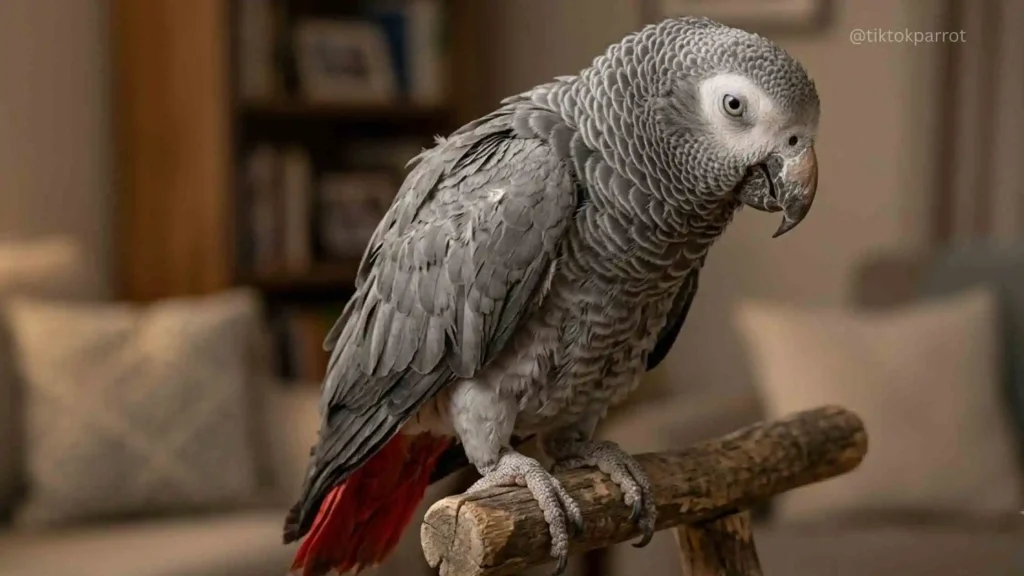
African Grey parrots are among the longest-lived companion birds on the planet. In captivity, a well-cared-for African Grey can reach 50 to 60 years of age — and some have been documented living even longer. That remarkable lifespan is one of the reasons so many people fall deeply in love with this species. But it also means that at some point, every African Grey owner will face the experience of caring for an aging bird.
Knowing the signs of aging in your African Grey isn’t about preparing for the worst — it’s about providing the best possible care at every stage of life. A senior parrot has different needs than a young bird, and the sooner you recognize those changes, the better equipped you’ll be to support your companion through their golden years.
Table of Contents
When Does an African Grey Parrot Become “Old”?
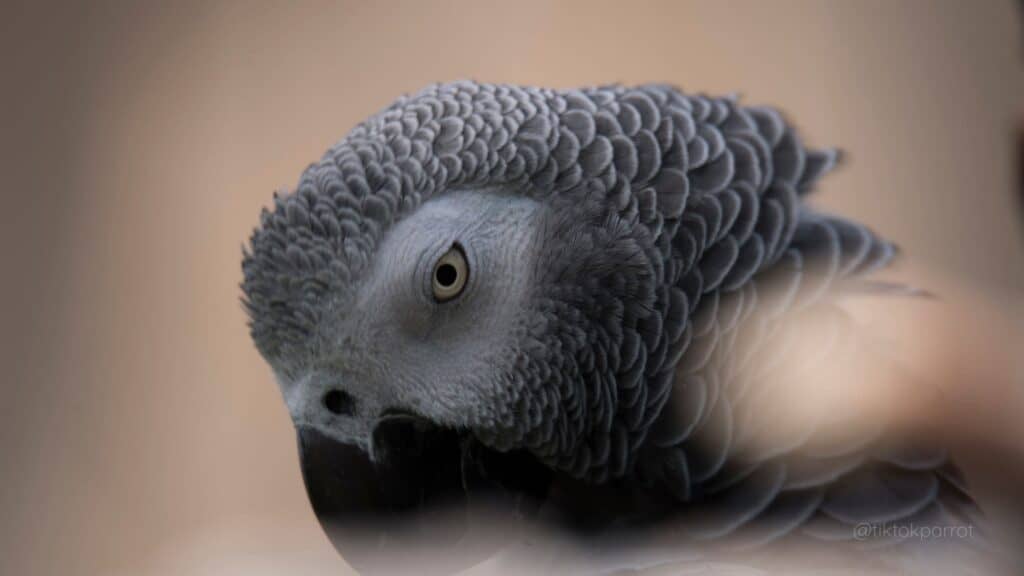
African Greys don’t follow a neat calendar when it comes to aging. Generally speaking, birds in the range of 20 to 30 years may begin showing the first subtle signs of middle age, while those 30 years and beyond are considered senior birds. By the time an African Grey reaches 40 or 50, the changes become more visible and require more attentive management.
This is very different from what you’d see with a dog or cat, where old age arrives in years rather than decades. The long timeline is part of what makes African Grey ownership such a profound, lifelong commitment.
Physical Signs of Aging in African Grey Parrots
Changes in Feather Quality
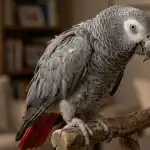
One of the earliest and most noticeable physical signs of aging is a change in feather condition. Young African Greys have rich, tight plumage — their grey feathers appear smooth and uniform, and their iconic red tail is vivid. As birds age, feathers may become:
- Duller in color, with less contrast between grey and white
- Looser in texture, with slight fraying at the edges of flight feathers
- Slower to regrow after molting
- Unevenly pigmented in some older birds, with occasional white or pale feathers appearing where grey ones used to be
content to help visitors (and search engines) understand the structure of
These changes are gradual and not always obvious year to year, but over time they become a reliable indicator of age.
Weight Changes and Muscle Loss
Older African Greys often experience subtle but important changes in body composition. Muscle mass can decrease with age, particularly in the pectoral muscles (chest). When you gently feel your bird’s keel bone — the ridge running down the center of the chest — a more prominent keel with less surrounding muscle can indicate age-related muscle wasting.
Some senior birds also struggle to maintain weight, even with a good diet. Regular weigh-ins on a gram scale are valuable at every life stage, but become especially important once your Grey enters their senior years.
Reduced Activity and Slower Movement
A bird that once climbed vigorously from perch to perch may gradually become more deliberate in its movements. You might notice:
- More time spent sitting still in one spot
- Less enthusiasm for climbing or flying within the cage
- A preference for lower perches that require less effort to reach
- Slower, more cautious movement on perches and ladders
This isn’t necessarily cause for alarm — it mirrors the natural slowing down that happens with age in most animals. However, a sudden dramatic drop in activity can indicate illness rather than normal aging, and always warrants a vet visit.
Eye Changes
The eyes of an aging African Grey may appear slightly less bright than those of a young bird. Some older Greys develop a mild cloudiness or haziness in one or both eyes, which may indicate the early stages of cataracts. Vision decline in senior parrots is not uncommon and can affect how they navigate their environment.
If you notice your Grey startling more easily, misjudging distances when stepping onto your hand, or becoming hesitant in low light, reduced vision may be a contributing factor.
Beak and Nail Changes
As African Greys age, their beak may grow more slowly or, in some cases, develop slight irregularities in shape or texture. Nails can become thicker and more brittle, requiring more frequent trimming and careful attention to avoid cracking or splitting.
Behavioral Signs of Aging in African Grey Parrots
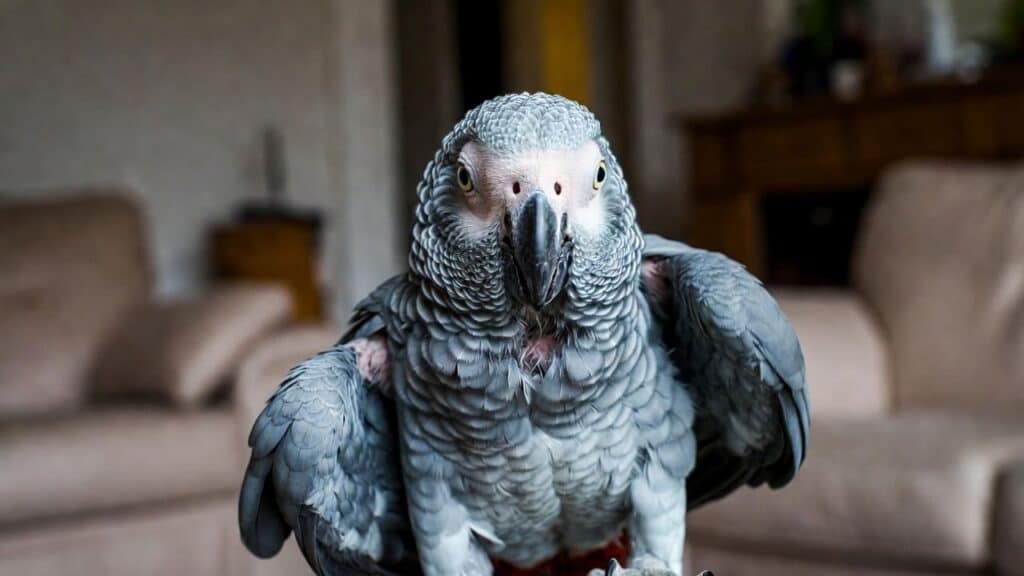
Changes in Vocalization
African Greys are famously vocal birds, and changes in their speech and sounds can reflect aging. Older Greys may:
- Speak or mimic less frequently than they once did
- Have a slightly altered voice quality, often sounding raspier or softer
- Repeat familiar phrases more and learn new ones less readily
- Become less reactive to household sounds and conversations
Cognitive decline in very old birds can also affect communication patterns. Some senior Greys repeat phrases out of context more often — something owners sometimes notice as a gentle shift from intentional communication to habitual vocalization.
Increased Sleep and Rest
Senior African Greys sleep more than younger birds. While a healthy adult Grey typically needs 10 to 12 hours of sleep at night, an aging bird may nap more during the day and be slower to “wake up” in the morning. If your Grey is sleeping more but still eating, interacting, and preening normally, increased rest is likely just a sign of aging.
However, if excessive sleep is paired with fluffed feathers, loss of appetite, or disorientation, these are warning signs of illness rather than normal aging.
Personality Shifts
Long-time owners often describe their senior Greys as calmer and more settled than their younger selves. The feisty, mischievous energy of a young African Grey tends to mellow with age. Many owners find this shift deeply endearing — their bird becomes a more contemplative, steady companion.
That said, some senior birds become more anxious or clingy, particularly if their eyesight or hearing has declined. They may seek more reassurance from their primary caregiver and become unsettled by changes in routine.
Health Conditions More Common in Senior African Greys

Aging birds are more susceptible to certain health conditions. Regular veterinary check-ups — at least once a year, ideally twice for senior birds — become even more important as your Grey gets older. Watch for signs of:
- Arthritis: stiffness, reluctance to grip perches firmly, or swollen joints
- Kidney disease: increased thirst, changes in droppings, or weight loss
- Liver issues: discolored feathers, yellowing around the vent, or lethargy
- Respiratory changes: subtle changes in breathing rate or effort
- Nutritional deficiencies: more likely as digestive efficiency decreases with age
Bloodwork and imaging at annual vet visits can catch many of these conditions early, when they are most manageable.
How to Support an Aging African Grey
Caring for a senior Grey means adapting their environment and routine to suit their changing needs:
- Lower perch placement — make sure the lowest perch is easy to reach in case climbing becomes difficult.
- Softer perches — add rope or cushioned perches to reduce pressure on aging feet and joints.
- Warmth — older birds are more sensitive to cold; keep their environment consistently warm and draft-free.
- Nutrient-rich diet — consult your avian vet about age-appropriate dietary adjustments, including calcium and vitamin supplementation.
- Consistent routine — senior Greys thrive on predictability; minimize disruptions to their daily schedule.
- Increased vet visits — move from annual to bi-annual check-ups once your bird reaches senior status.
Frequently Asked Questions
What age is considered old for an African Grey parrot?
African Greys are generally considered middle-aged around 20 to 30 years and senior at 30 years and beyond. Birds over 40 are in their advanced senior years and benefit from more specialized care.
Do African Grey parrots get grey feathers as they age?
African Greys are naturally grey, but aging can cause feathers to appear duller, less uniform, or occasionally lighter than before. Feather regrowth also slows with age.
Can an old African Grey parrot still learn new words?
Older Greys can still learn, but their pace typically slows with age. Many senior birds rely more on their established vocabulary rather than picking up new phrases.
How can I tell if my African Grey is aging or sick?
Gradual, slow changes over months or years often point to normal aging. Sudden changes — in appetite, droppings, activity level, or behavior — are more likely signs of illness and should be assessed by an avian vet promptly.
How long do African Grey parrots live in captivity?
With excellent care, African Grey parrots can live 50 to 60 years in captivity. Some exceptional individuals have been documented living even longer.
Conclusion
Watching your African Grey grow older is a privilege that not every pet owner gets to experience — it means you’ve provided decades of excellent care. The signs of aging in African Greys are subtle at first: slightly duller feathers, more sleep, calmer behavior, slower movement. Over time, they become more pronounced and call for thoughtful adjustments in diet, environment, and veterinary care.
The most important thing you can do for your senior Grey is stay observant, stay connected with your avian vet, and continue providing the stable, loving routine these intelligent birds depend on. With the right support, your African Grey’s senior years can be among the most rewarding of your shared life together.
If you enjoyed this blog, we’d truly appreciate it if you shared it with your family and friends who might find it helpful too. And if you love African Greys, we’d love to have you join our community of Grey owners! Connect with fellow enthusiasts, share your experiences and tips, ask questions, and learn from one another as we celebrate these amazing birds together.
Stay safe and much love!


Hey there! 🐾 Looking for top-notch pet supplies or anything on Amazon?
Support our site by shopping on Amazon through our this referral link, it will not cost you extra!
Your purchases on Amazon can help us continue providing valuable content.
Thank you for your support! 🛍️