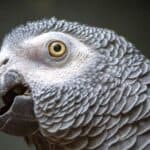
If you’ve ever watched your African Grey parrot panic at night — thrashing around the cage, calling out in alarm, or sitting frozen on its perch — you’ve probably wondered: can African Greys actually see in the dark? Or are these intelligent birds just as blind as we are once the lights go out? The answer involves some fascinating bird biology, and understanding it can genuinely improve how you care for your parrot at night.
Table of Contents
How Bird Vision Works

Before diving into what African Greys can and can’t see after dark, it helps to understand how bird eyes work compared to human eyes.
Birds have remarkably sophisticated visual systems. Their eyes are proportionally enormous compared to their skull size, and most species have a much higher density of photoreceptor cells than humans. There are two main types of photoreceptors: cones, which process color and fine detail in bright light, and rods, which detect low-light movement and shapes.
Humans are heavily cone-dominant during the day, but our rods take over in low light — which is why we can navigate a dark room after our eyes adjust. Birds like hawks and eagles have exceptional daytime vision. But the story changes considerably for parrots.
Can African Grey Parrots See in the Dark?
The short answer is: no, not well at all.
African Grey parrots are diurnal birds, meaning they are naturally active during daylight hours. Their eyes are highly optimized for bright, tropical light — which makes perfect sense given their native habitat in the dense rainforests of Central and West Africa, where they spend their days foraging, socializing, and scanning for predators.
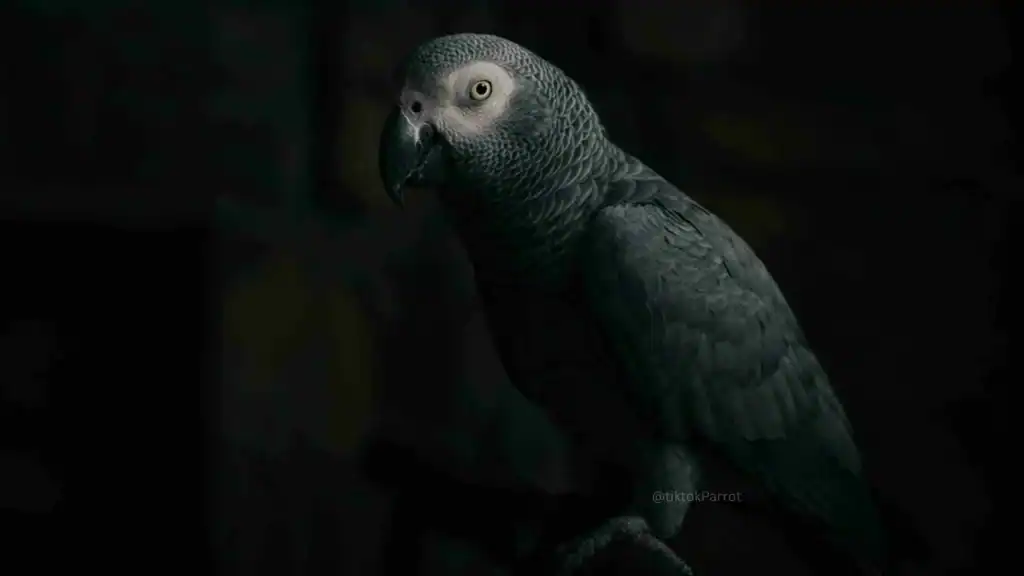
Unlike owls, which have a high rod-to-cone ratio that makes them exceptional night hunters, African Greys have relatively few rod cells. Their visual system simply isn’t built for darkness. Once the light drops significantly, an African Grey’s vision becomes quite poor, and they can easily become disoriented.
This is why African Grey owners frequently report night frights — a sudden burst of panicked flapping and crashing around the cage that happens in the middle of the night. Something as minor as a car headlight sweeping across the ceiling, a shadow passing the window, or an unfamiliar sound can startle a Grey that cannot see clearly enough to orient itself. Unable to identify the threat or find its footing, the bird panics.
Understanding Night Frights in African Grey Parrots
Night frights are more than just a nuisance — they can be genuinely dangerous. A bird that thrashes around in a dark cage can injure its wings, break feathers, damage its feet on the bars, or even go into shock. African Greys, already known for being highly sensitive and somewhat nervous by nature, can be especially prone to this.
What Triggers Night Frights?
- Sudden flashes of light (car headlights, lightning)
- Shadows moving across the room
- Loud or unexpected noises
- A change in the environment they can’t investigate visually
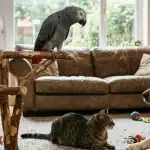
- Other pets moving nearby (cats are a common culprit)
How to Reduce Night Frights
The most effective tool is a night light. A dim, stable light source — such as a small LED nightlight in the corner of the room — gives your Grey just enough visual information to orient itself if something startles it. It doesn’t need to be bright; in fact, it shouldn’t be, or it will disrupt your bird’s sleep cycle. The goal is simply to prevent total darkness.
Other helpful steps include:
- Using a cage cover — a good cover muffles sound and blocks sudden flashes of light, creating a more stable environment
- Placing the cage away from windows — this reduces exposure to car headlights, passing animals, and moonlight fluctuations
- Keeping a consistent evening routine — African Greys thrive on predictability; erratic schedules increase stress
- Removing perches near the top of the cage at night — if your bird falls, it’s safer to fall from a lower height
Do African Greys Need Complete Darkness to Sleep?
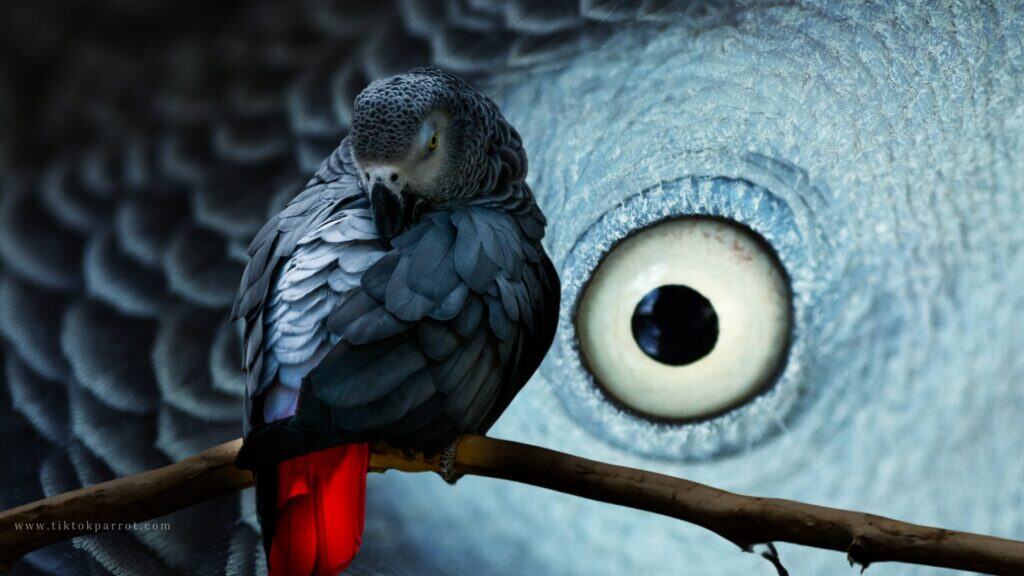
Not necessarily, but they do need consistent, appropriate darkness to get quality sleep. African Greys need around 10 to 12 hours of sleep per night. Irregular light exposure — such as staying up late in a brightly lit living room or being exposed to artificial light for too many hours — can disrupt their circadian rhythm, leading to chronic sleep deprivation.
Sleep-deprived African Greys can develop behavioral issues including feather destructive behavior, excessive screaming, aggression, and even immune suppression over time. So while complete pitch darkness isn’t mandatory and a dim night light is fine, what matters most is regularity and duration.
The Importance of a Sleep Routine
Many experienced African Grey owners have a dedicated “bird room” or simply cover the cage at the same time every evening. This consistent signal — the light going dark at a predictable hour — helps regulate your Grey’s internal clock, which in turn supports better mood, health, and behavior during the day.
Can African Greys See Ultraviolet Light?
Here’s where African Greys actually have a visual advantage over humans: like most parrots, they can see into the ultraviolet (UV) spectrum. Humans see in three color channels (red, green, blue); many birds, including African Greys, have a fourth channel that extends into UV wavelengths.
This means their experience of color is far richer than ours — feathers that look plain to us may shimmer with complex UV patterns that are visible to other birds. This UV vision plays a role in mate recognition, food selection, and social communication.
However, this UV capability doesn’t help at all in the dark. UV vision still requires light — it just expands the range of visible light wavelengths, not the ability to see without light.
Practical Tips for African Grey Owners
Understanding your Grey’s visual limitations at night leads to some concrete, practical improvements in how you manage their environment:
- Install a dim nightlight in the same room as your parrot to prevent disorienting darkness.
- Use a breathable cage cover every night at a consistent time.
- Position the cage away from windows to minimize light fluctuations and shadows.
- Ensure 10–12 hours of darkness each night for adequate rest.
- Keep cats and other pets out of the room during sleeping hours to prevent startling noises or movement.
- If night frights are frequent, consider a bird-safe UV/full-spectrum light during the day to ensure your Grey gets sufficient light exposure and maintains a healthy rhythm.
Frequently Asked Questions
Can African Grey parrots see in the dark?
No. African Greys are diurnal birds with vision optimized for daylight. Their eyes have relatively few rod cells, making them poorly equipped for low-light or dark conditions. Total darkness can cause disorientation and night frights.
Why does my African Grey panic at night?
Night frights are caused by sudden sensory triggers — a flash of light, a shadow, or a noise — in an environment where your Grey cannot see well enough to orient itself. A dim nightlight and a cage cover significantly reduce their frequency.
Should I leave a light on for my African Grey at night?
A very dim nightlight is beneficial, especially if your bird is prone to night frights. It should be just bright enough for your bird to see its surroundings without disrupting their sleep cycle.
How many hours of sleep does an African Grey parrot need?
African Greys need approximately 10 to 12 hours of sleep per night. Consistent, predictable dark periods are essential for their physical and mental health.
Do African Grey parrots have good eyesight overall?
Yes — in daylight, African Greys have excellent vision, including the ability to see ultraviolet light. Their vision is highly adapted for their natural foraging and social life in the wild. It’s specifically nighttime and low-light conditions where their vision is limited.
Conclusion
African Grey parrots cannot see well in the dark. As diurnal birds built for bright tropical environments, their eyes are optimized for daylight, and darkness can cause genuine distress and disorientation.
Night frights are a real risk, and creating a safe, stable sleep environment — with a dim nightlight, a consistent routine, and a proper cage cover — is one of the most important things you can do for your Grey’s wellbeing. Brilliant eyesight during the day, vulnerable at night: understanding this balance is key to keeping your African Grey healthy, calm, and well-rested.
If this blog post has helped you, please share it with your family and friends who might also find it helpful. If you love African Greys, join our community of Grey owners! You can meet other owners, share tips and learn from each other.
Stay safe and much love!


Hey there! 🐾 Looking for top-notch pet supplies or anything on Amazon?
Support our site by shopping on Amazon through our this referral link, it will not cost you extra!
Your purchases on Amazon can help us continue providing valuable content.
Thank you for your support! 🛍️