Breeding African Grey parrots is not something you stumble into lightly. Unlike keeping a single pet Grey, successfully raising chicks requires a level of commitment, knowledge, and preparation that goes far beyond everyday bird care.
Yet for experienced owners who have done their homework, the process can be one of the most rewarding experiences in aviculture — watching two bonded birds raise their young, or hand-rearing chicks yourself from just days old, is genuinely extraordinary.
This guide is written for owners who are serious about understanding what responsible home breeding actually looks like: the biology, the setup, the ethics, and the realities beginners often don’t see coming.
Table of Contents
Is Home Breeding Right for You?

Before any nest box goes up, the first question is an honest one: why do you want to breed your African Greys?
Breeding for the right reasons matters. Responsible breeders aim to produce well-socialized, healthy birds, to preserve genetic diversity, and to meet genuine demand from knowledgeable owners. Breeding to generate income quickly, to “see what happens,” or because you have a spare cage is a path that frequently leads to poorly socialized chicks, overwhelmed owners, and birds that end up rehomed within a year.
Ask yourself: Do you have the time to hand-rear if the parents abandon the clutch? Do you have a trusted avian vet? Do you already have buyers or placement plans for chicks you can’t keep? If the honest answer to any of these is no, it’s worth waiting until you do.
Understanding Pair Bonding in African Greys
African Greys are monogamous birds that form deep, long-term pair bonds in the wild. In captivity, forcing two birds together and expecting them to breed is a recipe for failure — and sometimes injury.
Finding a Compatible Pair
True compatibility takes time to assess. Introducing two adult African Greys requires patience and a gradual approach:
- House them near each other first, in adjacent but separate cages, for several weeks. Watch for mutual interest — preening through bars, moving toward each other, calling back and forth.
- Move to supervised shared time in a neutral space before introducing them to a shared enclosure.
- Watch for aggression, particularly from the male. Biting, feather-pulling, or one bird consistently chasing the other are signs the pairing is not working.
Pair bonding can take months or even over a year with adult Greys. Rushing it often results in a stressed, suppressed female who may lay but fail to incubate, or worse, become physically harmed by an incompatible male.
DNA Sexing
Visual sexing of African Greys is unreliable. Both males and females look nearly identical. Before attempting to breed, have both birds professionally DNA sexed through a blood sample or feather test. Assuming sex based on behavior or appearance is a common and costly mistake.
Setting Up the Breeding Environment
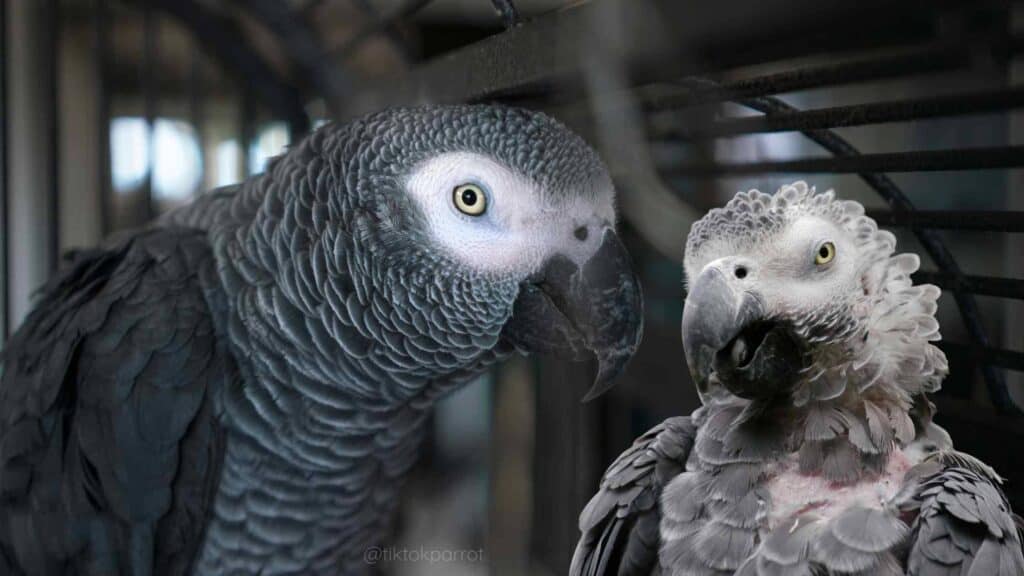
African Greys in captivity need specific conditions before they’ll feel secure enough to breed.
The Enclosure
A breeding pair needs significantly more space than a single pet bird. A flight cage of at least 120 cm x 60 cm x 150 cm (approximately 4 ft x 2 ft x 5 ft) is a reasonable minimum, though larger is always better. The pair should have space to move away from each other — constant forced proximity creates stress.
The Nest Box
The nest box is central to the breeding setup. African Greys are cavity nesters, and they prefer a wooden box with a small, round entrance hole. A common size is approximately 30 cm x 30 cm x 60 cm (12″ x 12″ x 24″), positioned high in the enclosure. Line the base with soft wood shavings or a cork layer — not cedar, which releases aromatic oils harmful to birds.
Only introduce the nest box when you are genuinely ready to allow breeding. Leaving it in the cage year-round encourages chronic egg-laying and hormonal behavior outside of the appropriate season.
Light and Temperature
Breeding in African Greys is strongly influenced by day length. Gradually increasing light exposure — mimicking the lengthening days of spring — helps trigger breeding readiness. Aim for 12 to 14 hours of light during the breeding season, reducing to 10 to 12 hours outside of it. Stable temperatures between 20–26°C (68–79°F) are ideal.
The Incubation Process
Once eggs are laid, incubation begins — and this is where things get either fascinating or stressful, depending on how prepared you are.
Parent Incubation vs. Artificial Incubation
In a well-bonded, experienced pair, both parents typically share incubation duties over the 28 to 30 day incubation period. The female usually sits overnight; the male may spell her during the day. This is the ideal scenario — parent-raised chicks develop strong behavioral foundations.
However, first-time breeding pairs often abandon eggs or fail to incubate consistently. If you notice eggs left unattended or the hen showing no interest after 48 to 72 hours, you may need to intervene with an incubator.
Artificial incubation settings:
- Temperature: 37.2°C (99°F)
- Humidity: 50–60%, rising to around 70% in the final three days before hatching
- Egg turning: At least 3 to 5 times daily (automatic incubators handle this)
Candling eggs at days 7 and 14 reveals whether development is occurring. A fertile egg will show a web of blood vessels and a darkening mass; an infertile egg remains clear.
The First 72 Hours After Hatching
Newly hatched African Grey chicks are blind, nearly featherless, and entirely dependent. If parent-rearing, resist the urge to interfere unless there is a clear problem — abandonment, injury, or failure to feed. Parents typically begin feeding within a few hours of hatching.
If hand-rearing, feeding begins within 12 hours of hatching using a specialized formula designed for parrot chicks. The frequency starts at every 2 hours around the clock and gradually decreases as the chick grows. Hand-rearing is deeply rewarding but genuinely exhausting — this is not a part-time commitment.
The Ethics of Breeding African Greys
This section matters, and it deserves honest attention.
Wild Population Pressure
African Grey parrots are listed as Endangered on the IUCN Red List. While captive breeding does not directly harm wild populations, it exists within a broader context of decades of trapping and habitat loss. Responsible captive breeders keep meticulous records, avoid inbreeding, and ideally register with national or regional avicultural societies that track breeding programs.
The Overpopulation Risk
Parrots live a very long time. An African Grey bred today may live for 50 to 60 years. The rescue and rehoming community is already strained. Breeding without a clear plan for where chicks will go — and who will care for them for their entire lives — adds to this pressure.
Socialization Obligations
Chicks that are poorly socialized, prematurely weaned, or inadequately handled become difficult, fearful, or aggressive adults who are nearly impossible to rehome. If you breed, you are responsible for producing birds that are mentally healthy and prepared for life with a human family.
Common Challenges First-Time Breeders Face
Even with thorough preparation, home breeding rarely goes exactly to plan. Here are the issues most breeders encounter:
- Pair incompatibility despite months of introduction — sometimes a pair simply won’t bond.
- Egg abandonment by first-time parents with no experience sitting a clutch.
- Egg binding in the female, which is a veterinary emergency requiring immediate attention.
- Failure to feed chicks, requiring the owner to step in with hand-rearing.
- Chick aspiration during hand-feeding from incorrect formula temperature or technique.
- Behavioral regression in the breeding male, who may become territorial and bite.
None of these challenges are reasons not to breed — but they are reasons to have an avian vet on speed dial and a backup plan ready before the first egg appears.
Frequently Asked Questions
At what age can African Grey parrots start breeding?
African Greys typically reach sexual maturity between 3 and 5 years of age, though many experienced breeders recommend waiting until birds are at least 5 to 7 years old before attempting breeding, as younger birds often make unreliable parents.
How do I know if my African Grey pair is bonded?
Bonded pairs preen each other, share food through regurgitation, stay close together, and vocalize to each other. Genuine bonding develops gradually and cannot be forced.
How long does it take to hand-rear an African Grey chick?
Hand-rearing African Grey chicks takes approximately 12 to 16 weeks from hatching to full weaning, requiring multiple feedings per day and declining as the chick becomes independent.
Is a permit required to breed African Grey parrots?
Requirements vary by country. In many regions, African Greys are CITES Appendix I listed, and breeding, selling, or transferring birds may require documentation. Always check local wildlife and aviculture regulations before breeding.
Can African Greys breed in a home environment without a separate breeding room?
Yes, but a quiet, low-traffic area is essential. Frequent disturbances, household noise, and stress significantly reduce breeding success. A dedicated space where the pair can nest undisturbed improves outcomes considerably.
Conclusion
Breeding African Grey parrots at home is an undertaking that rewards the well-prepared and humbles the overconfident. Successful breeding requires a genuinely bonded pair, appropriate housing, solid avian veterinary support, and a clear-eyed understanding of the ethical responsibilities involved.
For experienced owners who go in with realistic expectations and genuine commitment, the experience of raising these remarkable birds — from egg to fledgling — is unlike anything else in aviculture.
If you’re not quite there yet, that’s not a failing — it’s wisdom. Keep learning, build your relationship with your current birds, and revisit the question when the time and conditions are truly right.
If you liked this blog, please share it with your family and friends who might also find it helpful. If you love African Greys, join our community of Grey owners! You can meet other owners, share tips and learn from each other.
Stay safe and much love!


Hey there! 🐾 Looking for top-notch pet supplies or anything on Amazon?
Support our site by shopping on Amazon through our this referral link, it will not cost you extra!
Your purchases on Amazon can help us continue providing valuable content.
Thank you for your support! 🛍️