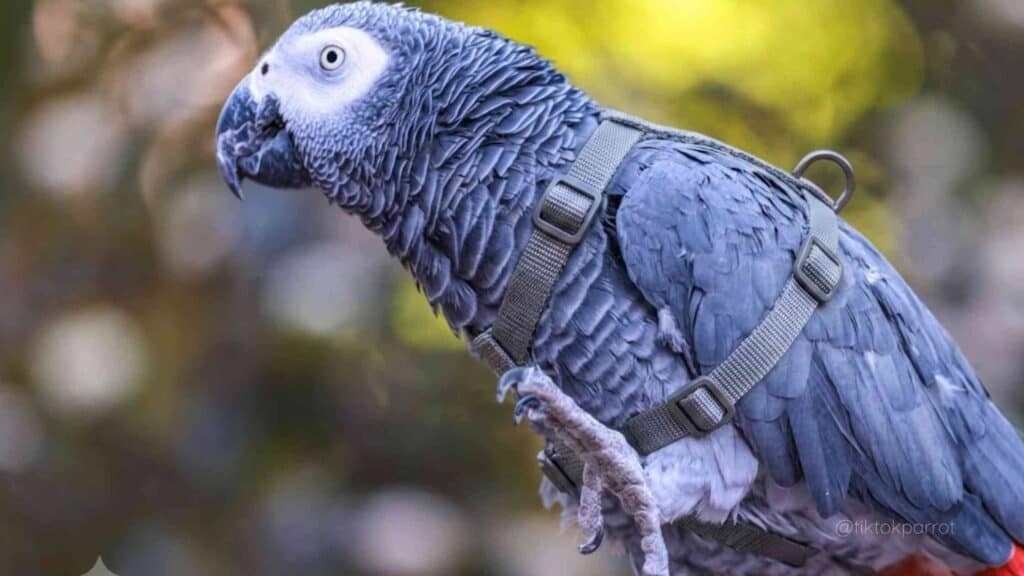
There’s a particular moment every African Grey owner dreams about: stepping outside with their bird perched confidently on their shoulder, curious eyes scanning the world, completely safe and secure in a harness. It’s not just a beautiful image — it’s a real possibility, even for parrots that seem terrified of the idea.
Harness training an African Grey parrot takes patience, consistency, and the right approach, but it’s one of the most rewarding skills you can teach your bird at any age.
If you’ve tried before and failed, or if your Grey is older and fear-reactive, this guide is for you.
Table of Contents
Why Harness Train Your African Grey?
African Greys are one of the most intelligent parrot species on the planet. They are naturally curious, highly observant, and capable of learning complex behaviors — but that intelligence cuts both ways. They are also prone to anxiety, easily startled, and can form strong negative associations with objects they’ve been frightened by.
A harness solves a problem that no cage or clipped wing fully addresses: it allows your bird to experience the world safely while staying bonded to you. Whether you’re taking your Grey on car trips, sitting in the garden, or traveling to the vet, a properly fitted harness keeps them from flying into danger or escaping in a moment of panic.
Beyond safety, outdoor time benefits African Greys enormously. Natural sunlight supports vitamin D3 synthesis, fresh air stimulates their senses, and new environments provide the mental enrichment these birds desperately need.
Choosing the Right Harness for an African Grey
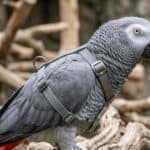
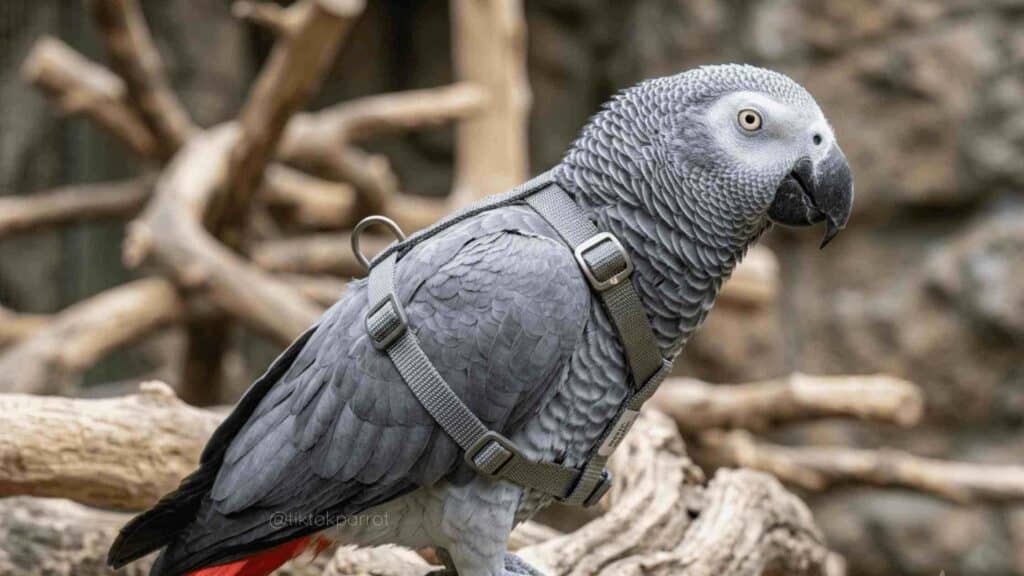
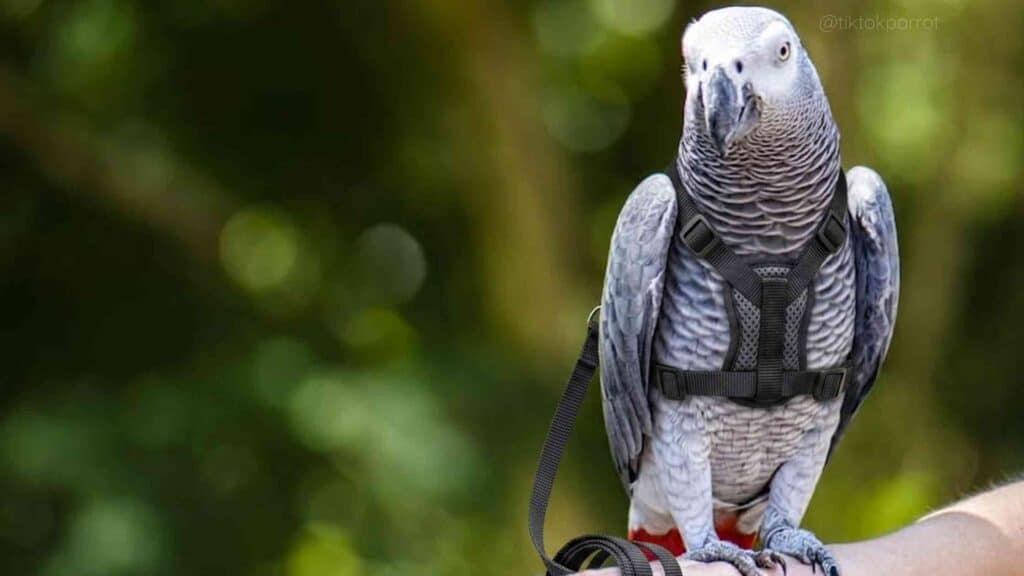
Before a single training session begins, you need the right equipment. The most popular and widely trusted harness for African Greys is the Aviator Harness, which comes in a size specifically designed for medium parrots. It fits snugly around the body without restricting wing movement or breathing, and the elastic leash provides gentle resistance without sharp tugging.
When sizing, an African Grey typically fits a medium Aviator Harness, though Congo African Greys and Timneh African Greys may require slightly different sizes — always measure your bird’s chest girth before purchasing.
Avoid harnesses that clip around the neck or use rigid materials. Your Grey needs to be comfortable enough that the harness becomes a neutral, then positive, part of their routine.
Step-by-Step: Harness Training Your African Grey
Step 1: Desensitize to the Harness as an Object
Don’t rush to put the harness on. African Greys need time to process new objects, and forcing contact too early can create a lasting negative association that sets your training back weeks.
Place the harness near your bird’s cage for several days. Let them look at it, sniff it if they choose, and observe you handling it calmly. Pair this with treats — every time the harness is visible, something delicious appears. Almonds, pine nuts, or a favorite fruit work well as high-value rewards.
Signs to move forward: Your Grey is no longer fluffing up or moving away when the harness is nearby.
Step 2: Introduce Physical Contact with the Harness
Begin touching your bird gently with the harness — start with a wingtip or the back of the foot, and slowly work toward the body. Keep sessions short: 3 to 5 minutes maximum. Always end on a positive note before your bird shows signs of stress.
Do not attempt to loop the harness over anything yet. The goal is simply to build tolerance of the harness touching their body.
Signs to move forward: Your bird remains calm when you touch various body parts with the harness.
Step 3: Teach “Head Through” with Treats
This is the step most owners find challenging, and it’s where patience becomes non-negotiable. Form the harness into its loop shape and hold a treat on the far side, encouraging your bird to push their head through to reach it. Most Greys need 5 to 20 sessions before they’ll do this willingly.
Never force the head through. If your bird pulls back, reset, wait a moment, and try again with a higher-value treat. Some trainers use a small cup or toilet roll tube to simulate the sensation first, helping the bird get comfortable with the idea of putting their head through an opening.
Signs to move forward: Your bird voluntarily puts their head through the harness loop to reach the treat.
Step 4: Slide the Harness Over the Body
Once your bird accepts the head through step, begin gently guiding the harness over the body — one wing at a time — without fastening it. Treat generously and immediately after. Practice this until your Grey is relaxed while fully draped (but not clipped) in the harness.
Signs to move forward: Your bird stands calmly while the harness rests unclipped on their body.
Step 5: Fasten and Celebrate
The first time you fasten the harness is a milestone. Keep the bird occupied with a treat the moment it clips shut. Allow them to wear the harness for 30 to 60 seconds maximum on the first attempt — then remove it and reward heavily.
Gradually increase wearing time across multiple sessions: 2 minutes, then 5, then 10, eventually working up to full outdoor sessions.
Special Tips for Scared or Older African Greys
Many owners give up on harness training because their bird is fear-reactive or was never socialized to novel objects early in life. Here’s what to know:
Older birds can absolutely learn. African Greys are lifelong learners. The process simply takes longer, and the desensitization phase may stretch from days to several weeks. That’s normal — it doesn’t mean it won’t work.
Use target training as a foundation. If your Grey already knows how to target (touching a stick or your finger on command), you can use this skill to guide their head through the harness loop far more efficiently. Target training also keeps your bird mentally engaged and builds confidence.
Never train during stress. If your bird has had a fright response that day — a loud noise, a new visitor, an unexpected change — skip the harness session. Training on anxious birds reinforces negative associations.
Work in short, frequent sessions. Two 5-minute sessions daily will outperform a single 30-minute session every time. African Greys learn best with repetition spaced over time.
Respect hard stops. Fluffed feathers, wide eyes, fast breathing, or lunging are clear signals to stop immediately. Pushing past these signs will undo previous progress.
Common Mistakes to Avoid
- Forcing the harness on during the first session. This is the single most common reason harness training fails with African Greys.
- Inconsistent training sessions. Skipping days or weeks between sessions means your bird forgets progress and the association fades.
- Using the harness only for vet visits. If your Grey only experiences the harness in stressful contexts, they will always resist it. Use it for enjoyable outings too.
- Choosing the wrong harness size. A harness that’s too tight causes discomfort; too loose and your bird can slip a wing or escape.
Frequently Asked Questions
How long does it take to harness train an African Grey parrot?
Most African Greys take between 4 and 12 weeks to become comfortable wearing a harness, depending on their age, temperament, and training consistency. Older or more fearful birds may take longer, but consistent positive reinforcement will get there.
Can you harness train an older African Grey?
Yes. While younger birds typically adapt faster, older African Greys can absolutely learn to accept and wear a harness. The desensitization phase simply takes more time and patience, and progress must be made in smaller steps.
What size Aviator Harness fits an African Grey parrot?
Most Congo African Greys fit a medium Aviator Harness. Timneh African Greys may fit a small. Always check the manufacturer’s sizing chart and measure your bird’s chest girth before ordering.
Is it safe to take an African Grey outside in a harness?
Yes, with the right precautions. Always supervise your bird outdoors, avoid areas with dogs or cats nearby, and never leave your bird unattended. Watch the weather — direct sun without shade and temperatures above 32°C (90°F) can cause heat stress.
My African Grey keeps backing away from the harness. What should I do?
Go back a step in the training process. If your bird is retreating, the desensitization phase wasn’t complete enough. Spend more time simply having the harness visible and pairing it with treats before attempting contact again.
Conclusion
Harness training an African Grey parrot is one of the most meaningful investments you can make in your bird’s quality of life. It opens the door to safe outdoor experiences, strengthens your bond, and provides the enrichment these highly intelligent birds genuinely need.
Whether your Grey is young and curious or older and cautious, the step-by-step process outlined here — grounded in patience, positive reinforcement, and respect for your bird’s pace — will get you there.
Start small, stay consistent, and celebrate every tiny victory. Your bird is capable of more than you think.
If you liked this blog, please share it with your family and friends who might also find it helpful. If you love African Greys, join our community of Grey owners! You can meet other owners, share tips and learn from each other.
Stay safe and much love!


Hey there! 🐾 Looking for top-notch pet supplies or anything on Amazon?
Support our site by shopping on Amazon through our this referral link, it will not cost you extra!
Your purchases on Amazon can help us continue providing valuable content.
Thank you for your support! 🛍️