Bringing an older African Grey parrot into your home is one of the most rewarding decisions a bird lover can make — and one of the most misunderstood. Many people assume that a rescued or rehomed Grey will be broken in some way, difficult to bond with, or permanently scarred by its past. The truth is far more hopeful than that. With patience, consistency, and the right approach, adult African Greys can form deep, lasting bonds with new owners. But you do need to go in with realistic expectations.
This guide is for anyone considering adopting a second-hand African Grey — whether from a rescue organization, a private rehoming situation, or a parrot shelter. Here’s what you’ll actually encounter, and how to give your new bird the best possible start.
Table of Contents
Why African Greys End Up Needing New Homes
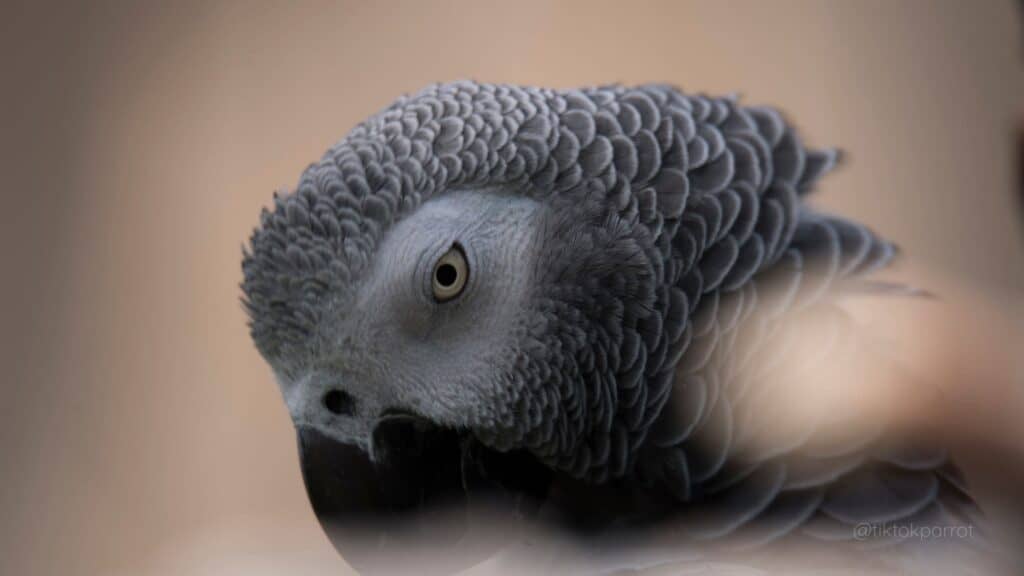
Understanding why a Grey was rehomed is the first step toward understanding who that bird is now. African Greys are often surrendered for reasons that have little to do with the bird’s behavior:
- Owner lifestyle changes: divorce, house moves, new babies, or long work hours
- Allergies or health issues in the family
- Underestimating the commitment: African Greys can live 50 to 60 years, and not every owner is prepared for that
- Behavioral challenges that developed from neglect, lack of stimulation, or incorrect handling
- Death of the original owner, leaving the bird without a home
Knowing the backstory matters — but even when that history is incomplete or difficult, it doesn’t define what your Grey can become. These birds are extraordinarily intelligent and adaptable when given the right environment.
What to Expect in the First Few Weeks
The Adjustment Period Is Real
Experienced parrot owners call the first few weeks the “honeymoon phase” — except with African Greys, the honeymoon often looks more like a cold war. Your new bird may not eat well, may sit fluffed at the back of the cage, and may show little interest in you or its surroundings. This is completely normal.
African Greys are creatures of deep habit. They map their environment carefully, notice every change, and take time to determine whether a new space is safe. What looks like withdrawal is often your bird doing exactly what it should: observing, processing, and slowly building a new mental model of its world.
Give the bird at least two to four weeks of low-pressure settling time before expecting any kind of engagement. Don’t force interaction. Let the Grey watch you go about your daily routine — this is how trust begins.
Regression Is Common
Many rehomed Greys who were previously hand-tame may temporarily revert to fearful behavior in a new home. A bird that reportedly stepped up willingly for its previous owner might bite or refuse to come out of the cage with you. Don’t take this personally. Regression happens because the trust your Grey had with its previous owner is not automatically transferable — it has to be rebuilt from scratch.
How to Build Trust With an Adult African Grey
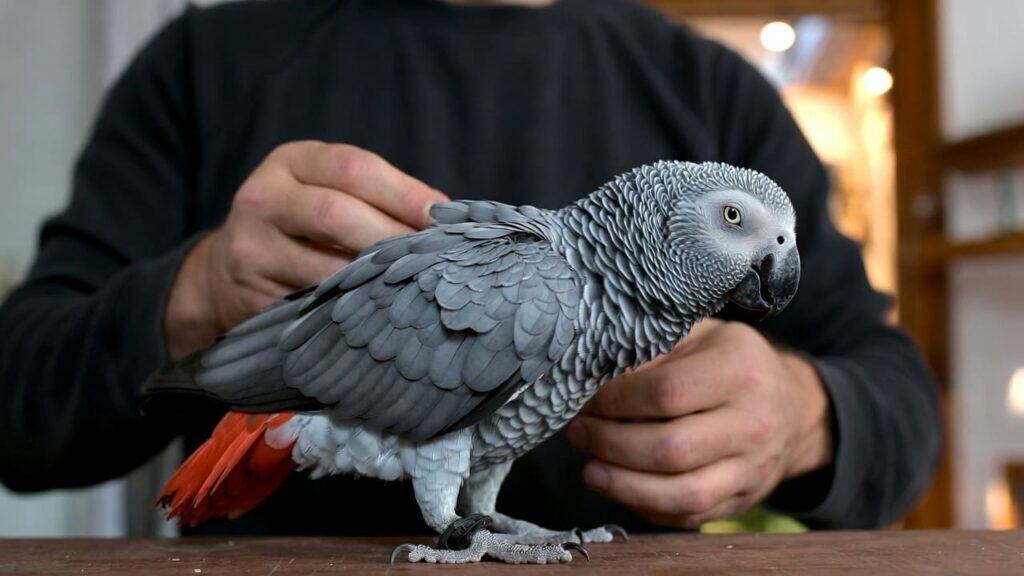
Building a relationship with a rehomed Grey is a slow, deliberate process. There are no shortcuts, but there is a proven framework.
Step 1: Respect the Cage as a Safe Space
Never reach into the cage uninvited. For a newly arrived Grey, the cage is the one consistent element in a changed world. Forcing your hand in to “make friends” will set your progress back significantly. Instead, sit near the cage quietly, talk in a calm voice, and let the bird get used to your presence on its own terms.
Step 2: Use Food as a Bridge
Offer high-value treats — a small piece of walnut, a slice of almond, or a grape — through the cage bars. Don’t hover or stare directly at the bird while doing this. Direct eye contact can feel threatening to a Grey that doesn’t yet trust you. Offer the food and look slightly away. When your bird takes food from your hand for the first time, you’ve crossed a meaningful threshold.
Step 3: Keep Routines Predictable
African Greys thrive on routine, and this is especially true for birds adjusting to a new home. Feed, cover, and uncover the cage at consistent times each day. Speak the same greetings and use a calm, even tone. Predictability signals safety, and safety is the foundation of trust.
Step 4: Read Body Language Carefully
An adult Grey communicates constantly. Pinning pupils (rapidly dilating and contracting), sleeked-down feathers, a raised foot, or tail fanning are signs of agitation or excitement — read context carefully before reaching in or approaching. A bird with relaxed, slightly puffed feathers who is grinding its beak is usually content. The more you observe without reacting, the better you’ll understand your specific bird.
Step 5: Let the Bird Initiate Contact
One of the most counterintuitive pieces of advice for rehomed Grey owners: stop trying to touch the bird. Instead, create the conditions where the bird chooses to approach you. Spend time near the cage, speak gently, and wait. When a Grey voluntarily moves toward you — toward the front of the cage, toward your hand — that moment is worth far more than any interaction you could have forced.
Common Challenges With Rehomed African Greys
Feather Destructive Behavior
Some rehomed Greys arrive with feather-damaging habits caused by stress, boredom, or illness in their previous environment. This can range from mild over-preening to severe plucking. While some cases resolve with improved nutrition, enrichment, and stability, others require veterinary assessment — including bloodwork to rule out underlying health conditions. Never assume feather destruction is purely behavioral without a vet’s input.
Screaming and Attention-Seeking Vocalizations
A Grey that screamed in its last home to get attention may continue the behavior initially. The key is to never reward the screaming by appearing or engaging. Return to the room only during quiet moments, and reinforce those quiet moments with calm attention and treats. Consistency here is everything.
Fear of Hands
Some rehomed Greys have a genuine phobia of hands — often due to rough handling in the past. Targettraining (using a stick or chopstick for the bird to touch rather than your hand) is an excellent bridge tool. Over weeks, the target stick can be phased out as the bird’s confidence grows.
Setting Up for Long-Term Success
A few practical steps that make a significant difference for rehomed Greys:
- Schedule a vet check within the first week. Get baseline bloodwork done so you know the bird’s health status from day one.
- Don’t rearrange the cage layout immediately. Keep familiar perches and toys if the previous owner passed them along. Familiarity reduces stress.
- Introduce new toys slowly. Many rehomed Greys are wary of new objects. Place new items near the cage before putting them inside.
- Connect with the previous owner if possible. Learning the bird’s call words, favorite foods, and daily routine is incredibly valuable information.
- Join a community. African Grey owner groups — online and in person — are full of people who have successfully bonded with rehomed birds. Their experience is a genuine resource.
Frequently Asked Questions
How long does it take to bond with a rehomed African Grey parrot?
It varies widely. Some birds begin showing trust within weeks; others take six months to a year. Patience and consistency matter far more than speed. Pushing the timeline almost always backfires.
Can an older African Grey parrot learn to trust a new owner?
Absolutely. African Greys are highly intelligent and emotionally capable birds. Many rehomed Greys go on to form extraordinarily close bonds with their new families — sometimes closer than they had with their original owners.
Should I get another bird to keep my rehomed Grey company?
Not immediately. Adding another bird during the adjustment period creates additional stress and competition. Allow your Grey at least several months to settle before considering a companion.
What if my rehomed African Grey bites me?
Stay calm and don’t react dramatically. Yelling or pulling away sharply reinforces fearful behavior. Understand what triggered the bite — was it a sudden movement, a perceived threat? Learn the warning signs and adjust your approach accordingly.
Is it worth adopting a rehomed African Grey parrot?
Without question. Rehomed Greys deserve a second chance, and the bond that forms when a previously fearful or neglected bird finally chooses to trust you is unlike anything else in the parrot world. Many experienced bird owners say their most profound relationships have been with rescue Greys.
Conclusion
Adopting a rehomed or rescued African Grey parrot isn’t the easy path — but it is an incredibly meaningful one. These birds carry their histories with them, and your job isn’t to erase the past but to build something better on top of it. With time, structure, and genuine respect for your Grey’s pace, the bond that develops will be built on real trust — and that makes it all the stronger.
If you’re willing to slow down, observe carefully, and let your bird lead, you’ll discover what so many rehoming adopters have learned: an older African Grey, given the right home, has every capacity to thrive.
If you liked this blog, please share it with your family and friends who might also find it helpful. If you love African Greys, join our community of Grey owners! You can meet other owners, share tips and learn from each other.
Stay safe and much love!


Hey there! 🐾 Looking for top-notch pet supplies or anything on Amazon?
Support our site by shopping on Amazon through our this referral link, it will not cost you extra!
Your purchases on Amazon can help us continue providing valuable content.
Thank you for your support! 🛍️