Traveling with any bird is a logistical challenge. Traveling with an African Grey parrot — one of the most intelligent, emotionally complex, and stress-sensitive parrots in the world — requires serious preparation.
Whether you’re relocating across the country, taking a road trip, or navigating an airport for the first time with your Grey in tow, the difference between a smooth journey and a traumatic one comes down to planning, the right equipment, and knowing your bird.
This guide covers everything practical: how to harness train your African Grey, choosing the right travel carrier, managing the stress of transit, and what you need to know before booking a flight with your bird.
Table of Contents
Why Traveling is Particularly Stressful for African Greys

African Greys are creatures of routine. They are highly attuned to their environment, sensitive to noise and temperature shifts, and deeply reliant on the security of familiar surroundings. Unlike more adventurous parrot species, a Grey that isn’t properly acclimated to travel can experience significant psychological and physical stress — including feather plucking, illness, and behavioral regression.
That said, African Greys that are gradually introduced to travel from a young age, or carefully desensitized as adults, can handle trips remarkably well. The key is patience and preparation — not rushing your bird into situations it isn’t ready for.
Harness Training Your African Grey
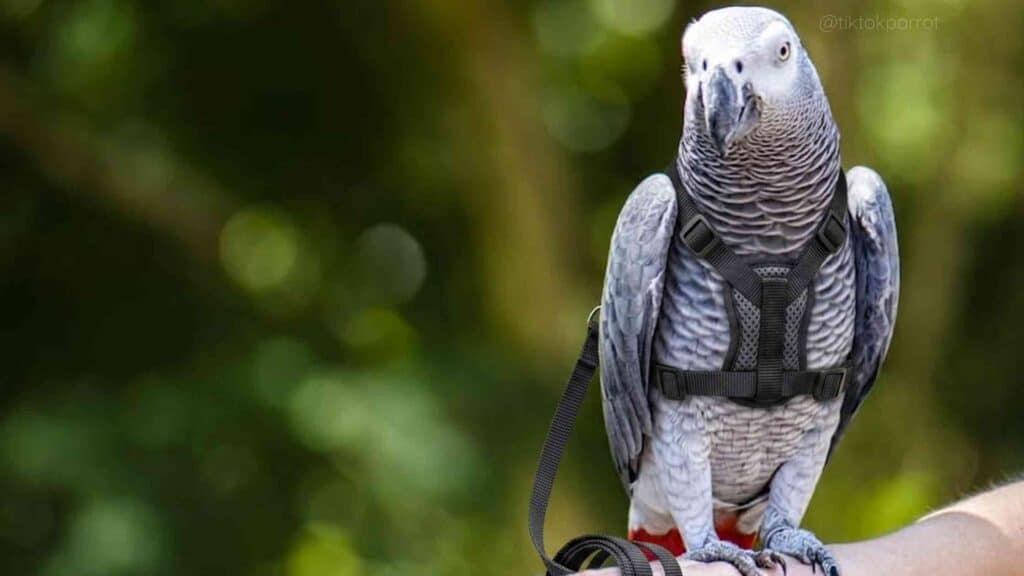
A flight harness is one of the most valuable tools for any travelling parrot owner. It allows your Grey to be out of a carrier safely in open or outdoor spaces — useful during layovers, rest stops, or at your destination. The Aviator Harness is widely regarded as the best option for African Greys and comes in sizes specifically suited to the species.
Getting Your Grey Used to the Harness
Harness training is a gradual process that can take anywhere from a few weeks to a few months, depending on your bird’s temperament. Rushing it will backfire — African Greys that feel forced or trapped during harness introduction often develop a lasting aversion.
Follow these steps:
- Introduce the harness as a neutral object. Leave it near the cage for several days so your Grey can observe it without feeling threatened.
- Associate it with positive experiences. Hold the harness near your bird during treat time. Let your Grey touch or nibble it (supervised).
- Practice putting it near the body. Gently drape the harness around the bird without fastening it, then immediately reward.
- Work toward full fitting. Slowly progress to securing the harness, rewarding at every step. Keep initial wearing sessions very short — one to two minutes.
- Build duration gradually. Once your Grey accepts the harness calmly, increase wearing time over days and weeks before attempting outdoor use.
Never leave a harnessed bird unsupervised. Even a well-fitted harness can become a hazard if the bird becomes tangled.
Choosing the Right Travel Carrier
The carrier you choose will directly affect how comfortable and safe your African Grey is during travel. There’s no one-size-fits-all answer — the best carrier depends on your mode of transport and how long the journey is.
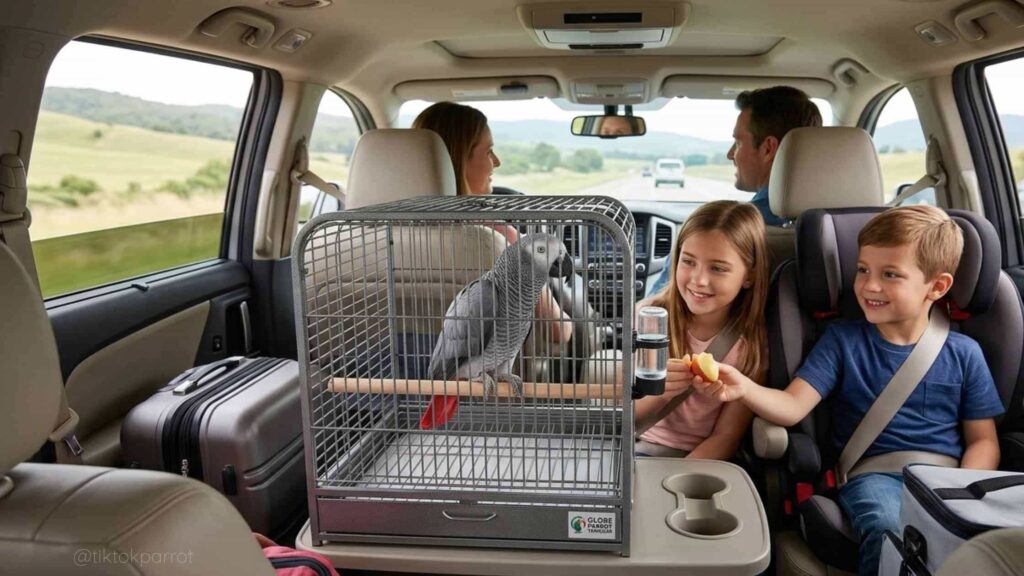
For Car Travel
For road trips, a rigid-sided carrier with good ventilation works best. Look for carriers that:
- Are large enough for your Grey to stand upright and turn around comfortably
- Have a secure, lockable door that cannot be popped open accidentally
- Allow you to attach a perch at a comfortable height
- Are easy to secure with a seatbelt or cargo strap
A car perch or travel stand is an alternative some owners prefer for shorter journeys, allowing the bird to sit freely with harness attached. For longer drives, a proper enclosed carrier reduces the risk of your Grey flying into the driver’s area if startled.
For Air Travel
If you’re flying, carrier requirements become more specific — and more regulated. Most major airlines classify parrots under their exotic bird or live animal policies, with requirements that vary significantly between carriers. A few key points:
- The carrier must fit under the seat in front of you if traveling in-cabin
- It must be well-ventilated on at least three sides
- The bird must be able to stand and turn around comfortably inside
- The carrier must be leak-proof on the bottom
Look for a soft-sided carrier specifically approved for in-cabin pet travel — brands like Celltei and Pak-o-Bird make carriers popular among parrot owners that meet most airline specifications. Always confirm with your specific airline before purchase.
Airline Travel with an African Grey: What You Need to Know
Flying with an African Grey is entirely possible, but it requires research, paperwork, and communication with your airline well in advance. Here’s a realistic breakdown of what to expect.
Research Airline Policies Early
Not all airlines allow parrots or exotic birds in the cabin. Some require birds to travel as cargo, which is generally not recommended for African Greys given their stress sensitivity and temperature regulation needs. Contact the airline directly — policies change frequently and cannot always be trusted on their website alone.
Airlines that do allow birds in-cabin typically limit the number of animals per flight. Book early and inform the airline at the time of booking, not at the gate.
Required Documentation
For domestic travel within most countries, you’ll typically need:
- A health certificate from an avian vet, issued within 10 days of travel
- Proof of ownership if requested
For international travel, requirements increase substantially and may include:
- CITES (Convention on International Trade in Endangered Species) documentation — African Greys are a CITES Appendix I listed species, meaning their trade and transport is tightly regulated
- Import permits from the destination country
- Health certificates compliant with the destination country’s requirements
- Quarantine periods in some countries
International travel with an African Grey is a complex process. Start researching at least 3 to 6 months before your intended trip and work with an avian vet who has experience with international bird transport.
Day-of Travel Tips
- Feed lightly before the flight. A full crop can cause discomfort during travel. Offer a small meal 2 to 3 hours before departure.
- Line the carrier bottom with absorbent material — paper towels work well.
- Cover part of the carrier with a light breathable cloth to reduce visual stimulation and help your Grey feel secure.
- Bring familiar food and a small foot toy. Familiar items reduce anxiety.
- Stay calm yourself. African Greys are highly attuned to their owner’s emotional state. If you’re anxious, your bird will pick up on it.
- Avoid sedating your bird unless under explicit veterinary guidance — sedation can be dangerous for birds during air travel due to altitude changes affecting respiration.
Managing Stress During and After Travel
Even the most well-prepared journey can leave an African Grey unsettled. Watch for signs of stress post-travel: feather ruffling, loss of appetite, excessive vocalization, or unusual quiet and withdrawal.
When you arrive at your destination:
- Set up the cage immediately in a quiet room with familiar perches and toys.
- Maintain your regular feeding and interaction schedule as closely as possible.
- Give your bird 24 to 48 hours to decompress before introducing new people or environments.
- Watch for any signs of illness — stress can lower immune function, and respiratory symptoms or lethargy after travel warrant a vet visit.
Frequently Asked Questions
Can African Grey parrots fly on planes?
Yes, African Greys can travel on planes, but policies vary by airline. Many airlines allow birds in-cabin in an approved carrier. Always confirm policies directly with the airline and arrange documentation with an avian vet in advance.
What is the best harness for an African Grey parrot?
The Aviator Harness is the most widely recommended option for African Greys. It is durable, escape-resistant, and available in a size specifically suited to the species. Proper training before use is essential.
Do I need paperwork to travel with an African Grey parrot?
For domestic travel, a health certificate from an avian vet (usually issued within 10 days of travel) is typically required. International travel requires CITES documentation and may involve import permits and quarantine requirements.
How do I reduce stress for my African Grey during travel?
Gradual acclimation to the carrier before the trip, covering the carrier during transit, bringing familiar food and toys, and maintaining calm yourself all help reduce your bird’s travel anxiety.
Can African Grey parrots travel by car?
Yes, and many owners find car travel easier to manage than flying. Use a secure, ventilated carrier or travel stand with a harness. Keep the car temperature comfortable, avoid loud music, and plan rest stops where your bird can have quiet time out of the carrier.
Conclusion
Traveling with an African Grey parrot takes planning, patience, and respect for your bird’s emotional needs — but it is absolutely achievable. Start with harness training long before any trip is on the calendar, invest in a quality carrier suited to your travel mode, and never underestimate the importance of documentation and airline communication when flying.
The more your Grey is exposed to travel in a gradual, positive way, the more resilient it will become. A well-prepared journey keeps both you and your bird calm, safe, and ready for whatever comes next.
If you liked this blog, please share it with your family and friends who might also find it helpful. If you love African Greys, join our community of Grey owners! You can meet other owners, share tips and learn from each other.
Stay safe and much love!


Hey there! 🐾 Looking for top-notch pet supplies or anything on Amazon?
Support our site by shopping on Amazon through our this referral link, it will not cost you extra!
Your purchases on Amazon can help us continue providing valuable content.
Thank you for your support! 🛍️