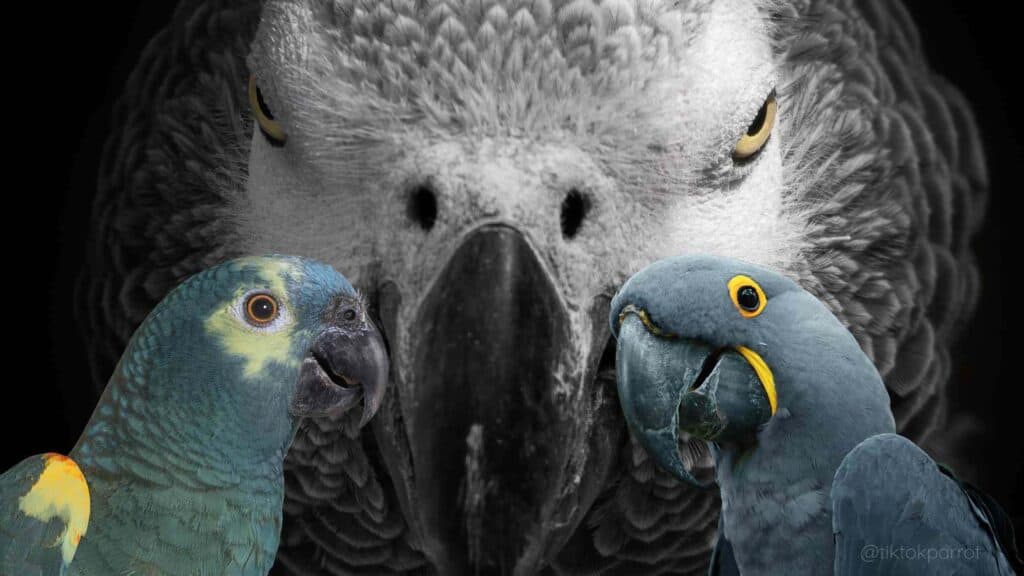
Bringing a second bird into a home that already has an African Grey — or introducing your Grey into a household with other parrots — is one of the most exciting and nerve-wracking decisions a bird owner can make.
African Greys are remarkable companions, but they are also sensitive, territorial, and emotionally complex. A poorly managed introduction can result in stress, injury, or lasting behavioral problems for every bird involved. Get it right, though, and you may find your Grey thriving with a feathered companion in ways you never expected.
This guide walks you through everything you need to know about multi-bird household dynamics, the specific temperament of African Greys around other species, and how to introduce new birds safely and successfully.
Table of Contents
Understanding the African Grey’s Social Nature

Before any introduction happens, it helps to understand how African Greys are wired socially. In the wild, Congo and Timneh African Greys live in large flocks, roosting communally and foraging in groups. Social contact is a core part of their biology — and yet this does not automatically translate into easy friendships with every bird they meet.
African Greys are sensitive, observant, and emotionally perceptive. They form strong bonds but are also prone to anxiety and stress when their environment changes suddenly. A new bird in the house represents a major disruption. Your Grey will notice the new sounds, smells, and shifts in your attention immediately — and their reaction can range from mild curiosity to outright distress.
Understanding this helps you set realistic expectations: the goal isn’t to make your African Grey instantly love a new companion. It’s to manage the process slowly enough that both birds feel safe throughout.
Which Parrots Can African Greys Live With?
African Greys can coexist peacefully with a range of species, but compatibility depends heavily on individual personalities, the size difference between birds, and the structure of your household.
Generally Compatible Species
- Other African Greys: Often the most natural pairing, though two Greys can still be competitive, particularly during breeding season.
- Eclectus parrots: Typically calm and non-aggressive, they often tolerate Greys well.
- Cockatiels and smaller parakeets: Can work, but require careful supervision due to size differences — an African Grey’s beak can cause serious injury even during play.
- Amazon parrots: Mixed results. Amazons can be bold and pushy, which stresses many Greys. Individual temperament matters enormously here.
Species to Approach with Caution
- Macaws: Their size, volume, and dominant personalities can overwhelm an African Grey.
- Cockatoos: Highly tactile and expressive in ways Greys often find invasive. Cockatoos may attempt to preen or push contact that the Grey finds threatening.
- Conures: Energetic and loud, which can unsettle the calm that African Greys prefer.
The key point: no two birds are identical. A species that’s generally compatible may not work with your specific Grey, and vice versa. Always let individual behavior guide your decisions.
The Quarantine Phase: Non-Negotiable
Before any physical introduction, a minimum 30-day quarantine for the new bird is essential — many avian vets recommend 45 to 60 days. This isn’t just a precaution; it’s the responsible standard of care for any multi-bird household.
New birds can carry diseases such as Psittacine Beak and Feather Disease (PBFD), Avian Polyomavirus, or Chlamydiosis (Psittacosis) without showing obvious symptoms. These illnesses can be fatal to an established bird like your African Grey. During quarantine, the new bird should be housed in a completely separate room with separate food and water dishes, and you should wash your hands thoroughly between handling each bird.
Schedule a full veterinary checkup and testing panel for the new bird before quarantine ends. A clean bill of health is your green light to move forward.
Step-by-Step Introduction Process
Once quarantine is complete, resist the urge to rush. A slow, structured introduction protects both birds emotionally and physically.
Step 1: Scent and Sound Introduction
Move the new bird’s cage into a room near your African Grey’s space — but not the same room initially. Let them hear each other without visual contact. African Greys are highly attuned to vocalizations and will begin processing the presence of another bird through sound alone. This phase should last several days to a week.
Step 2: Visual Introduction at a Distance
Move the cages into the same room but place them on opposite sides with significant space between them. Watch your Grey carefully. Signs of relaxed curiosity — leaning toward the new bird, vocalizing softly, normal eating and preening — are positive. Signs of stress — feather fluffing, refusal to eat, repetitive behaviors, or screaming — mean you need to increase the distance and slow the pace.
Step 3: Parallel Out-of-Cage Time
Allow both birds out of their cages simultaneously in a shared space — but on separate play stands or perches. Do not place them within reach of each other yet. The goal is shared space with no forced interaction. Supervise closely and keep sessions short (15–20 minutes) at first.
Step 4: Supervised Closer Interaction
Only once both birds consistently show calm, relaxed body language during parallel time should you allow closer proximity. Even then, watch for warning signals: pinned eyes, raised feathers along the neck, a rigid posture, or one bird stalking the other. Any of these cues mean the session should end calmly and immediately.
Never leave two parrots together unsupervised until you are completely confident in their dynamic — and even then, it’s wise to maintain separate cages permanently as each bird’s safe retreat.
Managing Jealousy and Attention Dynamics
One thing many African Grey owners underestimate is how strongly their bird will react to perceived changes in attention. African Greys bond deeply with their primary human, and the arrival of a new bird can trigger jealousy-related behaviors: feather plucking, screaming, biting, or regression in training.
The antidote is deliberate, consistent one-on-one time with your Grey. Don’t reduce their interaction time because you’re busy with the new bird. If anything, increase it during the transition period. Your African Grey needs to learn through lived experience that the new bird’s presence does not mean a loss of your attention or affection.
Some experienced multi-bird owners recommend greeting and spending time with the established bird first each day during the introduction period — a small but meaningful signal that their place in the household hasn’t changed.
Common Mistakes to Avoid
- Rushing the introduction: Even if both birds seem fine, take it slower than you think you need to. The stakes of a physical altercation are too high.
- Assuming cage-sharing is possible early on: African Greys generally do best with their own cage, even after becoming comfortable with a companion. Shared cages require months of established trust and constant monitoring.
- Ignoring stress signals: Subtle behavioral changes in your African Grey — quietness, reduced appetite, over-preening — are communication. Don’t dismiss them.
- Skipping quarantine: No amount of trust in the seller or breeder replaces a proper quarantine and vet check.
- Forcing interactions: Placing birds together before they’re ready does not speed up bonding. It damages it.
Frequently Asked Questions
Can African Grey parrots live with other parrots?
Yes, African Greys can live alongside other parrots, but introductions must be gradual and supervised. Compatibility depends on species, individual temperament, and the structure of your home. They generally do best with similarly calm species.
How long does it take for an African Grey to accept a new bird?
It varies widely. Some African Greys warm up to a new companion within weeks; others take several months. Patience and a slow, structured introduction process are the most important factors.
Should I get another African Grey as a companion for my bird?
Another African Grey is often a natural pairing, but it’s not a guaranteed match. Two Greys can be competitive, especially around breeding season. Their relationship will still need to be built carefully over time.
Will my African Grey get depressed if I get another bird?
It’s possible, especially if the introduction is poorly managed or your attention to your Grey decreases significantly. Watch for behavioral changes and maintain your regular bond with your Grey throughout the process.
Is it safe to let my African Grey and other parrots share a cage?
Cage-sharing is not recommended until both birds have demonstrated a consistently comfortable, relaxed relationship over many months. Even then, each bird should have its own separate cage as a safe retreat. Never cage-share unsupervised.
Conclusion
Introducing an African Grey to other parrots is absolutely possible — and for many birds, the presence of a compatible companion genuinely enriches their lives. But success depends entirely on your patience, your observation skills, and your willingness to let the birds set the pace. Quarantine every new bird without exception, move through each introduction step only when both birds are ready, and never underestimate the emotional sensitivity of your African Grey.
A multi-bird household done right is deeply rewarding. Done in a rush, it can set everyone back months. Take your time, trust your birds’ body language, and build the kind of slow, stable foundation that allows both to eventually thrive side by side.
If you liked this blog, please share it with your family and friends who might also find it helpful. If you love African Greys, join our community of Grey owners! You can meet other owners, share tips and learn from each other.
Stay safe and much love!


Hey there! 🐾 Looking for top-notch pet supplies or anything on Amazon?
Support our site by shopping on Amazon through our this referral link, it will not cost you extra!
Your purchases on Amazon can help us continue providing valuable content.
Thank you for your support! 🛍️