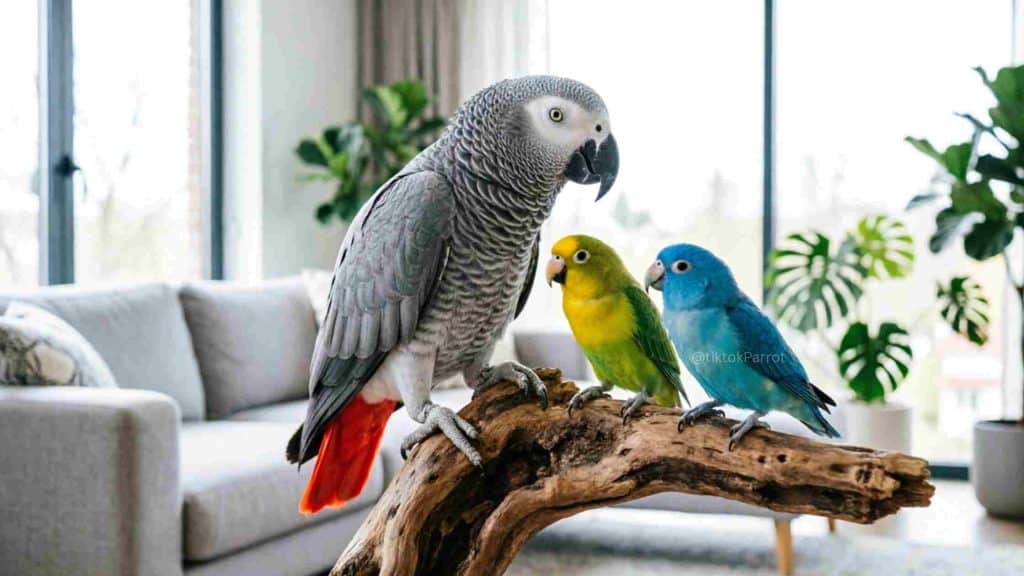
If you’re considering adding a lovebird to a home that already has an African Grey, or wondering whether the two species could ever share space safely, it’s worth understanding the real risks involved before making any introductions.
Despite lovebirds being small and undeniably charming, their name is genuinely misleading when it comes to how they treat other birds. Combined with the fact that African Greys are often naturally solitary by temperament, this pairing carries more risk than many owners expect.
This guide covers whether lovebirds and African Greys can safely mingle, why the answer is generally no when it comes to shared housing, and what safer alternatives actually look like.
Table of Contents
The Short Answer: Generally, No
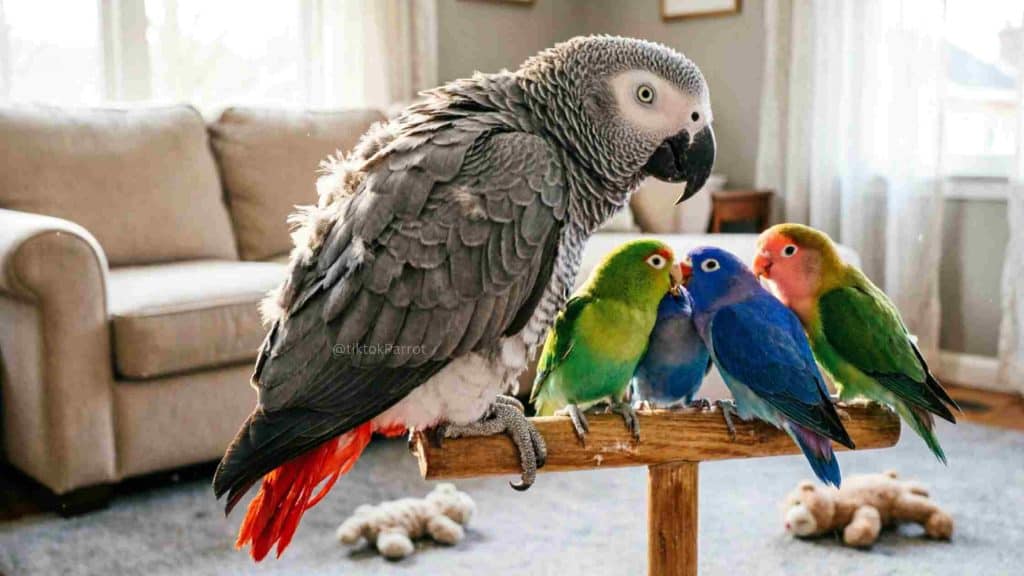
Most avian behavior experts and experienced bird owners advise against housing lovebirds and African Greys together, or allowing them to interact freely without extremely careful supervision. This isn’t really about size or the assumption that a bigger bird poses the risk; it’s actually the opposite.
Lovebirds have a well-documented reputation for aggression toward other birds, regardless of the other bird’s size, and are known to seriously injure or even kill birds considerably larger than themselves under the wrong circumstances.
Why Lovebirds Are Risky Companions for Other Birds
Despite their name suggesting affection and gentleness, lovebirds are notoriously territorial and can be surprisingly aggressive, particularly toward birds outside their own species or bonded pair. Several sources specifically caution that lovebirds have been known to maim or kill birds considerably larger than themselves, including species like conures.
Some general guidance goes as far as recommending that lovebirds only ever be kept with other lovebirds, and even then, only in sufficiently spacious, aviary-style housing.
This aggressive tendency isn’t necessarily constant; it often intensifies around specific triggers, including:
- Breeding season and related hormonal shifts
- Competition over food, perches, or nesting areas
- Feeling that territory or a bonded partner is being threatened
- Limited space that increases the chance of unwanted proximity
Why African Greys Present Their Own Challenge
On top of the lovebird-specific risks, African Greys bring their own complicating factor to this equation. Multiple avian behavior sources specifically identify African Greys as a species that often prefers being the only bird in the household, sometimes described as natural “loners” outside of an established breeding pair.
This isn’t universal to every individual Grey, personalities vary, but it’s a well-recognized pattern significant enough that most general parrot compatibility guides list Greys among the species least likely to comfortably share space with unrelated birds.
Combine a territorially aggressive lovebird with a Grey that may not welcome cage-mates in the first place, and you have two species whose natural tendencies work against safe cohabitation rather than toward it.
The Real-World Risk of Combining Species
The core issue with mixing bird species, lovebirds and African Greys included, comes down to a simple but important truth: birds choose their own companions, and forcing proximity doesn’t create compatibility. Putting two birds together and hoping they’ll get along isn’t a safe strategy, since the consequences of a poor match can include serious injury or death, not just squabbling or noise.
It’s also worth dispelling a common myth here: the absence of immediate aggression doesn’t mean two birds are safely compatible. Tension and aggression can develop over time, particularly as hormonal cycles shift, even in pairings that seemed calm at first.
Can They Ever Coexist in the Same Home?
While sharing a single cage or free space isn’t advisable, many owners do successfully keep a lovebird and an African Grey in the same household, just not together. This typically means:
- Separate cages, ideally positioned so the birds can see or hear each other from a safe distance if desired, without direct physical contact
- Covering the tops of cages if they’re placed near one another, to prevent one bird from landing on the other’s cage and biting through the bars
- Fully supervised, individual out-of-cage time, never allowing both birds loose and unsupervised in the same space at once
- Careful, gradual introductions if any shared interaction is attempted, with close observation for signs of stress or aggression from either bird
This approach allows both species to live under the same roof without the serious risk that direct cohabitation or unsupervised mingling would create.
What a Safer Companion Looks Like
If your primary concern is providing your African Grey with a bird companion rather than specifically wanting a lovebird, it’s generally more successful to consider:
- Another African Grey, ideally introduced thoughtfully and given time to bond naturally, since compatibility between individual birds still isn’t guaranteed even within the same species
- Species known for more sociable temperaments in mixed settings, such as certain Amazon parrots or conures in same-sex groupings, according to some avian behavior sources, though even these pairings require careful introduction and ongoing supervision
- Recognizing that some Greys simply prefer solo status, in which case dedicated human interaction, rather than a bird companion, may be the more appropriate and successful path
Signs a Pairing (or Even Supervised Interaction) Isn’t Working
If you do attempt any supervised interaction between a lovebird and an African Grey, watch closely for:
- Lunging, chasing, or repeated aggressive posturing
- One bird consistently avoiding or fleeing from the other
- Feather plucking or stress behaviors following interactions
- Vocal distress signals from either bird
Any of these signs warrant immediately separating the birds and reassessing whether continued interaction attempts are appropriate at all.
Common Mistakes Owners Make
- Assuming small size means low risk. Lovebirds’ size doesn’t reflect their capacity for aggression toward much larger birds.
- Interpreting initial calm as long-term compatibility. Aggression can develop later, especially around breeding season or hormonal changes.
- Housing both birds in the same cage to save space. This significantly increases the risk of serious injury.
- Leaving birds unsupervised together, even briefly. Injuries can happen quickly, sometimes before an owner has time to intervene.
- Assuming every African Grey wants a bird companion. Many genuinely prefer being the sole bird in the household.
Frequently Asked Questions
Can lovebirds and African Grey parrots share the same cage?
No, this isn’t recommended. Lovebirds are known for aggression toward other birds regardless of size, and African Greys often prefer being the only bird in a household, making shared housing genuinely risky.
Are lovebirds dangerous to bigger birds like African Greys?
Yes, despite their small size, lovebirds have a documented history of aggression toward much larger birds and should not be assumed safe around any other species without extremely careful supervision.
Can I keep a lovebird and an African Grey in the same house, just not together?
Yes, many owners successfully keep both species in the same home using separate cages and fully supervised, individual out-of-cage time, without ever allowing direct, unsupervised contact.
Why are African Greys considered poor candidates for bird roommates?
African Greys are frequently described as naturally solitary outside of breeding pairs, meaning many individuals simply don’t want or need another bird sharing their space.
What’s a safer companion option if I want my African Grey to have a bird friend?
Another African Grey, introduced carefully, or certain same-sex groupings of species like Amazons or conures, tend to have better track records, though careful introduction and supervision always remain necessary.
How can I tell if my birds aren’t compatible during supervised interaction?
Watch for lunging, chasing, one bird avoiding the other, feather plucking after interactions, or vocal distress, all of which suggest the pairing isn’t working and interaction should stop.
Is it ever safe to leave a lovebird and African Grey together unsupervised?
No, unsupervised interaction between these two species is not recommended under any circumstances, given the documented risk of serious injury.
Conclusion
While it’s understandable to want your African Grey to have company, lovebirds are generally not a safe match, and their small size shouldn’t be mistaken for low risk. Between lovebirds’ well-documented territorial aggression and many African Greys’ natural preference for solo living, direct cohabitation or unsupervised mingling simply isn’t worth the risk to either bird.
If companionship is the goal, exploring other options, whether a carefully introduced second Grey or simply investing in dedicated human interaction, offers a far safer path forward.
If this blog post has helped you, please share it with your family and friends who might also find it helpful. If you love African Greys, join our community of Grey owners! You can meet other owners, share tips and learn from each other.
Stay safe and much love!


Hey there! 🐾 Looking for top-notch pet supplies or anything on Amazon?
Support our site by shopping on Amazon through our this referral link, it will not cost you extra!
Your purchases on Amazon can help us continue providing valuable content.
Thank you for your support! 🛍️