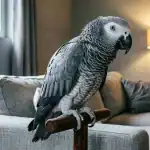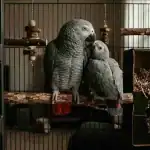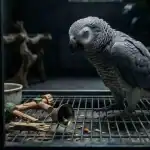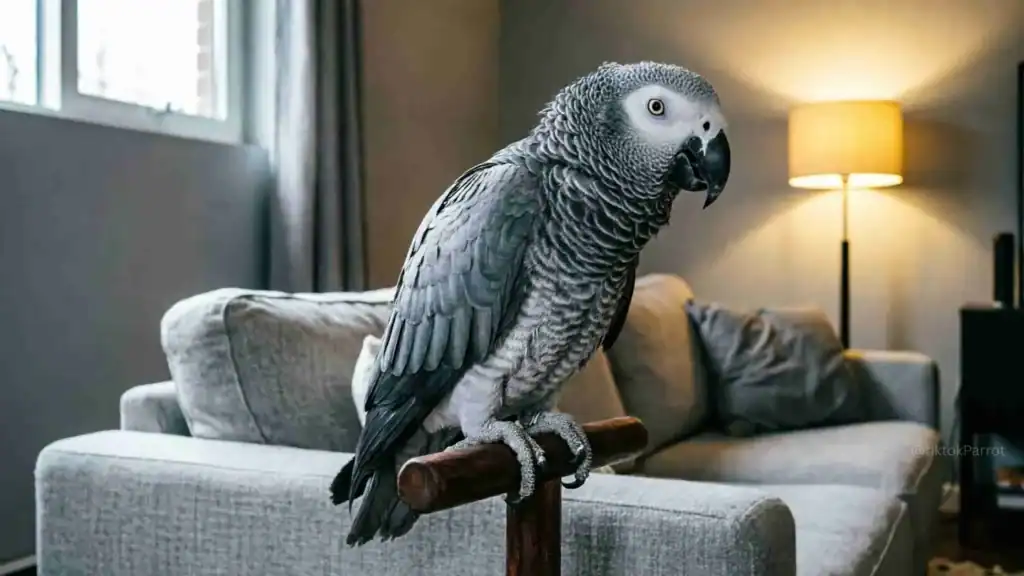
African Greys are famous for their intelligence and emotional depth, and unfortunately, that same emotional sophistication means they’re capable of experiencing genuine distress when their needs aren’t being met.
While researchers are careful to note that we can’t confirm birds experience depression in exactly the same way humans do, there’s substantial evidence that parrots kept in inadequate conditions display behaviors consistent with real emotional suffering, including withdrawal, reduced vocalization, and self-destructive habits like feather plucking.
This guide walks through the warning signs of depression and emotional distress in African Greys, what typically causes it, and the crucial reason every one of these signs should prompt a veterinary visit first, not just a behavioral fix.
Table of Contents
Why This Matters So Much for African Greys Specifically
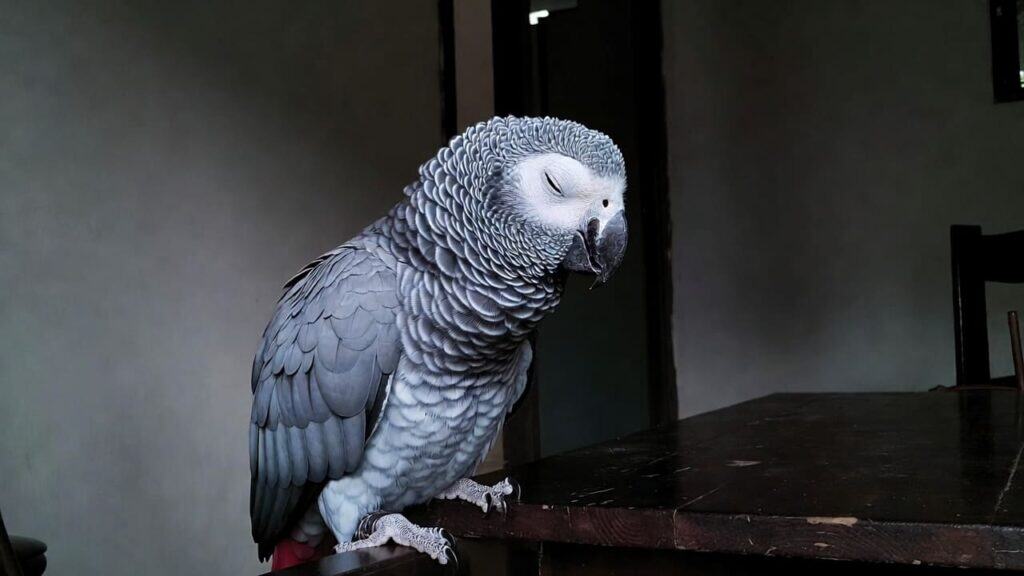
African Greys are among the most socially and intellectually demanding parrot species kept as pets. They’re known to need several hours of daily interaction, mental stimulation, and companionship, and when those needs go unmet, the emotional toll can be significant. Research on the species has even found that social isolation is linked to measurable physiological signs of chronic stress, underscoring that this isn’t just anecdotal; unmet social and enrichment needs have real, documented effects on this species’ wellbeing.
Warning Signs of Depression in African Greys
Behavioral Changes
- Reduced vocalization. A Grey that suddenly talks, chatters, or vocalizes far less than usual may be experiencing stress, depression, boredom, or illness. This is one of the more reliable early indicators, especially in a species known for being so vocal.
- Social withdrawal. Retreating to a corner of the cage, avoiding interaction, or showing less interest in engaging with family members.
- Reduced activity or play. A previously curious, playful bird that stops engaging with toys or foraging activities.
- Increased aggression. Sudden biting, snapping, or irritability, particularly toward people or situations the bird previously tolerated well.
- Repetitive behaviors (stereotypies). Repeated pacing, swaying, or other patterned movements that don’t serve an obvious purpose.
Physical Signs
- Fluffed-up feathers that persist beyond normal grooming or temperature regulation, sometimes described as looking “tired” or unwell.
- Feather plucking or picking. One of the most commonly reported outward signs of emotional distress in this species, sometimes progressing to bald patches or, in severe cases, skin damage.
- Decreased appetite or noticeable weight loss.
- Lethargy or excessive sleepiness, beyond a bird’s normal rest patterns.
- Changes in droppings, which can accompany both stress and underlying illness.
The Critical Overlap With Physical Illness
Here’s the single most important point in this entire topic: nearly every sign of depression in an African Grey can also be a sign of a medical illness, and in many cases, the two aren’t mutually exclusive at all. Puffed feathers, reduced appetite, lethargy, and quietness are hallmark symptoms of numerous physical conditions, from respiratory infections to nutritional deficiencies to more serious systemic illness.
Because birds are so skilled at hiding illness until it’s fairly advanced, any sudden behavioral change, especially reduced vocalization, appetite loss, or persistent fluffing, should be treated as a reason for a prompt veterinary visit, not an assumption that your bird is simply “in a mood.” Only after a vet has ruled out underlying medical causes should the presenting signs be reasonably attributed to emotional or psychological distress.
Certain signs should always be treated as an emergency regardless of suspected cause, including open-mouth breathing, tail bobbing with each breath, seizures, tremors, falling from the perch, or a bird sitting on the floor of the cage.
Common Causes of
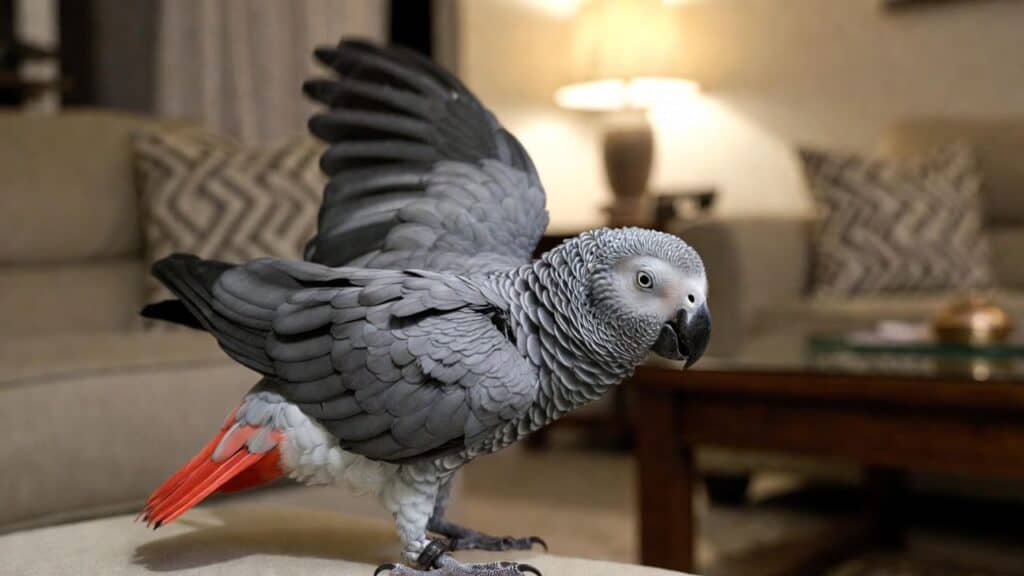
Once medical causes have been ruled out, several environmental and social factors are commonly linked to depression-like behavior in this species:
- Insufficient social interaction. As highly social birds, Greys who don’t receive adequate daily attention are at real risk of emotional withdrawal.
- Boredom and lack of enrichment. Without adequate mental stimulation, intelligent birds like Greys can spiral into repetitive or self-destructive behaviors.
- Loss of a companion, whether another bird, a pet, or a person the bird was closely bonded with.
- Environmental changes, including a move, a new cage location, altered routine, or unfamiliar sounds and sights.
- Sudden isolation, such as an owner’s extended absence, which has been specifically documented as a source of significant distress in this species.
- Chronic under-stimulation from confinement, particularly when a bird has very limited time outside its cage.
What You Can Do to Help
Rule Out Medical Causes First
This bears repeating: schedule a full veterinary exam before assuming any of the above signs are purely emotional or behavioral. If your vet finds no underlying medical cause, that’s a strong indicator the issue is emotional or environmental, and it becomes appropriate to address it that way.
Increase Quality Interaction Time
African Greys generally benefit from multiple hours of engagement daily, not just passive time in the same room, but genuine interaction, conversation, training, or play.
Provide Robust Enrichment
Foraging toys, puzzle feeders, and rotating novel objects help keep a highly intelligent bird’s mind engaged and reduce the boredom that often underlies distress behaviors.
Reassess the Environment
Consider whether cage placement, noise levels, lighting, or recent changes in the household could be contributing to stress, and make adjustments where possible.
Rebuild Routine and Predictability
Consistent daily schedules for feeding, interaction, and rest help reduce anxiety, particularly for a species known to be sensitive to change.
Be Patient
Emotional recovery, much like physical recovery, can take time. Consistent, calm engagement tends to work far better than dramatic or forced changes.
Common Mistakes Owners Make
- Assuming quietness or fluffing is just a mood. These are also classic early signs of physical illness and deserve veterinary attention first.
- Overlooking reduced vocalization. This subtle change is often one of the earliest and most telling signs something is wrong.
- Underestimating daily interaction needs. African Greys generally need substantially more engagement than many owners initially expect.
- Reacting to feather plucking with visible frustration. Birds are highly perceptive of mood, and owner tension can worsen the underlying anxiety.
- Making sudden, drastic environmental changes in an attempt to fix the problem quickly, which can add further stress rather than relieve it.
Frequently Asked Questions
Can African Grey parrots actually get depressed?
While researchers can’t confirm birds experience depression identically to humans, African Greys under inadequate conditions consistently show behaviors associated with real emotional distress, including withdrawal, reduced vocalization, and feather plucking.
What is the first sign of depression in an African Grey?
Reduced vocalization is often one of the earliest and most noticeable signs, though it can also indicate illness, so a vet visit is the appropriate first step.
Should I take my African Grey to the vet if I think it’s depressed?
Yes, always. Many signs of emotional distress overlap heavily with symptoms of physical illness, and ruling out medical causes should come before assuming a purely behavioral explanation.
Can losing a companion cause depression in an African Grey?
Yes, the loss of a bonded companion, whether another bird, a pet, or a person, has been associated with signs of grief and withdrawal in this species.
How much interaction do African Greys need to stay emotionally healthy?
Many sources suggest several hours of daily interaction and enrichment, reflecting how socially and intellectually demanding this species is compared to many other parrots.
Is feather plucking always a sign of depression?
Not necessarily. Feather plucking can stem from medical conditions, boredom, stress, or habit, which is why veterinary evaluation is important before assuming an emotional cause.
Can changing a bird’s environment help with depression-like symptoms?
Yes, but changes should be made thoughtfully and gradually, since sudden or drastic environmental shifts can sometimes add stress rather than relieve it.
Conclusion
Recognizing emotional distress in an African Grey starts with understanding just how socially and mentally demanding this species truly is, and staying alert to changes in vocalization, activity, and appearance.
Because so many of these signs overlap with physical illness, a veterinary exam should always come first. Once medical causes are ruled out, consistent interaction, enrichment, and a stable, predictable environment give African Greys the best chance at a genuinely content, emotionally healthy life.
If this blog post has helped you, please share it with your family and friends who might also find it helpful. If you love African Greys, join our community of Grey owners! You can meet other owners, share tips and learn from each other.
Stay safe and much love!


Hey there! 🐾 Looking for top-notch pet supplies or anything on Amazon?
Support our site by shopping on Amazon through our this referral link, it will not cost you extra!
Your purchases on Amazon can help us continue providing valuable content.
Thank you for your support! 🛍️