If you share your home with an African Grey parrot — or you’re thinking about breeding a pair — understanding their annual reproductive cycle is something you’ll want to get right. African Greys aren’t like chickens or doves.
They’re highly intelligent, slow-maturing birds, and their breeding biology reflects that. So when owners ask how many eggs an African Grey lays in a year, the answer involves more than a simple number. It’s about breeding seasons, clutch sizes, recovery time, and the long-term health of your bird.
Table of Contents
The Annual Breeding Cycle of African Grey Parrots
In the wild, African Grey parrots (Psittacus erithacus) are seasonal breeders. They typically nest once per year, most commonly between October and April depending on their geographic location in Central and West Africa. Breeding is triggered by environmental cues — changing daylight hours, rainfall patterns, and food availability all play a role.
In captivity, these triggers can be manipulated (sometimes unintentionally). Changes in artificial lighting, temperature shifts, or even the presence of nesting materials can bring a pair into breeding condition. This is why captive African Greys sometimes breed outside of what would be their “natural” window — and occasionally produce more than one clutch in a calendar year.
How Many Eggs Per Clutch?
Before calculating annual egg output, you need to know the baseline: how many eggs does an African Grey lay per clutch?
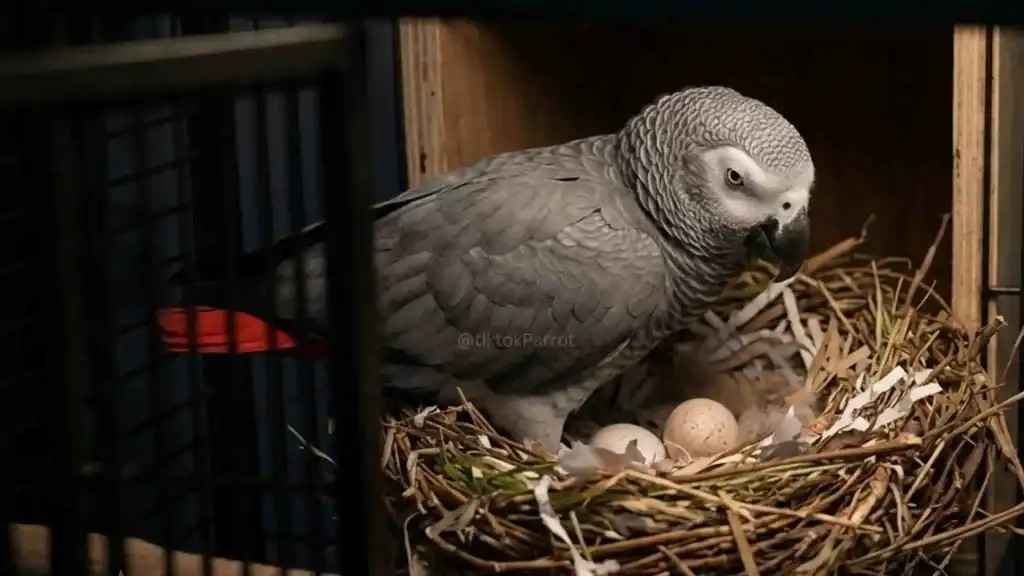
A typical clutch contains 2 to 4 eggs, with 3 being the average. Eggs are laid every 2 to 3 days, so a full clutch of 3 takes roughly 6 days to complete. The hen then incubates the eggs for approximately 28 to 30 days before the chicks begin to hatch.
Not every egg will be fertile, and not every fertile egg will hatch successfully. Infertile eggs, developmental failures, and parental abandonment all factor into real-world outcomes. This is worth knowing for anyone calculating expected chick numbers.
How Many Clutches Per Year Can an African Grey Lay?
This is where the answer to the original question really lives.
In the wild: African Grey parrots produce one clutch per year. Natural environmental conditions, food availability, and the physical demands of raising chicks keep breeding to a single cycle annually.
In captivity: With a bonded pair and optimal conditions, African Greys can produce up to two clutches per year — but this depends heavily on whether the first clutch is removed for hand-rearing. When eggs are pulled early, the hen’s body reads this as a signal that the clutch was lost, and she may cycle again within a matter of weeks.
So, doing the math:
- One clutch per year (wild or conservatively managed): 2 to 4 eggs annually
- Two clutches per year (captivity, first clutch removed): 4 to 8 eggs annually
These are the realistic ranges. Some sources suggest African Greys can occasionally produce three clutches in extraordinary circumstances, but this is rare, discouraged, and hard on the bird’s body.
Why More Isn’t Better: The Health Cost of Frequent Laying

It’s tempting to think that more clutches means more chicks and more breeding success. In practice, pushing an African Grey hen past two clutches a year is a serious mistake.
Egg production is metabolically demanding. Each egg pulls calcium and other nutrients from the hen’s body. Without adequate dietary support and recovery time, the consequences can be severe:
Egg binding is one of the most dangerous risks. This occurs when an egg becomes stuck in the reproductive tract and cannot be passed. Signs include straining, a swollen or distended abdomen, lethargy, and loss of appetite. Egg binding is a veterinary emergency that can be fatal if not treated promptly.
Calcium depletion is another major concern. Over-breeding depletes the hen’s calcium reserves, which can cause weak or soft-shelled eggs, tremors, and long-term bone issues. A laying hen needs significantly more dietary calcium than usual — offered through cuttlebone, calcium supplements, and calcium-rich vegetables like kale and broccoli.
Exhaustion and stress are harder to quantify but just as real. African Greys are sensitive birds. Repeated breeding cycles without sufficient rest increase stress, suppress immunity, and can shorten a bird’s lifespan. Given that a well-cared-for African Grey can live 50 to 60 years in captivity, protecting their health now pays off for decades.
Factors That Affect Annual Egg Production
Not every pair will follow the same pattern. Several variables influence how many eggs your African Grey lays in a given year:
Age of the Hen
African Greys reach sexual maturity between 3 and 5 years of age, though most experienced breeders wait until the birds are at least 5 to 7 years old before allowing breeding. Young hens may lay irregularly. Older hens in their prime reproductive years (roughly 5 to 20 years old) tend to be more consistent breeders.
Presence of a Mate
A bonded pair is far more likely to breed reliably than a single bird. That said, lone females can lay unfertilized eggs, sometimes repeatedly, which brings its own set of health concerns.
Environmental Conditions
Light exposure is one of the biggest triggers for breeding behavior. African Greys in homes with long hours of bright artificial light may come into breeding condition more readily or for longer periods than birds kept on a more natural light schedule. Providing around 10 to 12 hours of light per day and ensuring a consistent routine can help regulate — or discourage — breeding activity.
Diet Quality
Hens fed a poor diet are more likely to suffer complications during laying. A varied, nutrient-rich diet that includes quality pellets, fresh vegetables, fruits, and supplemental protein helps support healthy egg production.
Nest Box Availability
The presence of a nest box in the cage is one of the most reliable triggers for breeding behavior. If you want to discourage breeding, removing the nest box during off-season is one of the most effective steps you can take.
Managing Annual Egg Production Responsibly
Whether you’re an active breeder or an owner dealing with an unexpected laying hen, here’s how to approach the situation thoughtfully:
- Limit to two clutches per year maximum if breeding intentionally. Give the hen at least two to three months of rest between cycles.
- Use dummy eggs if you want to discourage hatching without triggering the hen to re-lay. Replacing real eggs with fake ones allows the hen to complete her incubation instinct without cycling again.
- Maintain calcium-rich nutrition throughout the laying period and beyond. Consult your avian vet about supplement dosing.
- Remove the nest box after the breeding season ends. Out of sight generally means out of mind for breeding African Greys.
- Work with an avian vet experienced in parrots. Breeding African Greys is not a low-maintenance endeavor, and annual checkups — including blood panels — are strongly recommended for breeding hens.
Frequently Asked Questions
How many eggs does an African Grey parrot lay per year?
In the wild, African Greys lay one clutch of 2 to 4 eggs per year. In captivity, a pair may produce two clutches annually, yielding up to 8 eggs per year. More than two clutches is not recommended for health reasons.
How many eggs are in one African Grey clutch?
A typical clutch contains 2 to 4 eggs, with 3 being the most common number. Eggs are laid 2 to 3 days apart over the course of roughly a week.
Can an African Grey parrot lay eggs without a male?
Yes. Female African Greys can and do lay unfertilized eggs without a male present. Chronic egg-laying in lone females is a health risk that should be discussed with an avian vet.
At what age do African Grey parrots start laying eggs?
African Greys reach sexual maturity at 3 to 5 years of age, but most breeders recommend waiting until birds are 5 to 7 years old before allowing them to breed for the first time.
What should I do if my African Grey lays too many eggs in a year?
Consult an avian veterinarian. Interventions may include removing nesting materials, adjusting light schedules, modifying the diet, and in some cases, hormonal treatment to suppress breeding behavior.
Conclusion
An African Grey parrot lays between 2 and 4 eggs per clutch, once — or at most twice — per year. That works out to a maximum of around 8 eggs annually under carefully managed captive breeding conditions. In the wild, and in responsibly managed captivity, one clutch per year is the norm.
What matters most isn’t the number of eggs, but the health of the bird producing them. African Greys are long-lived, intelligent companions, and their reproductive lives should be managed with the same care and attention you give every other aspect of their wellbeing.
If this blog post has helped you, please share it with your family and friends who might also find it helpful. If you love African Greys, join our community of Grey owners! You can meet other owners, share tips and learn from each other.
Stay safe and much love!


Hey there! 🐾 Looking for top-notch pet supplies or anything on Amazon?
Support our site by shopping on Amazon through our this referral link, it will not cost you extra!
Your purchases on Amazon can help us continue providing valuable content.
Thank you for your support! 🛍️