Taming an African Grey, whether you’ve brought home a shy new bird or you’re working to rebuild trust with an older, more defensive one, is a process built almost entirely on patience. These are remarkably intelligent, perceptive animals, and rushing the process tends to backfire, leading to bites, fear, and setbacks rather than the trusting bond most owners are hoping for.
This guide walks through a realistic, step-by-step approach to taming an African Grey, whether you’re starting with a young bird or working with one that’s more nervous or defensive.
Table of Contents
Understanding Your African Grey’s Perspective First
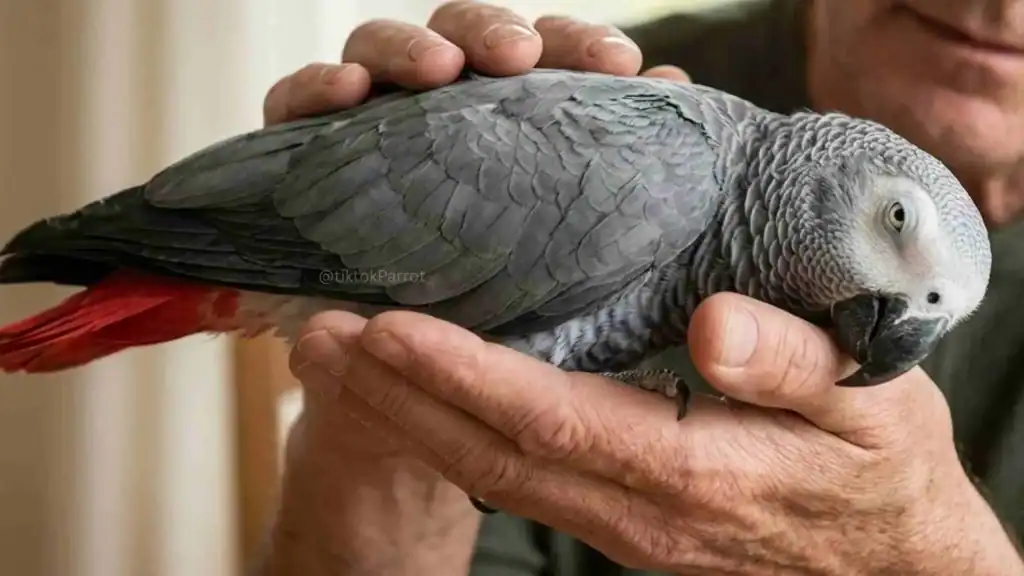
Before diving into technique, it helps to understand why taming can be slow going in the first place. African Greys are prey animals at heart, and hands, in particular, can register as genuinely threatening rather than friendly.
A bird purchased from a shop or rehomed from a previous owner may specifically associate hands with being captured or restrained, which is exactly why moving too fast, especially by trying to grab or force interaction, tends to increase fear rather than build trust.
It’s also worth remembering that biting isn’t really “viciousness.” It’s typically a fear-based response: if a bird feels cornered or threatened and can’t fly away, biting becomes its main remaining defense. Understanding this reframes the entire taming process as one of reducing fear rather than “correcting” a difficult bird.
Step 1: Build Positive Associations From a Distance
Before attempting any hands-on interaction, spend time simply being near the cage in a calm, non-threatening way.
- Sit near the cage regularly, without trying to interact directly.
- Talk to your Grey in a calm, soothing voice during normal activities.
- Drop a favorite treat into the food bowl from outside the cage several times a day. Over time, this helps your bird associate your presence and approach with something positive rather than something to fear.
This stage might feel slow, but it’s genuinely foundational. Skipping ahead to hands-on contact before your bird feels safe in your general presence usually leads to more biting and more fear, not less.
Step 2: Get Your Grey Comfortable With Your Hands Nearby
Hands deserve special attention in this process, since they’re often the specific trigger for fear-based biting.
- Rest your hands on the outside of the cage bars, without reaching in, until your bird seems calm about their presence.
- Once your bird is relaxed with that, slowly move your hands inside the cage, resting them still for 10 to 15 minutes at a time, without trying to touch or catch your bird.
- Avoid sudden movements, and keep your voice calm and soothing throughout.
- Offer a treat on an open, outstretched palm once your bird seems comfortable with your hand simply being present. Some owners find it easier to place a single treat in the food dish first, so fingers aren’t directly exposed early on, gradually building up to hand-offered treats.
Step 3: Introduce a Grooming Perch or Doorway Perch
A perch installed just inside the cage door can be a genuinely useful bridge between “inside the cage” and “fully out.” This allows your bird to step onto a perch and exit the cage while still remaining close to the security of familiar territory, rather than facing an abrupt jump straight into open space.
Continue offering treats consistently at this stage, reinforcing that engaging with you, even just stepping toward the door, leads to something positive.
Step 4: Work Toward “Step Up” Training
Once your Grey is comfortable with your hand being present and treats are working as a reliable positive association, you can begin working on the classic “step up” cue:
- Offer your hand or a target stick near your bird’s feet, at chest level, without forcing contact.
- Reward any movement toward stepping onto your hand or the target, even small attempts at first.
- Use a consistent verbal cue, like “step up,” every time, paired with the physical prompt.
- Reward with a treat, praise, or both immediately after a successful step up.
- Repeat in short, calm sessions rather than long, potentially frustrating ones.
Target-stick training is particularly useful here, since it lets you shape behavior without needing your bird to feel comfortable with direct hand contact right away.
Step 5: Use Consistent, Positive Reinforcement Throughout
Across every stage of taming, a few principles remain constant:
- Reward desired behavior immediately, so your bird can clearly connect the action with the positive outcome.
- Keep sessions short and calm. Long, repetitive sessions can lead to frustration on both sides, while short, positive interactions build trust more reliably.
- Choose healthy treat options, such as small pieces of nuts, seeds, or vegetables, rather than high-fat, low-nutrition snacks used excessively.
- Fade out food rewards gradually over time, shifting toward praise and affection once trust is well established, so cooperation doesn’t remain permanently dependent on food.
Reading Body Language Along the Way
African Greys communicate discomfort clearly if you know what to watch for. Common signs your bird is becoming stressed or uneasy during training include:
- Feather fluffing
- Eye pinning (rapid contraction and dilation of the pupils)
- Tail fanning
Catching these signals early and backing off before they escalate helps prevent bites and keeps the overall experience calmer and more positive for your bird.
Special Considerations for Older or More Defensive Birds
Taming an older, more defensive African Grey, particularly one with a history of biting or a difficult past, generally takes considerably more patience than starting with a young bird. A few additional points matter here:
- Give new birds time to settle in. Many experienced owners recommend giving a newly rehomed bird several weeks before expecting real progress, simply to let them adjust to a new environment feeling safe.
- Don’t force interaction. If a bird is consistently biting despite calm, patient effort, forcing continued contact tends to reinforce fear rather than resolve it.
- Consider your own safety and limits. Some birds, particularly those with a difficult history, may take considerably longer to trust handling, and that’s genuinely okay. A bird can still be happy, healthy, and well cared for even if full hands-on taming takes a very long time or looks different than originally hoped.
- Seek experienced guidance if progress stalls. Working alongside someone experienced with parrot behavior can help identify what a particular bird needs, especially in more entrenched cases.
Environmental Factors That Support Taming
A few environmental details can meaningfully support the overall taming process:
- Consistent light cycles. African Greys benefit from a fairly regular light and dark schedule, generally around 12 hours each, mimicking their natural equatorial origins. Irregular lighting can contribute to stress that makes taming more difficult.
- A stable daily routine. Predictability in feeding, interaction, and rest times helps a nervous bird feel more secure over time.
- A calm environment. Loud noises, sudden movements, or general household chaos can undermine progress, especially in the early stages.
Common Mistakes Owners Make
- Moving too fast. Attempting hands-on contact before a bird feels safe in your general presence often increases fear and biting.
- Trying to grab or force interaction. This reinforces exactly the fear response taming is meant to reduce.
- Giving up after a bite. A single bite doesn’t mean taming has failed; it usually just means a step happened too quickly and needs to be slowed down.
- Inconsistent cues or reactions. Using different words or reacting unpredictably to the same behavior can confuse your bird and slow progress.
- Overlooking body language. Missing early stress signals like fluffing or eye pinning often leads to preventable bites.
Frequently Asked Questions
How long does it take to tame an African Grey parrot?
It varies significantly by individual bird, but building basic trust and comfort often takes several weeks, while deeper bonding and reliable handling can take months of consistent, patient effort.
Why does my African Grey bite when I try to handle it?
Biting is typically a fear-based defense response, not aggression for its own sake, and usually means the bird feels cornered or that interaction is happening faster than it’s ready for.
What treats work best for taming an African Grey?
Small amounts of unsalted nuts, seeds, or vegetables tend to work well as training rewards, while high-fat treats should be used in moderation to avoid contributing to obesity.
Can an older, more defensive African Grey still be tamed?
Yes, though it typically requires more patience and time than taming a young bird, and progress may look different depending on the bird’s history and individual personality.
What is target-stick training and how does it help with taming?
Target-stick training teaches a bird to touch or follow a stick with its beak, allowing you to shape behaviors like stepping up without requiring direct hand contact right away.
How can I tell if my African Grey is stressed during training?
Watch for feather fluffing, rapid eye pinning, or tail fanning, all of which typically indicate discomfort and a good time to pause or back off.
Should I force my African Grey to interact with me if it’s scared?
No, forcing interaction with a fearful bird tends to reinforce fear and increase biting rather than build trust.
Conclusion
Taming an African Grey is less about mastering a specific technique and more about consistently building trust at a pace your bird can actually accept. Starting with distance-based positive associations, gradually introducing hands, and reading your bird’s body language throughout the process lays the groundwork for a genuinely trusting relationship.
Whether you’re starting with a young bird or working patiently with an older, more guarded one, consistency and calm persistence remain the most reliable path to a strong, lasting bond.
If this blog post has helped you, please share it with your family and friends who might also find it helpful. If you love African Greys, join our community of Grey owners! You can meet other owners, share tips and learn from each other.
Stay safe and much love!


Hey there! 🐾 Looking for top-notch pet supplies or anything on Amazon?
Support our site by shopping on Amazon through our this referral link, it will not cost you extra!
Your purchases on Amazon can help us continue providing valuable content.
Thank you for your support! 🛍️