One of the most rewarding things about living with an African Grey parrot is discovering just how much they communicate — without saying a single word. These birds are famously intelligent, emotionally complex, and surprisingly expressive.
But if you’ve ever watched your Grey fluff up, pin its eyes, or flatten its feathers and wondered what on earth it’s trying to tell you, you’re not alone. Reading African Grey body language is a skill, and developing it will transform your relationship with your bird.
This guide breaks down the key signals your African Grey uses to express how it’s feeling — and what you should do in response.
Table of Contents
Why Body Language Matters for African Grey Owners
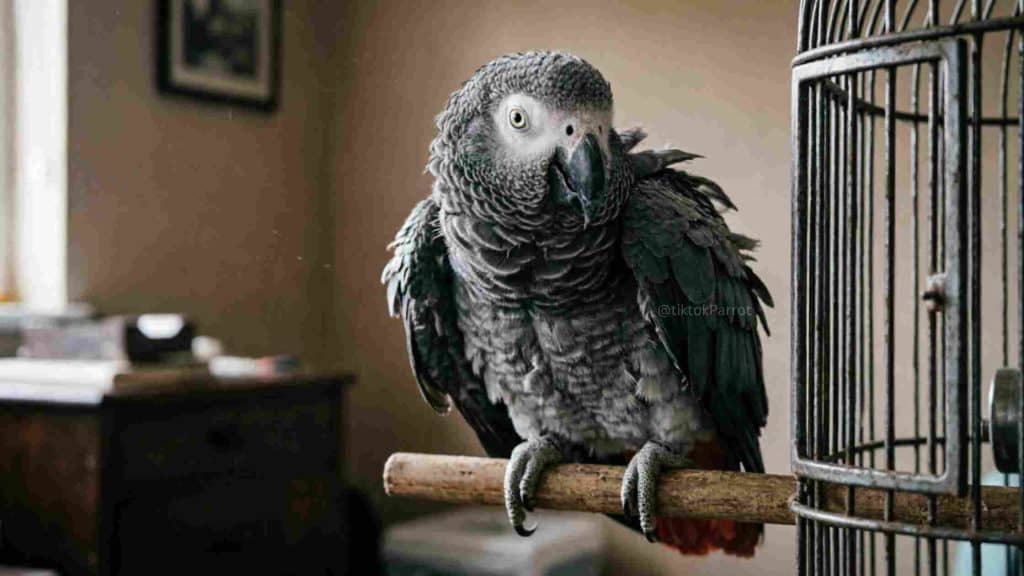
African Greys are not always vocal about distress. In fact, they are known for masking discomfort — a survival instinct inherited from wild birds that hide illness to avoid appearing vulnerable to predators. This makes body language your primary window into your Grey’s emotional and physical state.
Misreading those signals — or missing them entirely — can lead to accidental biting, damaged trust, or worse, overlooked health problems. Once you learn to speak your Grey’s silent language, you’ll notice mood shifts before they escalate, strengthen your bond, and become a far more confident and responsive owner.
Eye Pinning: What Those Rapid Pupil Changes Mean
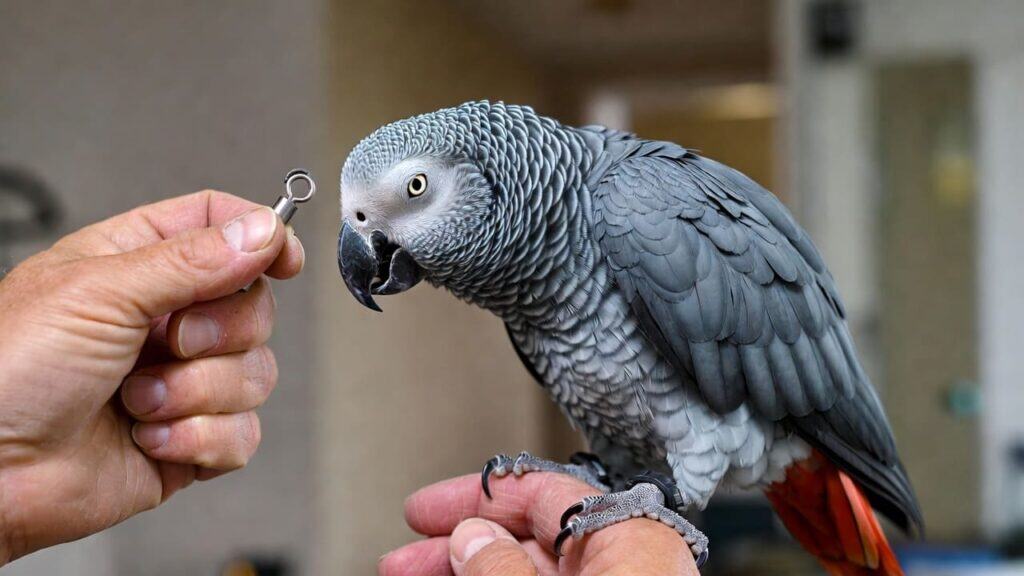
One of the most distinctive features of African Grey body language is eye pinning — the rapid dilation and contraction of the pupils. This happens so quickly it can look almost mechanical, and it always means your bird is emotionally engaged. The tricky part is that pinning can signal several different emotions:
- Excitement: If your Grey is pinning while leaning toward you, making happy sounds, or fluffing briefly, it’s probably thrilled — maybe you just walked in the door or offered a favorite treat.
- Aggression or overstimulation: Pinning accompanied by a fanned tail, raised neck feathers, or a lowered head is a warning. Back off and give your bird space.
- Intense focus: Sometimes parrots pin when they’re deeply engaged with something — a new toy, an interesting sound, a television program.
Eye pinning alone doesn’t tell the whole story. Always read it alongside posture and feather position for context.
Feather Position: The Mood Barometer
Your African Grey’s feathers are one of the most reliable indicators of how it’s feeling moment to moment.
Fluffed-Up Feathers
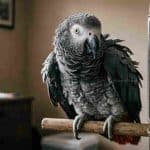
A Grey that holds its feathers slightly puffed out and looks a bit rounder than usual is typically relaxed and content — especially if paired with half-closed eyes and slow breathing. This is the parrot equivalent of sinking into a comfortable chair.
However, if feathers are puffed up for extended periods, the bird seems lethargic, and it’s sitting low on the perch — that’s a very different story. Persistent fluffing combined with inactivity can be a sign of illness. Know the difference between “cozy Grey” and “unwell Grey.”
Sleek, Flattened Feathers
When an African Grey pulls its feathers tight against its body, it’s signaling alertness or anxiety. Something has caught its attention — a strange sound, an unfamiliar person, or a perceived threat. This tight posture means your bird is ready to react. Give it time to settle before attempting interaction.
Raised Neck or Crest Feathers
African Greys don’t have a crest like a cockatoo, but they can raise the feathers around their neck and head. This often signals agitation or aggression — especially when combined with pinned eyes and a slightly open beak. Respect this warning.
Beak Behavior: Grinding, Clicking, and Beyond
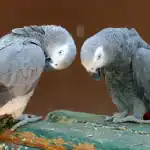
Beak grinding — a soft, rhythmic sound your Grey makes by rubbing the upper and lower mandible together — is a sign of deep contentment. You’ll often hear it just before your bird falls asleep. It’s one of the most reassuring sounds a parrot can make.
Beak clicking or snapping is something else entirely. A sharp, deliberate click or snap is a warning. It means your Grey is not in the mood to be handled. Ignoring this cue is how most bites happen.
Regurgitation might seem alarming the first time you witness it, but when an African Grey bobs its head and brings up food for you or a favorite toy, it’s actually a profound compliment. In parrot social dynamics, feeding a companion is an act of deep affection. It means your bird considers you part of its flock.
Posture and Body Position
How your African Grey holds itself says a great deal about its intentions and comfort level.
- Leaning toward you with relaxed feathers: An invitation. Your bird wants attention, interaction, or to step up.
- Leaning away or turning its back: A polite “not now.” Respect it — pushing interaction when a Grey has turned away often leads to a bite.
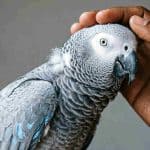
- Head lowered and pushed forward: A clear solicitation for head scratches. Scratch away — this is a bonding moment.
- Tail fanning: When the tail spreads wide like a fan, your Grey is either excited or agitated. Again, combine with other signals to determine which.
- Wing drooping: In young birds or after bathing, some wing drooping is normal. In an adult Grey holding one or both wings away from the body persistently, it can signal overheating, illness, or injury — worth a vet check.
Foot and Wing Signals
One foot raised while your Grey is perching is not a sign of injury — it’s a sign of comfort. A relaxed parrot often tucks one foot up, which reduces heat loss and signals that it feels completely safe in its environment.
Wing flapping while staying on the perch is exercise, not an escape attempt. Greys will often hold onto a perch and beat their wings vigorously — it’s good for muscle tone and a sign of a healthy, energetic bird.
Wing spreading combined with a lowered body and a hissing sound is a threat display. Step back and don’t reach for your bird.
Vocalizations as Part of Body Language
Body language and vocalizations work together in African Greys. A few key sounds to pair with your visual observations:
- Soft contact calls and murmuring: Contentment and connection — your bird is aware of you and happy about it.
- Loud, repetitive screaming: Distress, boredom, or a bid for attention. Address the cause rather than just the noise.
- Growling: A low growl is one of the clearest “do not touch me” signals a Grey can give. Take it seriously.
- Feather ruffling with a shake: Often a reset — your bird is shaking off tension or transitioning between moods.
Common Mistakes Owners Make
- Reaching in when signals say “no”: Bites almost always follow ignored warning signs. If your Grey is flattened, pinning, and clicking its beak — do not reach in.
- Treating all fluffing as illness: Context matters. A fluffed Grey napping in a warm room is fine; a fluffed Grey sitting on the cage floor is not.
- Misinterpreting the “happy dance” as aggression: Some Greys bob, sway, and shuffle when excited to see you. This enthusiastic display can look intense but is entirely positive.
- Skipping the body language check before handling: Always read your Grey before you reach for it. Thirty seconds of observation can prevent a bite and a broken trust.
Frequently Asked Questions
What does it mean when an African Grey fluffs up its feathers?
Usually relaxation and contentment, especially if the bird looks sleepy and calm. Persistent fluffing paired with lethargy and low perching can indicate illness and warrants a vet visit.
Why does my African Grey pin its eyes at me?
Eye pinning means your bird is emotionally engaged. It can signal excitement, agitation, or intense focus — read other body signals at the same time to understand which emotion you’re seeing.
What does it mean when an African Grey grinds its beak?
Beak grinding is a sign of deep contentment and relaxation. It’s most common just before a parrot falls asleep and is one of the most positive sounds an African Grey can make.
How do I know if my African Grey wants to be held?
A Grey that wants interaction will lean toward you with relaxed, slightly puffed feathers, may lower its head for scratches, and will make soft contact calls. A bird that leans away, flattens its feathers, or clicks its beak is telling you it’s not ready.
Why does my African Grey bob its head and regurgitate?
Regurgitation directed at you or a favorite object is a bonding behavior — your parrot is treating you like a beloved flock member and offering food. While it looks odd, it’s actually a sign of deep trust and affection.
Conclusion
Reading your African Grey’s body language is one of the most valuable skills you can develop as an owner. It keeps you safe from bites, helps you catch health issues early, and deepens the bond between you and your bird in a way that words alone never could.
Start by watching your Grey daily — without any agenda — and over time, the signals will become second nature. These birds are always communicating. Once you learn their language, you’ll realize they’ve been telling you everything all along.
If this blog post has helped you, please share it with your family and friends who might also find it helpful. If you love African Greys, join our community of Grey owners! You can meet other owners, share tips and learn from each other.
Stay safe and much love!

Hey there! 🐾 Looking for top-notch pet supplies or anything on Amazon?
Support our site by shopping on Amazon through our this referral link, it will not cost you extra!
Your purchases on Amazon can help us continue providing valuable content.
Thank you for your support! 🛍️